Autolyse
A bread-making technique where flour and water are mixed and rested before adding salt and leavening, allowing gluten to develop naturally.
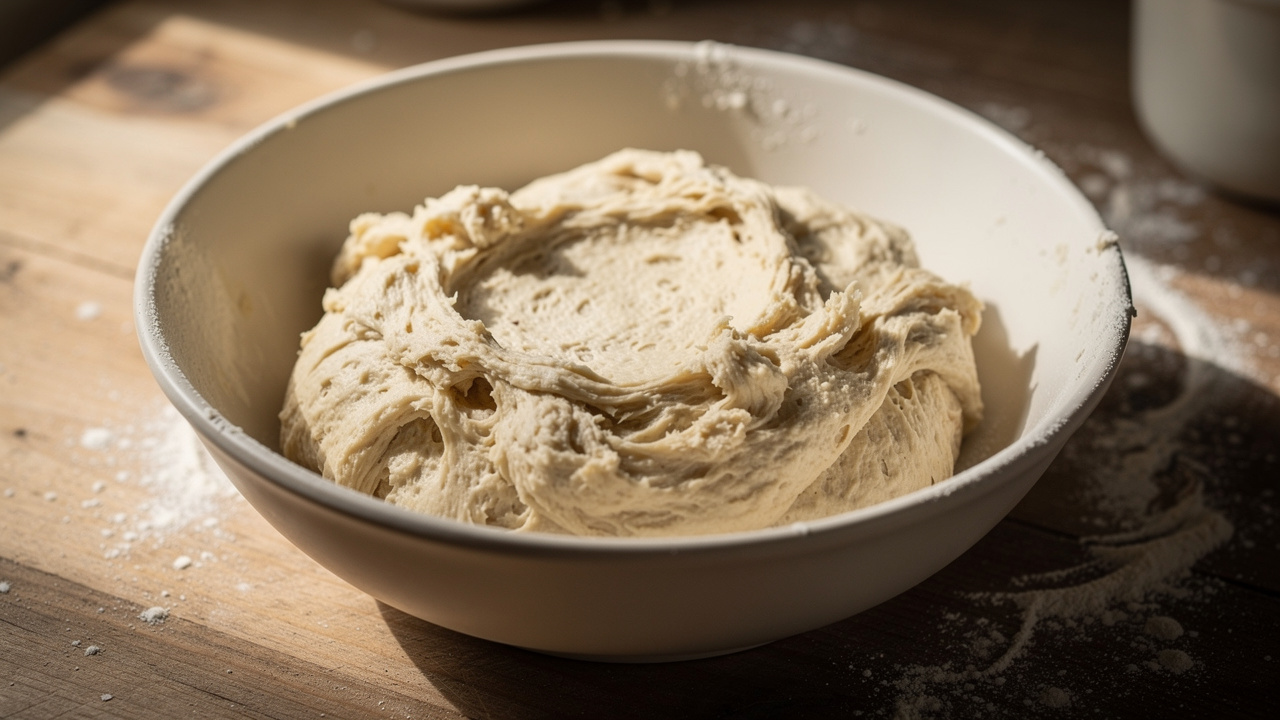
Autolyse (pronounced "auto-LEEZ") is a bread-making technique where you mix only flour and water, then let the mixture rest before adding salt and leavening. During that rest, gluten develops naturally — no kneading required.
French baking professor Raymond Calvel introduced the technique in 1974. He saw industrial mixing degrading French bread quality: over-oxidized dough, pale crumb, flat flavor. His solution was simple — let the flour and water do the work first. He published his findings in *Le Goût du Pain* (translated as *The Taste of Bread* in 2001), which remains one of the most influential texts on artisan breadmaking.
The science behind autolyse
Two enzymes naturally present in flour activate the moment water is added:
- Protease breaks long protein chains into shorter strands. This makes the dough more extensible — it stretches without snapping back. Extensibility is what allows bread to expand during oven spring and gives you an open crumb.
- Amylase converts starch into simple sugars. These sugars feed yeast during fermentation, producing better flavor and deeper crust color through caramelization.
Salt inhibits both enzymes. That's why Calvel's method keeps salt out until after the rest — the enzymes get a head start while the flour hydrates fully and evenly.
During the rest, glutenin and gliadin (the two proteins in wheat flour) absorb water and begin linking into a gluten network. This happens without any mechanical work. By the time you start kneading or folding, the dough already has a foundation of structure.
How to autolyse
The process is straightforward:
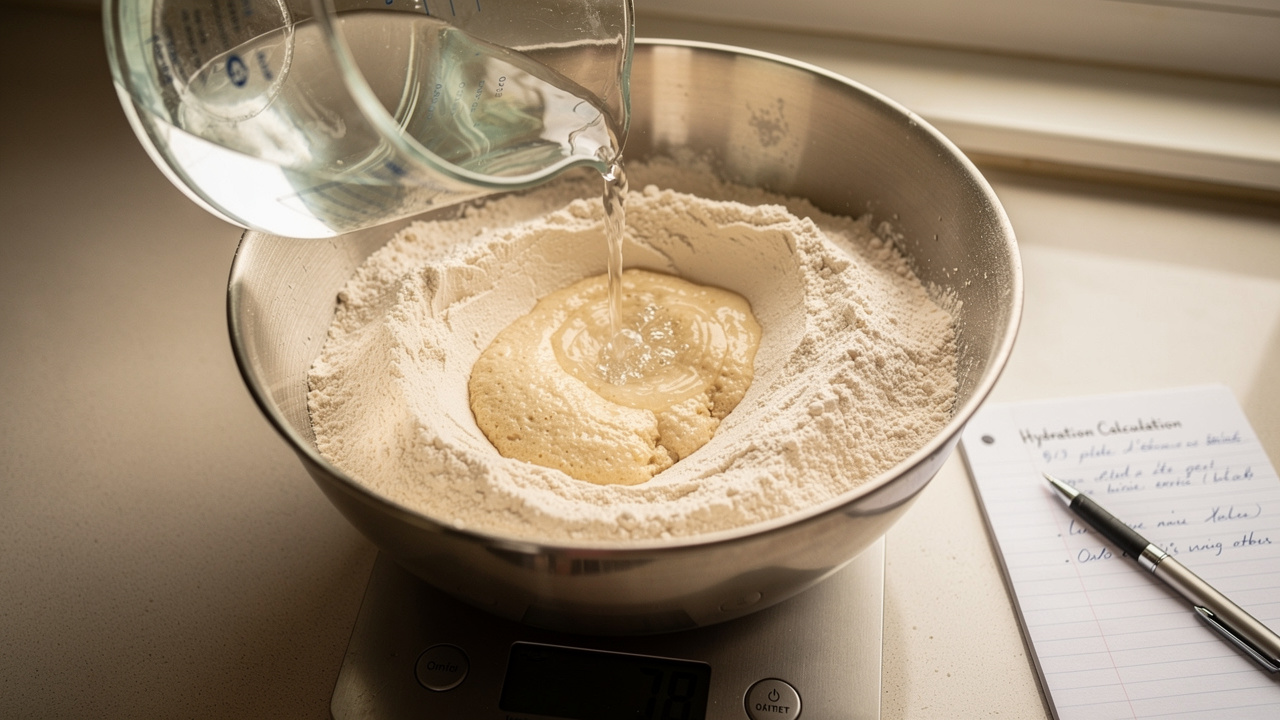
- Combine flour and water in your mixing bowl. Stir until no dry spots remain — it doesn't need to be smooth.
- Cover the bowl with a damp towel or plastic wrap to prevent the surface from drying out.
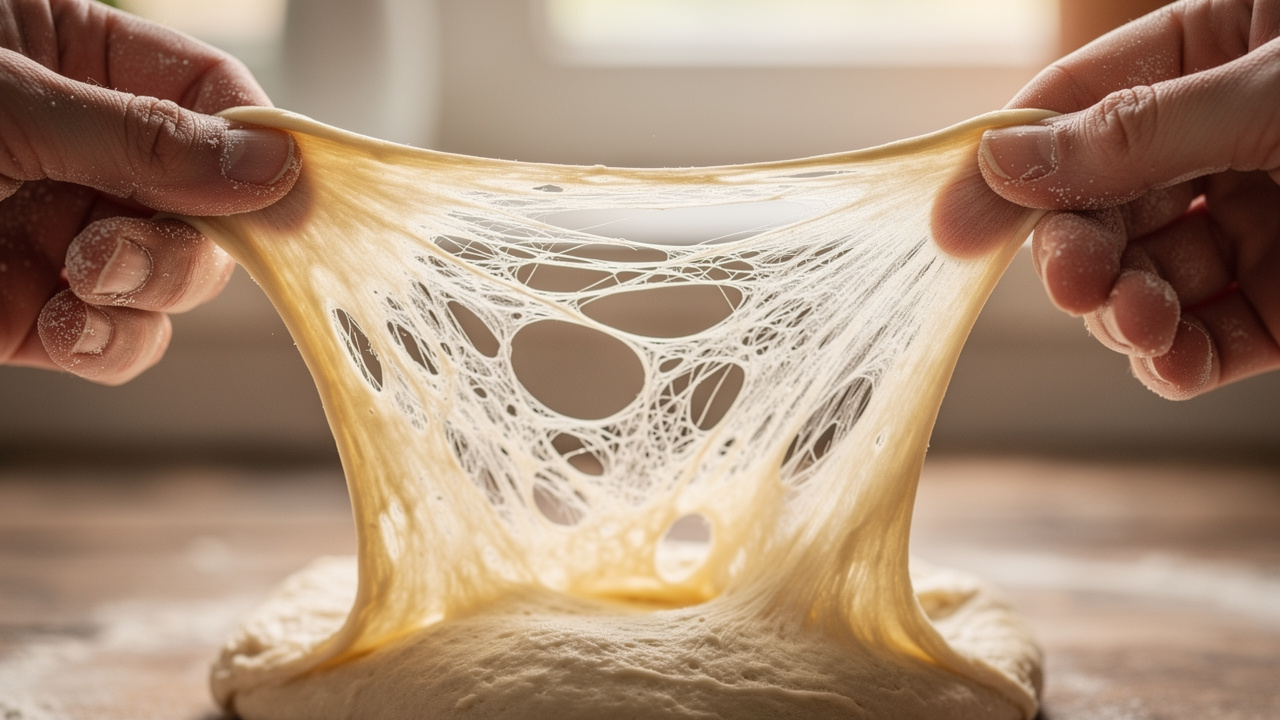
- Rest for 20-60 minutes. This is the standard range for most white flour breads. The dough will look and feel noticeably different afterward — smoother, more cohesive, easier to stretch.
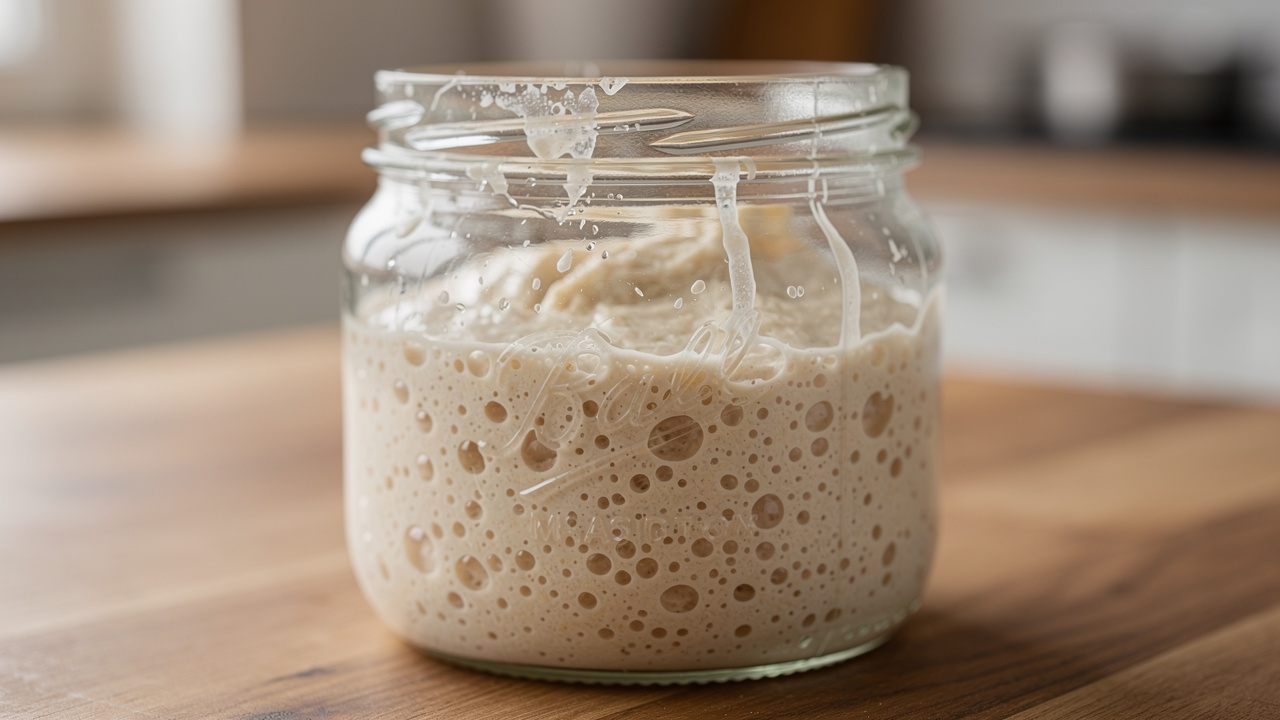
- Add salt and leavening (commercial yeast or sourdough starter). Mix until fully incorporated.
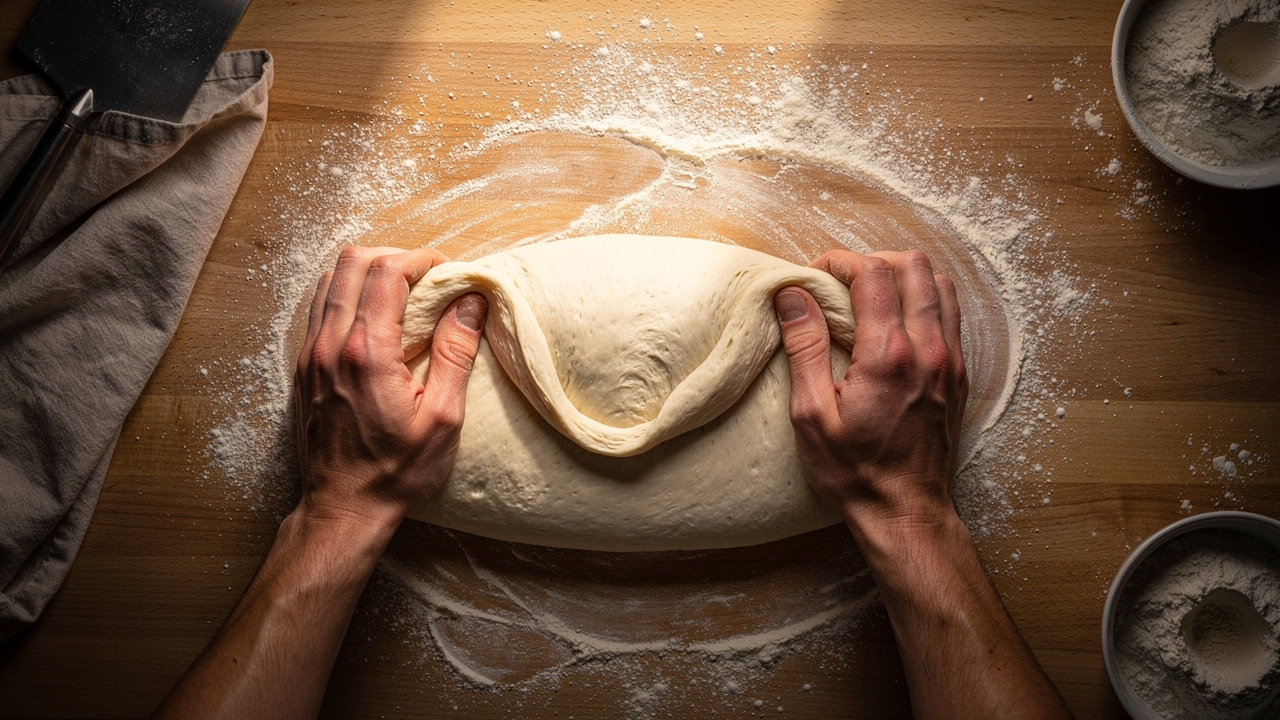
- Continue with your recipe — kneading, folding, or bulk fermentation.
One important detail: add yeast or starter *after* the autolyse, not during. If you add leavening at the start, fermentation begins immediately and you lose some of the enzymatic benefits. Some bakers make an exception for long autolyses (2+ hours) where they want fermentation to overlap with hydration, but this is a different technique sometimes called *fermentolyse*.
How long to autolyse
The right duration depends on your flour:
| Flour type | Recommended autolyse | Why |
|---|---|---|
| White bread flour (10-12% protein) | 20-30 minutes | Hydrates quickly, gluten forms fast |
| High-protein bread flour (13%+) | 30-60 minutes | More protein needs more time to relax |
| Whole wheat (50%+ of total flour) | 1-2 hours | Bran needs time to soften and hydrate |
| 100% whole wheat | 2-4 hours | Extended rest softens bran that would otherwise cut through gluten strands |
| Rye flour (high percentage) | Skip autolyse | Rye lacks the glutenin/gliadin needed — autolyse won't help |
Temperature matters. If your autolyse will exceed two hours, use cool water (65-72°F / 18-22°C) or refrigerate the mixture. Warm temperatures accelerate protease activity, and too much protease breaks down gluten structure instead of building it. The dough goes from extensible to slack.
When autolyse helps most
Autolyse shines in specific situations:
- Lean doughs (flour, water, salt, yeast) — baguettes, country loaves, ciabatta. These rely entirely on gluten structure, and autolyse gives them a head start.
- Whole grain breads — the bran in whole wheat and whole grain flours is sharp enough to physically cut gluten strands during mixing. A long autolyse lets bran soften before you develop the gluten network.
- High-hydration doughs — wetter doughs are harder to knead. Autolyse reduces the total mixing time needed, making the dough more manageable.
- Sourdough breads — since sourdough fermentation is already slow, adding an autolyse before the levain gives you better extensibility and an easier shaping experience.
When to skip autolyse
It's not always necessary:
- Enriched doughs (brioche, challah, panettone) — butter, eggs, and sugar already tenderize the dough. The fat coats flour proteins and interferes with gluten formation during an autolyse anyway.
- Quick breads and pastry — gluten development is unwanted here. You want *less* structure, not more.
- Rye-heavy doughs — rye flour contains pentosans instead of gluten-forming proteins. Autolyse won't create the same network, and the dough can become overly sticky.
- Pizza dough — opinions vary. Some pizza makers autolyse, but many find that a good cold fermentation achieves similar extensibility benefits over a longer timeline.
Common autolyse mistakes
Adding salt too early. Salt tightens the gluten network immediately and slows enzyme activity. The whole point of autolyse is giving enzymes a window to work. Add salt after the rest.
Going too long with warm water. Extended autolyse at room temperature (especially above 78°F / 26°C) can over-activate protease. The dough becomes slack and hard to shape. If you need a long autolyse, keep it cool.
Skipping it because "my bread is fine." Fair enough — autolyse isn't mandatory. But if you're struggling with tight dough that resists shaping, or your whole wheat bread is dense and heavy, an autolyse is the lowest-effort fix available.
Confusing autolyse with fermentolyse. If you add your sourdough starter during the rest, that's fermentolyse — a hybrid technique. True autolyse is flour and water only.
Autolyse vs. no-knead bread
Both techniques reduce manual work, but they solve different problems:
- Autolyse is a timed rest (20 minutes to a few hours) that precedes mixing. Enzymes and hydration do the early work, but you still knead or fold afterward.
- No-knead bread relies on a long fermentation (12-18 hours) where time replaces kneading entirely. The yeast produces gas slowly, and gentle folds provide the only structure.
You can combine both — autolyse your flour and water, then add a small amount of yeast and let it ferment overnight. This gives you enzyme benefits *and* the flavor development of a long, slow rise.
Autolyse and baker's percentage
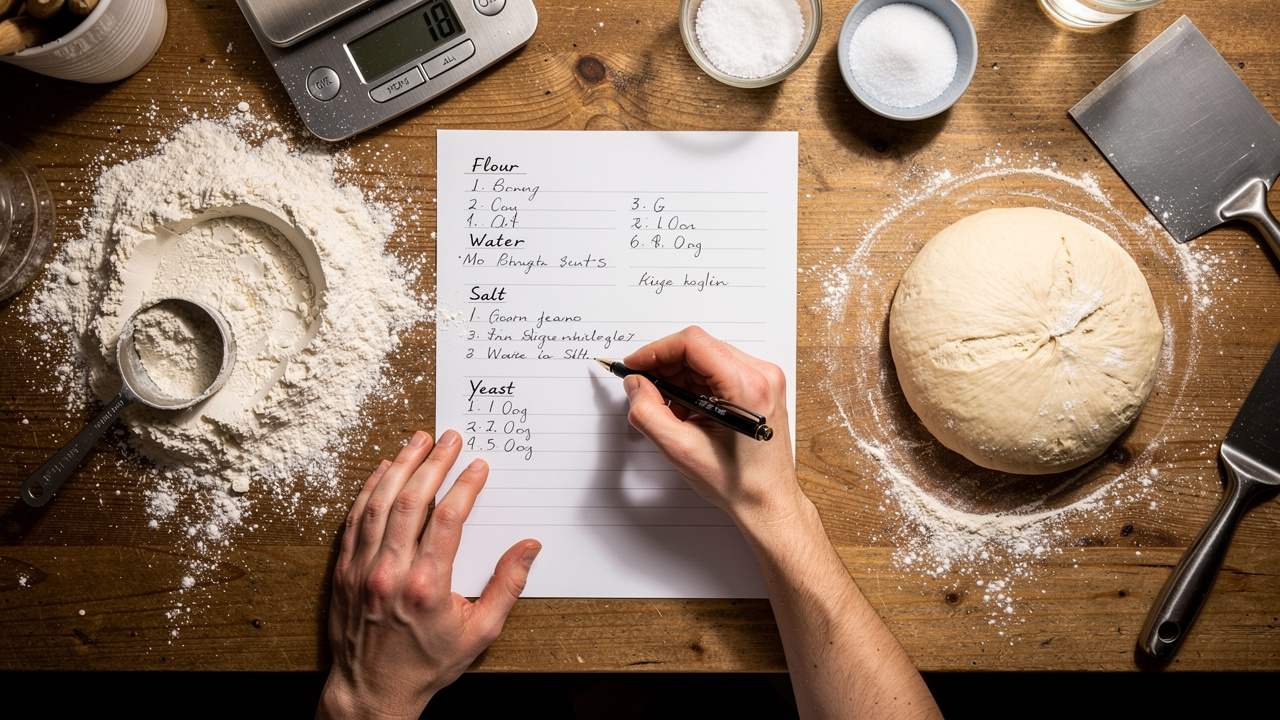
When calculating your autolyse, all the water goes in with the flour. In baker's percentage terms, if your recipe calls for 75% hydration, mix 750g water with 1,000g flour for the autolyse. Salt (typically 2%) and yeast get added after.
Some bakers hold back 10-20g of water to dissolve the salt later. This makes it easier to incorporate salt evenly into an already-hydrated dough.
Autolyse in Fond
Fond's Bread Studio has autolyse built into its workflow. When a recipe includes an autolyse step, Cook Mode walks you through the rest period and notifies you when it's time to add salt and starter — so you don't have to watch the clock.
Frequently asked questions
Can I autolyse overnight?
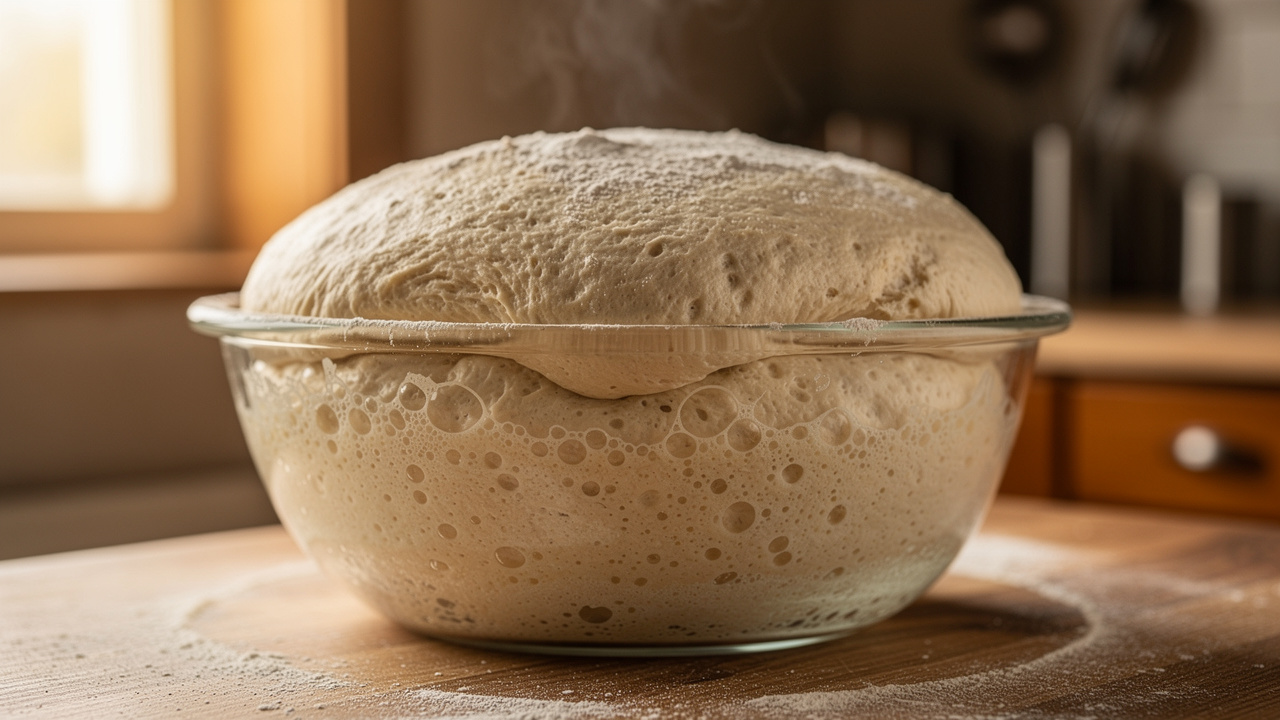
Yes, but refrigerate the mixture. At room temperature, protease will over-develop and the dough will become slack. In the fridge, a 10-12 hour autolyse works well for whole grain breads.
Should I add yeast during autolyse?
For a true autolyse, no. Adding yeast starts fermentation, which changes the chemistry of the rest. If you want both processes to happen at once, that's fermentolyse — a valid technique, but a different one.
Does autolyse work with gluten-free flour?
Not in the traditional sense. Gluten-free flours don't contain glutenin and gliadin, so there's no gluten network to build. However, some gluten-free bakers use a hydration rest to let starches absorb water more evenly.
How do I know when the autolyse is done?
The dough should look smoother and more cohesive than when you first mixed it. Pull a small piece — it should stretch more easily and feel less shaggy. There's no exact endpoint; the standard 20-60 minute range works for most white flour breads.