 Bastien
Bain-Marie
A bain-marie is a cooking technique that uses a water bath (max 100°C) to apply gentle, indirect heat to food, essential for custards, cheesecakes, melting chocolate, and emulsion sauces like hollandaise.
A bain-marie (pronounced "bane mah-REE") is a cooking technique that uses a water bath to apply gentle, indirect heat to food. Instead of exposing a dish directly to oven or burner heat, you place it inside or above a container of hot water. The water acts as a buffer, keeping temperatures low and even, ideal for delicate preparations that would curdle, scorch, or seize under direct heat.
The name comes from medieval Latin balneum Mariae, "Mary's bath," likely a reference to Maria the Jewess (also called Mary the Prophetess), an early alchemist in Alexandria who used water baths to control heat during experiments. The technique crossed from alchemy into cooking centuries ago and became a foundation of French pastry and sauce work.
What are the two forms of bain-marie?
Oven bain-marie (water bath)
The dish sits in a larger, deeper pan filled with hot water, and the whole assembly goes into the oven. The surrounding water limits the bain-marie temperature to 100°C (212°F), since water can't exceed its boiling point, so the food cooks gently and evenly.
This is the method for:
- Custards: crème brûlée, flan, crème caramel
- Cheesecakes: prevents cracking on the surface
- Terrines and pâtés: even cooking throughout a dense loaf
- Bread pudding: creamy interior without dried-out edges
Stovetop bain-marie (double boiler)
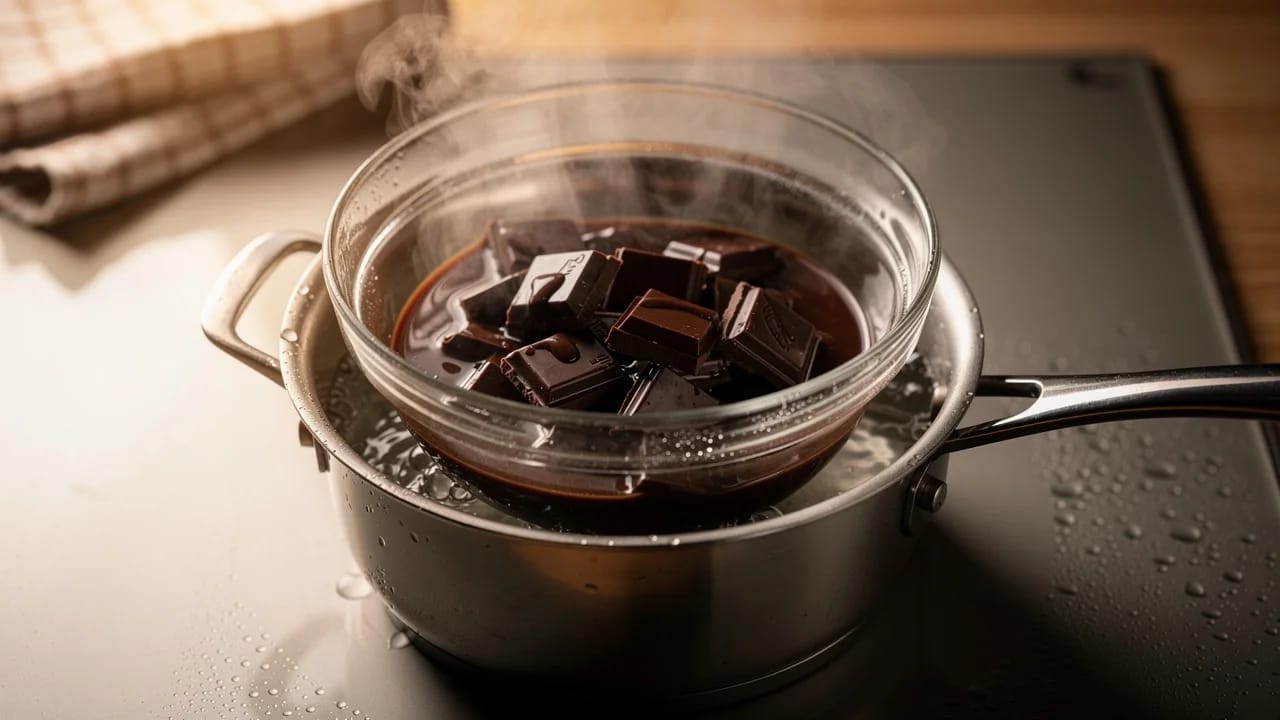
A heatproof bowl sits over a pot of simmering water. Steam from the water heats the bowl indirectly. The bowl should not touch the water. You want steam heat, not direct-contact heat.
This is the method for:
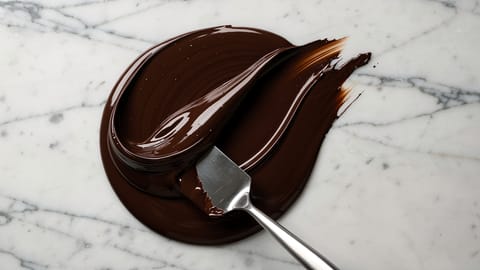
- Melting chocolate: prevents scorching and seizing
- Hollandaise and béarnaise: emulsification of egg yolks and butter at controlled heat. These are two of the five mother sauces
- Tempering eggs: gradually raising yolk temperature without scrambling
- Sabayon: whisking egg yolks and sugar into a foamy custard
How do you set up an oven bain-marie?
Filling the water on the pulled-out rack avoids carrying a heavy, sloshing pan across the kitchen. Water that sloshes into a cheesecake batter on the way to the oven leaves it lopsided and soggy on one side.
How do you set up a stovetop bain-marie?
Glass or metal bowls both work. Metal heats faster; glass holds heat more evenly.
Why does a bain-marie work?
The physics are simple: water cannot exceed 100°C (212°F) at standard pressure. By surrounding your dish with water, you cap the maximum temperature the food is exposed to, even if the oven is set higher.
This matters because:
- Egg-based mixtures curdle above 85°C (185°F). The Exploratorium puts the ceiling at 85°C, and America's Test Kitchen explains why: overheated egg proteins bond too tightly and clump. A direct oven at 160°C (325°F) can push custard edges past that threshold while the center stays raw. The water bath keeps the entire custard within a safe range
- Even heat distribution. Water conducts heat better than air, surrounding the dish uniformly instead of blasting it from one direction
- Moisture. The steam from the water bath keeps the oven humid, preventing surface cracking on cheesecakes and custards
What are the common uses of a bain-marie?
| Application | Method | Why bain-marie helps |
|---|---|---|
| Crème brûlée / flan | Oven | Prevents curdling, silky texture |
| Cheesecake | Oven | Prevents cracking and uneven cooking |
| Terrine / pâté | Oven | Even cooking through a dense mixture |
| Melting chocolate | Stovetop | Prevents scorching and seizing |
| Hollandaise / béarnaise | Stovetop | Controlled heat for emulsification |
| Tempering eggs | Stovetop | Gradual warming without scrambling |
| Sabayon / zabaglione | Stovetop | Gentle heat for whisking to foam |
What are the best tips for a bain-marie?
The towel trick is the one tip that makes the biggest difference to crème brûlée. Ramekins slide around in the pan without it, and the uneven contact with the pan bottom gives you hot spots. A cheap kitchen towel fixes it completely.
What is the difference between a bain-marie and a double boiler?
These are the same principle applied two different ways. "Bain-marie" is the French culinary term that covers both oven and stovetop versions. "Double boiler" is the English term specifically for the stovetop setup, a pot of water with a bowl or insert on top. In practice, most English-language recipes use "water bath" for the oven method and "double boiler" for the stovetop method. They all rely on water to moderate heat.
Bain-marie in Fond
Fond hasn't launched yet. This is how it will work at launch. Join the waitlist for early access.
Fond's recipe timers help you manage bain-marie cooking, where timing matters but the visual cues are subtle. When a recipe calls for a water bath custard or a stovetop chocolate melt, Fond tracks the duration so you can focus on the texture rather than watching the clock.