 Bastien
Mother Sauces
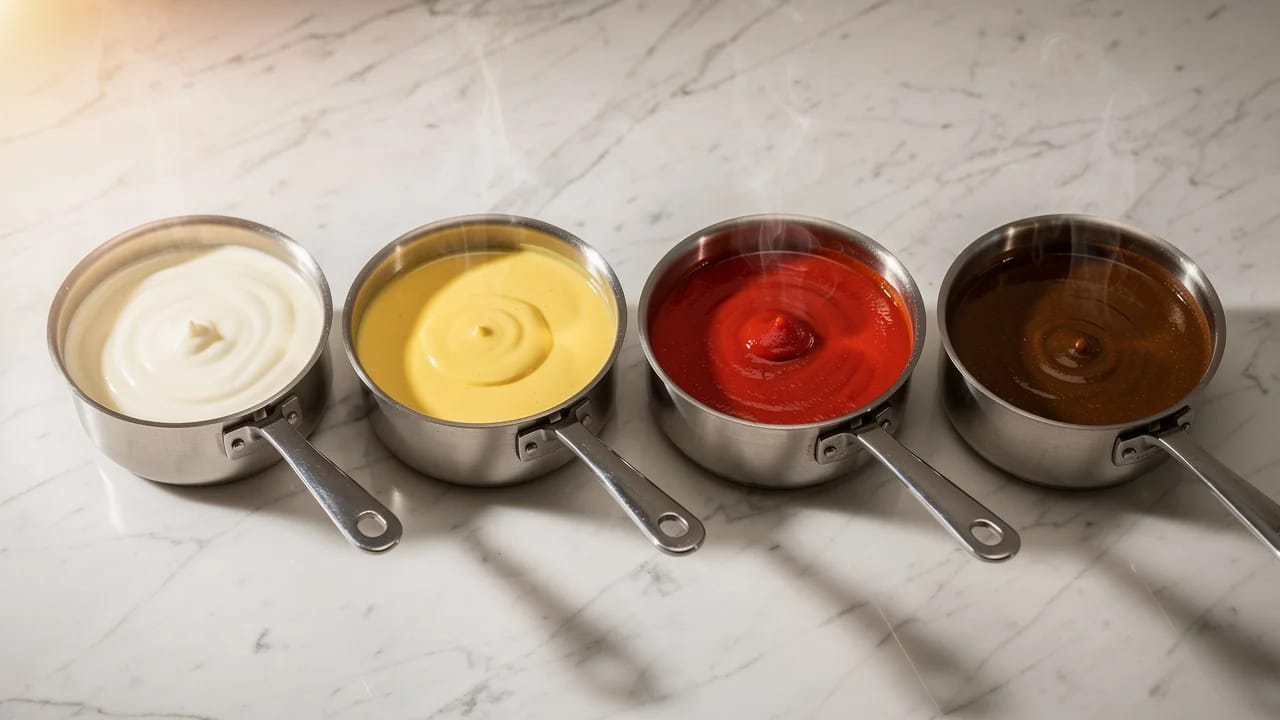
The mother sauces are the five foundational sauces of French cooking (bechamel, veloute, espagnole, hollandaise and tomato) from which hundreds of daughter sauces derive. The list is usually credited to Auguste Escoffier and Le Guide culinaire.
The mother sauces are the five foundational sauces of French cooking and the backbone of most Western sauce-making: bechamel, veloute, espagnole, hollandaise and sauce tomate. Each one is a base. Add an ingredient or two and you get a derivative "daughter" sauce, and Escoffier's system lists dozens under each mother.
The list is usually credited to Auguste Escoffier and his 1903 Le Guide culinaire, though the story is a little messier than "Escoffier picked five." The original French editions listed espagnole, veloute, bechamel and tomate among the grandes sauces de base, treated hollandaise as a derivative, and called mayonnaise the mother of the cold sauces. The 1907 English edition moved hollandaise into the basic sauces, and that is the five-sauce list culinary schools teach today. Before Escoffier, Carême's 1833 classification had four: espagnole, veloute, allemande and bechamel.
Three of the five start with a roux, which is butter and flour cooked together. One is an emulsion. One is tomato-based. That's the entire framework. Once you see it, the French sauce repertoire stops looking intimidating: the roux sauces share one technique and differ mainly in how long you cook the roux and which liquid you whisk in.
1. Bechamel sauce (white sauce)
Bechamel is milk thickened with a white roux. It's the simplest mother sauce and probably the one you've made most often without knowing its name.
Make the roux first: melt 2 tablespoons butter, whisk in 2 tablespoons flour, and cook for 2-3 minutes until the raw flour smell is gone but the paste stays pale. Then slowly whisk in 2 cups (500 ml) of warm milk. Keep whisking over medium heat until the sauce thickens enough to coat the back of a spoon, about 5-7 minutes. Season with salt, white pepper and, if you like, a pinch of nutmeg. Nutmeg is the classic addition; a small amount rounds out the flavor without tasting like nutmeg.
Daughter sauces and derivatives: Mornay (add Gruyere), cream sauce (add heavy cream), mustard sauce (add Dijon), soubise (add pureed onions)
Common uses: Lasagna, mac and cheese, gratins, croque monsieur, moussaka
2. Veloute sauce (blond sauce)
Veloute means "velvety" in French. It's the same technique as bechamel, but with white stock instead of milk. The result is lighter and more savory.
Cook the roux a little longer than for bechamel, about 4-5 minutes, until it turns golden (a "blond" roux). Then whisk in warm stock and simmer until thickened. Chicken veloute tastes different from fish veloute, which gives you range without learning a new technique.
Daughter sauces and derivatives: Allemande (add egg yolk and cream), supreme (add cream and reduce), Bercy (add shallots and white wine), Normande (add mushroom liquid and cream)
Common uses: Chicken pot pie filling, fish dishes, cream soups, vol-au-vents
3. Espagnole (brown sauce)
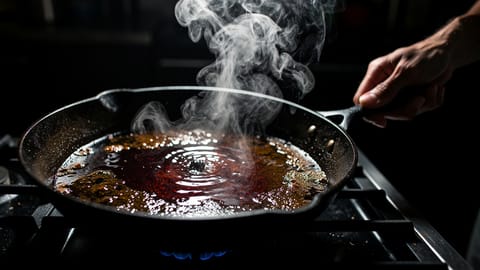
Espagnole is the richest and most involved of the mother sauces. It starts with a brown roux, adds mirepoix (diced onion, carrot and celery), tomato paste and brown stock, then simmers for hours.
This isn't a weeknight sauce. A proper espagnole takes 3-4 hours of simmering and reducing. A brown roux thickens less than a white or blond one (the longer flour cooks in fat, the less it thickens), so the long simmer does double duty: it concentrates flavor and reduces the sauce to the right consistency. Strain it before using; the mirepoix has given up its flavor by then.
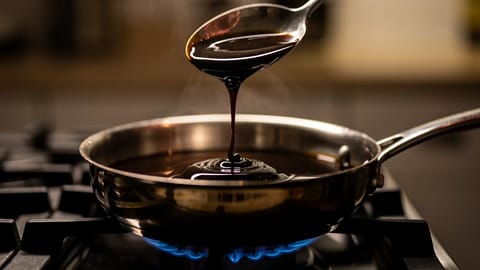
The payoff is demi-glace, espagnole reduced with more brown stock until it is glossy and intensely savory. A spoonful turns a plain steak into something that tastes like a restaurant made it.
Daughter sauces and derivatives: Demi-glace (espagnole reduced with more brown stock), bordelaise (add red wine and shallots), chasseur (add mushrooms, tomatoes, white wine), Robert (add onions and mustard)
Common uses: Steak sauces, braised meats, rich stews. Demi-glace is the base for most fine-dining pan sauces.
4. Hollandaise sauce (emulsion sauce)
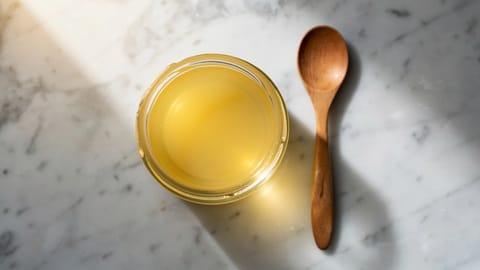
Hollandaise is the odd one out. No roux, no stock. It's a warm emulsion of egg yolks, clarified butter and lemon juice, held together by the emulsifiers in the yolks. Its yolk-free cousin, beurre blanc, builds a similar warm butter emulsion on a wine reduction alone.
Whisk egg yolks with a splash of lemon juice or water over gentle heat (a bain-marie works best). Once the yolks thicken slightly and turn pale, drizzle in warm clarified butter in a thin stream while whisking constantly. The sauce should be thick enough to hold its shape on a spoon.
The risk with hollandaise is heat. Too much and the yolks scramble. Too little and the yolks never thicken, and the butter can start to set. A gentle bain-marie that keeps the sauce warm but well below a simmer, roughly 60-65°C (140-150°F), is the usual target.
Daughter sauces and derivatives: Bearnaise (add a tarragon, shallot and vinegar reduction), choron (bearnaise with tomato paste), maltaise (add blood orange juice), mousseline (fold in whipped cream)
Common uses: Eggs Benedict, steamed asparagus, poached fish, vegetables
5. Sauce tomate (tomato sauce)
Escoffier's tomato sauce isn't the jar of marinara in your pantry. The classical version starts with salt pork, adds mirepoix, a small amount of roux, crushed tomatoes and stock, then simmers for 1-2 hours.
Modern versions often skip the roux and the pork, relying on long simmering to thicken the sauce naturally. Either approach works. The key is cooking the tomatoes long enough to concentrate their flavor and mellow the acidity.
Daughter sauces and derivatives: Creole (add peppers, onion, celery), Portugaise (add garlic and tomato concasse), Provencale (add garlic, olives, herbs), marinara (simplified Italian variation)
Common uses: Pasta, pizza, braised meats, shakshuka, ratatouille
How are the mother sauces connected by the roux?
Knowing which sauces share a roux base matters because it cuts your learning curve. If you can make bechamel, you already know most of what veloute and espagnole need. The only variables are roux color, liquid type and cooking time.
Are there 7 mother sauces?
You'll sometimes see references to 6 or 7 mother sauces instead of 5. The extra ones are usually mayonnaise (a cold emulsion of egg yolks and oil) and sometimes vinaigrette. There's a historical reason mayonnaise keeps coming back: Escoffier himself called it the mother sauce of the cold sauces in the French text of Le Guide culinaire, and the five-sauce list without it comes from the 1907 English edition.
For practical cooking at home, the five classics cover everything you need. Mayonnaise shares the emulsion principle with hollandaise but is a cold preparation, which is why the two are usually taught separately.
What are the most common mistakes with mother sauces?
Which mother sauce should you start with?
Start with bechamel. It's the fastest, the most forgiving, and you probably already have the ingredients. From there, try veloute with chicken stock: same technique, different liquid. Once those feel natural, hollandaise is worth the effort for a weekend brunch.
Espagnole is a project. Save it for a weekend when you want to fill the kitchen with the smell of roasting bones and simmering stock. The demi-glace that comes from it is worth the hours.
These five mother sauces have been the organizing framework for French cooking for over a century, and they remain the standard in culinary schools worldwide. Learn them and you have the foundation for any pan sauce you build by deglazing a skillet.