 Bastien
Ghee
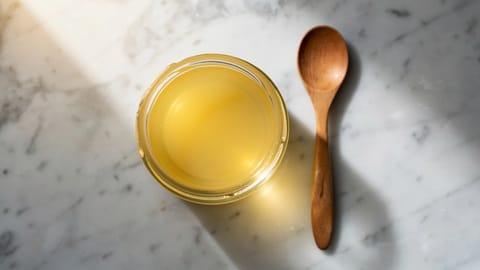
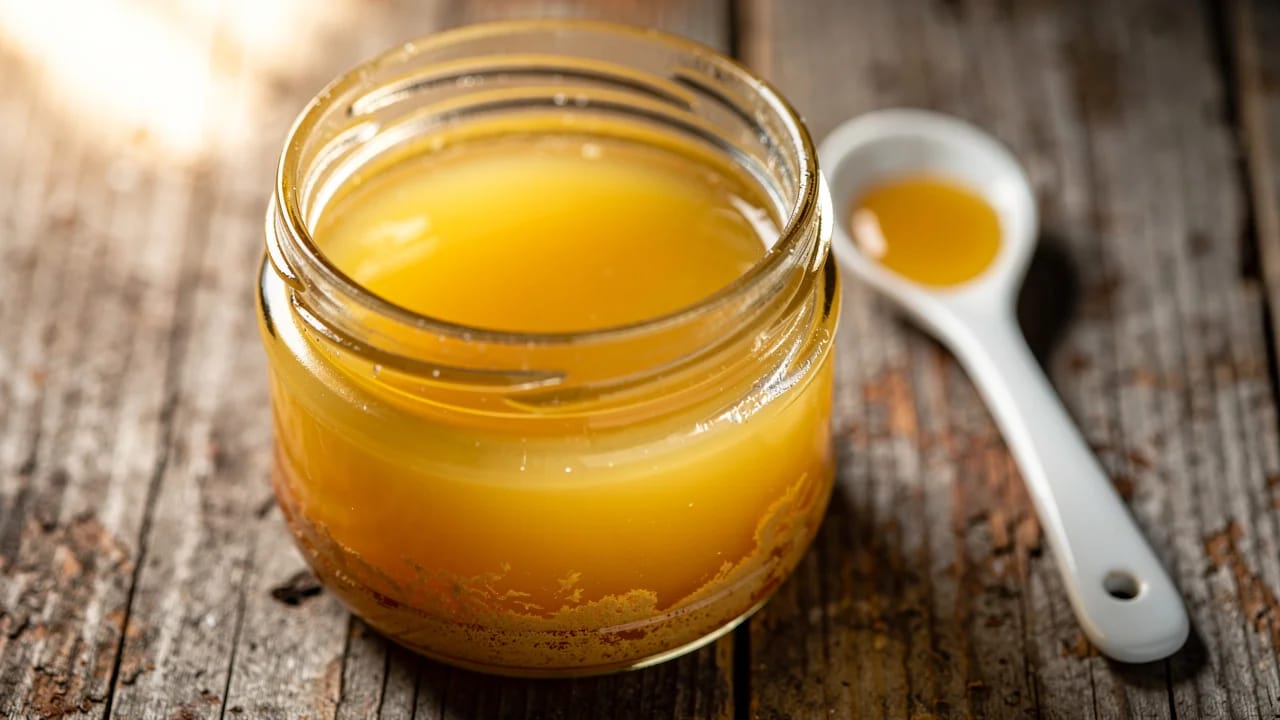
Ghee is a clarified butter cooked until the milk solids brown, giving it a nutty aroma, a 250°C / 485°F smoke point, and a long shelf life without refrigeration.
Ghee is a type of clarified butter cooked until the milk solids brown and are strained out, leaving a pure golden fat with a nutty aroma and a smoke point near 250°C / 485°F. It comes from the Indian subcontinent, where it has been made for at least three thousand years, and it is the cooking fat of choice across South Asian, Middle Eastern, and Ethiopian cuisines.
The reason to keep ghee around is heat. Regular butter starts smoking around 175°C / 350°F because the milk solids and water in it scorch and turn bitter. Remove them and the same butterfat stays clear in a screaming-hot pan, which is why nearly every cuisine that cooks over open flame eventually invented some version of it.
What is ghee made from?
Ghee starts as unsalted butter, ideally cultured and from grass-fed cows for the strongest flavor. Butter is about 80% fat, 16% water, and 4% milk solids (proteins and minerals). Cooking it gently drives off the water, then the solids settle to the bottom and gradually brown. Once those solids are strained out, what remains is pure butterfat.
That removal is the whole point. Milk proteins are what burn at low temperatures and what trigger reactions in lactose-intolerant people. Take them out and you get a fat that handles high heat, lasts for months without spoiling, and works for most dairy-sensitive cooks.
Note: "Cultured ghee" means the butter was lacto-fermented before being clarified. The bacterial activity creates extra flavor compounds, so the finished ghee tastes more complex. Indian grocers usually carry both regular and cultured versions.
How is ghee different from clarified butter?
The two are closely related but not identical. The difference is how long you cook the butter once the solids have separated.
In French kitchens, clarified butter is the base for mother sauces like hollandaise, where you want the rich dairy flavor without the milk solids breaking the emulsion; a beurre blanc, by contrast, is built on whole cold butter. Ghee's extra browning makes it less neutral. That nuttiness is wanted in an Indian curry, but it would compete with delicate French sauces.
How is ghee made?
Making ghee at home takes one pound of butter and about thirty minutes of mostly passive attention.
The window between "perfect golden ghee" and "burned" is about 60 seconds at the end. A glass pot lid lets you watch the color of the solids without lifting it, and the last five minutes are not the moment to leave the stove.
Yield and storage
One pound of butter (450g) makes about 350-380g of ghee. You lose roughly 15-20% to water and milk solids. Stored in a sealed glass jar at room temperature, away from light, it keeps 2-3 months. In the fridge it lasts a year but turns firm and grainy. Always use a clean, dry spoon. Water introduced into the jar is what spoils ghee.
What is ghee used for?
Ghee replaces butter or oil anywhere you cook at medium-high to high heat. Its 250°C smoke point is higher than olive oil (around 190°C extra virgin, 240°C refined) and on par with avocado oil.
- Tadka / tempering whole spices: Heat ghee until shimmering, drop in cumin or mustard seeds, let them pop for 10-15 seconds, then pour the seasoned fat over a finished dal or curry. The technique is called tempering and it's the single most common use of ghee in Indian cooking.
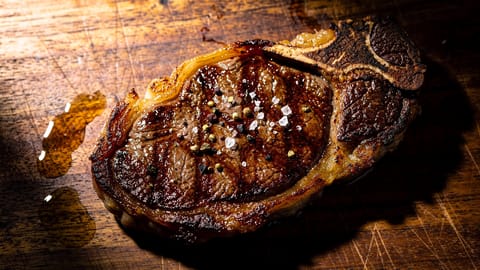
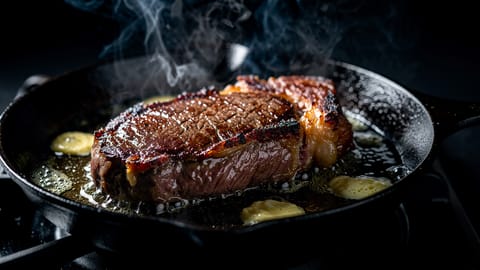
- Searing meat: Ghee browns steaks and chops without burning, which makes it a strong alternative to neutral oils for high-heat searing. The slight nuttiness pairs well with beef and lamb.
- Roasting vegetables: Toss potatoes, carrots, or cauliflower with a tablespoon of melted ghee before roasting at 220°C / 425°F. The fat coats more evenly than olive oil and the milk-solid-free composition means no scorched bits on the sheet pan.
- Sautéing aromatics: Onions, garlic, and ginger cook in ghee without the bitter notes that butter develops at higher heat. This is why ghee is the base fat in nearly every Indian curry.
- Finishing rice and dal: A teaspoon of ghee stirred into hot basmati or yellow dal right before serving adds richness without weighing the dish down.
- Cooking eggs: Scrambled eggs in ghee come out silkier than in butter because there are no water droplets to interfere with the curd structure.
Tip: Save the strained milk solids from making ghee. Sprinkle them over hot rice with a pinch of salt. They taste like browned butter solids, which they are. South Indian cooks call this khurchan.
Ghee vs butter for cooking
When the recipe calls for medium or high heat, ghee is the better choice nine times out of ten. Where butter wins is anywhere its water content matters: laminated doughs, creamed butter cookies, beurre blanc emulsions, or finishing a sauce mounted with cold cubes.
Is ghee healthy?
Ghee is roughly 65% saturated fat, about the same as butter on a per-gram basis. It has almost no lactose or casein, which matters for people with dairy sensitivities. It also contains conjugated linoleic acid (CLA) and butyrate, two compounds with some evidence for anti-inflammatory effects, though the amounts in a teaspoon of ghee are small.
That said, it's still concentrated saturated fat and 900+ kcal per 100g. Indian cooks have used ghee daily for thousands of years and built cuisines around it, but they use it as a finishing fat, a measured teaspoon at a time. The wellness narrative that ghee is a free pass to cook everything in dairy fat is not supported by the research it cites.
Common mistakes when making ghee
The milk solids were cooked past brown to black. Lower the heat and pull the pot the moment the solids turn nutty brown, usually right when the popping sound stops and you smell toasted popcorn.
Water got into the jar, or the ghee was poured before all the water had cooked off. Re-melt gently and strain again through fresh cheesecloth. Make sure your storage jar is bone dry.
Normal. Ghee is solid below about 32°C / 90°F and liquid above it. Cool kitchens will see it set up. Texture has no effect on quality.
Spoilage from water contamination, usually a wet spoon. Discard the batch. Properly made ghee should never smell sour, only nutty.
You started with butter that was higher in water content than average. Cultured European butters are around 82-84% fat (slightly less water), so they yield more. American supermarket butter is closer to 80% fat and yields a touch less ghee.
How does ghee fit with other fats?
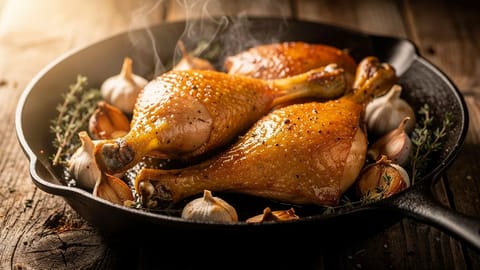
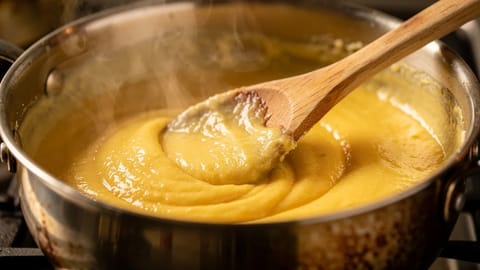
Ghee sits at the high-heat end of the cooking-fat spectrum. For a side-by-side with the cooking method confit (slow-cooked in fat) or fat-based sauces built on a roux, ghee plays a different role: it's a clean, neutral high-heat medium rather than a flavor base or a thickener. The Maillard reaction that brings deep flavor to seared meats happens above 140°C / 285°F, well within ghee's working range, which is why it has become a go-to fat in modern home kitchens that want butter flavor without butter's heat limits.
Note: If a recipe calls for clarified butter and you only have ghee, use it. The nuttiness is the only real difference, and most savory dishes welcome it. Going the other way is harder: clarified butter can't replace ghee in dishes where the toasted flavor is the point.