 Bastien
Pizza Stone
A pizza stone is a thick slab of cordierite, ceramic or clay that sits in your oven, stores heat and bakes the pizza from below, turning a 250 °C home oven into something much closer to a pizzeria deck.
A pizza stone is a thick slab of cordierite, ceramic or clay that lives on an oven rack, soaks up heat for 45-60 minutes, and then unloads it into the base of a pizza on contact. It exists to solve one problem: a domestic oven maxes out around 250-290 °C, while pizza wants the fierce bottom heat of a 400 °C deck.
A sheet pan bakes pizza from the top down while the base steams underneath. A hot stone bakes it from the bottom up. That is the difference between "homemade pizza" and pizza.
What is a pizza stone made of?
Three materials cover almost everything sold as a pizza stone. Cordierite is a magnesium aluminium silicate that is manufactured for high-temperature jobs such as kiln furniture and catalytic-converter cores because it barely expands when heated, which is exactly the property that stops a stone from cracking. Ceramic and fired clay stones are cheaper and heavier for their heat capacity, but they mind sudden temperature swings much more. Unglazed quarry tiles from a hardware store are the classic budget version of the same idea, as long as they are unsealed and sold as food-safe.
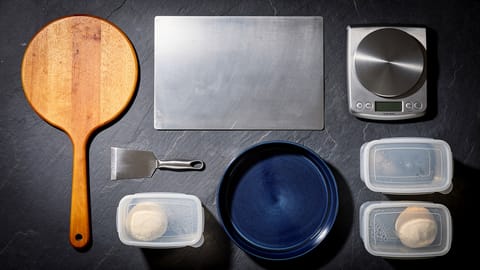
A baking steel is not a stone at all, just a thick plate of carbon steel that does the same job faster. The pizza equipment guide covers that comparison in detail.
How does a pizza stone work?
Two mechanisms. First, thermal mass: the stone stores far more heat than an oven rack or thin pan, so when dough lands, the base gets a surge of conductive heat instead of slowly warming up. That surge drives oven spring and starts browning immediately, typically cutting bake times from 12-15 minutes on a sheet pan to 6-8 on stone. Second, porosity: the baking stone drinks some of the steam coming off the bottom of the dough, so the base crisps instead of poaching in its own moisture.
That's the whole trick of every deck oven and wood-fired floor, shrunk to a slab. The Neapolitan tradition bakes at 430-480 °C in 60-90 seconds; a stone doesn't get you there, but it moves a home oven meaningfully in that direction.
How do you use a pizza stone in the oven?
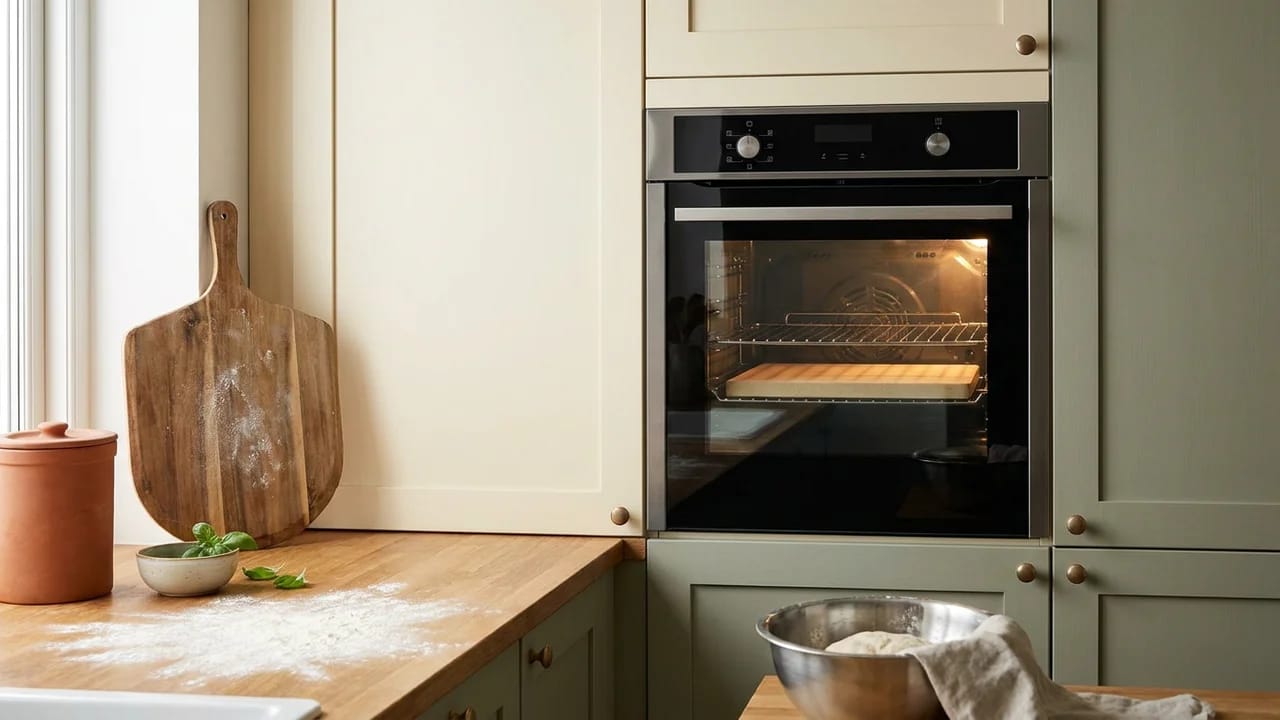
Put the stone on a rack in the upper third of a cold oven, crank to maximum (usually 250-290 °C), and wait 45 to 60 minutes after the oven claims it's ready; the air heats far faster than the slab. Build the pizza on a peel dusted with flour or semolina, give it a confidence shake to confirm it slides, and launch it directly onto the stone. No pan, and no parchment at full heat: Reynolds rates its parchment to 220 °C, well below where the stone is working.
The number to respect is the preheat. A 20-minute preheat gives you a lukewarm stone and a pale, stuck crust. If you're starting from zero, dough included, the beginner pizza dough guide pairs a first recipe with this exact bake setup.
Can you use a pizza stone on a grill?
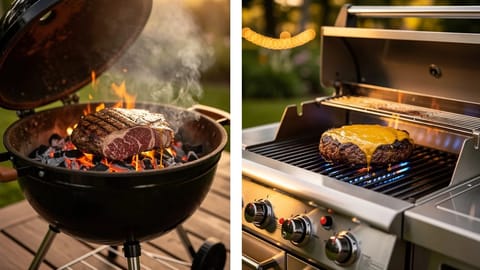
Yes, and it's the closest most homes get to a wood-fired oven. A kettle or gas grill with the lid closed runs well past anything an indoor oven allows. Set the stone on the grate before lighting, preheat 30-45 minutes with the lid down, and bake with the lid closed so the top cooks from reflected heat; pies finish in a few minutes rather than eight.
Two grill-specific cautions. Use cordierite, not bargain ceramic; grill temperatures amplify thermal-shock risk. And resist checking constantly: every lid lift dumps the dome heat the toppings need. Whether that grill burns charcoal or gas matters less here than the lid staying shut.
Pizza stone or baking steel?
| Factor | Cordierite stone | Baking steel |
|---|---|---|
| Heat transfer | Moderate | Much faster |
| Best oven range | 290 °C+ and grills | 230-290 °C home ovens |
| Weight | 2-4 kg | 6-10 kg |
| Price | Usually cheaper | Usually pricier |
| Thermal shock | Cordierite resists; clay cracks | Immune |
| Failure mode | Cracking | Rust if stored wet |
In a typical home oven, steel's conductivity wins the crust race. At grill and pizza-oven temperatures, steel overshoots and chars the base before the rim colours, and stone takes the crown back. The rest of the tool decisions (peel, scale, thermometer) are covered in the pizza equipment guide.
Why do pizza stones crack (and how do you prevent it)?
Thermal shock: one part of the slab expands or contracts much faster than another, and the stress snaps it. The classic killers are putting a cold stone into a preheated oven, splashing cold liquid (or a dripping-wet dough) onto a hot stone, and rinsing a stone that hasn't fully cooled.
The prevention rules are short. Heat the stone with the oven, always from cold, for at least 45 minutes. Cool it in the oven, ideally overnight. Keep it away from water while warm, and take it out before running a self-cleaning cycle, whose temperature swing is far beyond what any stone is built for. Cordierite tolerates far wilder swings than cheap clay; it's the difference between a stone that lasts a decade and one that halves itself in month three. A cast-iron pan shrugs off all of this, which is why it's the backup plan for one-pizza nights.
How do you clean and store a pizza stone?
You mostly don't, and that's by design. Once the stone is cool, scrape off welded cheese with a bench scraper, brush away flour ash, done. Soap is the one hard ban: porous stone absorbs it and returns it to your next three pizzas. A little plain water on a fully cooled stone is fine for stubborn spots; soaking is not, since a waterlogged stone can steam-crack on the next preheat.
The stains are permanent and meaningless; a mottled brown stone is a working stone. Storage is even easier: leave it in the oven full-time. It evens out oven hot spots for everything else you bake, and it's one less 3 kg object hunting for cabinet space. Fond's Pizza Workshop handles the dough side of the same evening: pick a style, set the bake date and time, and the calculator suggests a yeast amount for that schedule. Getting the stone hot is still on you.