 Bastien
Dutch Oven
A Dutch oven is a heavy, thick-walled pot with a tight-fitting lid, usually cast iron, used for braising, baking bread, soups and stews, and deep frying, on the stovetop or in the oven.
A Dutch oven is a heavy, thick-walled cooking pot with a tight-fitting lid, traditionally made of cast iron. It's used for braising, baking bread, making soups and stews, deep frying, and roasting. Any technique that benefits from even heat distribution and moisture retention works well in one.
For many home cooks it becomes the pot they reach for most. Braises, soups, bread, even deep-frying: one Dutch oven can replace several other pots.
Why is it called a Dutch oven?
The name is a piece of 18th-century industrial history rather than a description of Dutch cooking. Around 1704 the English ironmaster Abraham Darby studied the Dutch method of casting metal pots in sand molds, and in 1707 he patented a version of the process in England for casting iron. The pots made this way were sold as "Dutch ovens," and the name has stuck since at least 1710. The design is essentially unchanged today: thick walls, a heavy lid, and the ability to go from stovetop to oven. Enameled versions are sometimes called French ovens, after the French makers who popularized the coated finish.
What is a Dutch oven used for
A Dutch oven handles more cooking techniques than any other single pot in the kitchen.
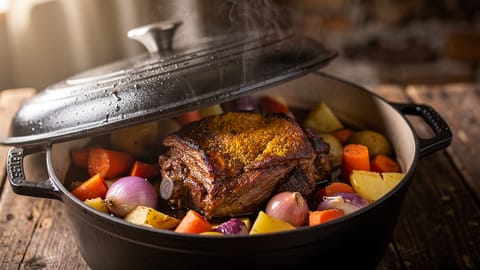
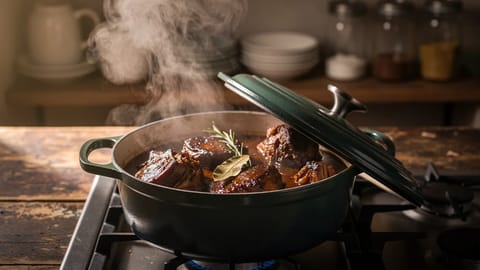
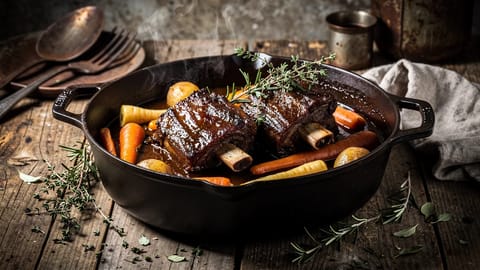
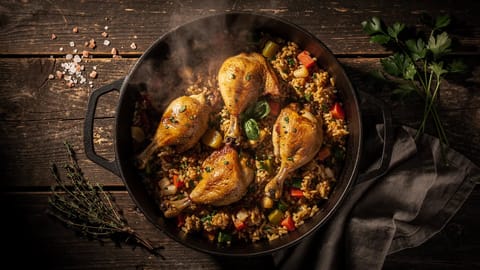
Braising. The classic Dutch oven cooking technique. Sear meat on the stovetop, add liquid, cover, and transfer to a low oven for hours. The heavy lid traps steam, keeping the environment moist while thick walls distribute heat evenly. Short ribs, pot roast, and coq au vin all happen in a Dutch oven. If you're looking for ideas, we have a full guide to how to braise meat that covers the technique in detail.
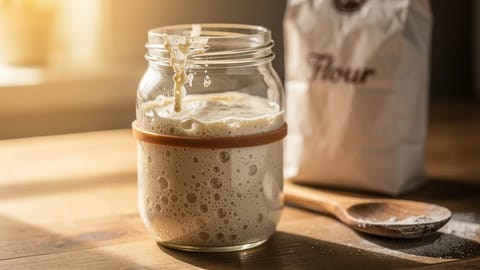
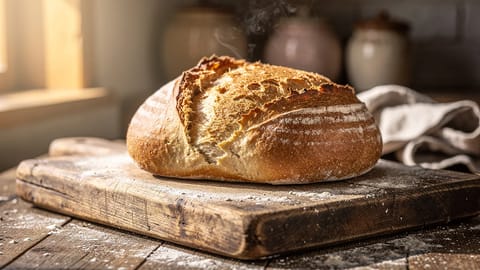
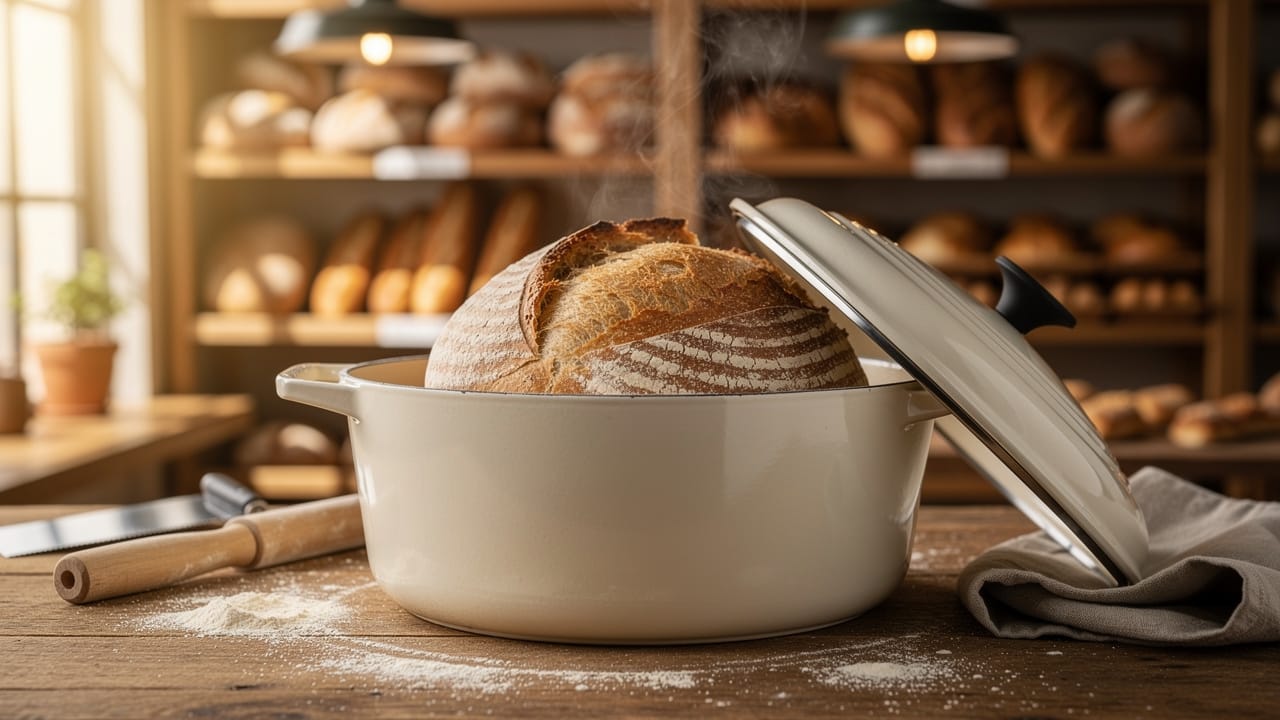
Bread baking. Preheating a Dutch oven and dropping dough inside creates a sealed, steam-filled environment that mimics a professional deck oven. The trapped moisture keeps the crust from setting too early, so the bread expands fully before the crust hardens. This is how most home bakers get artisan-quality sourdough with an open crumb and a shattering crust; the difference between Dutch oven bread and a loaf baked on a sheet is obvious on the first bake.
Soups, stews, and stock. Even heat prevents hot spots that scorch the bottom. The heavy construction holds temperature when you add cold ingredients. A Dutch oven simmers all day without fuss. See our one-pot meals guide for recipes that take advantage of this.
Deep frying. The thick cast iron walls maintain stable oil temperature better than thin-walled pots. When cold food hits the oil, a cast iron Dutch oven recovers heat quickly and evenly.
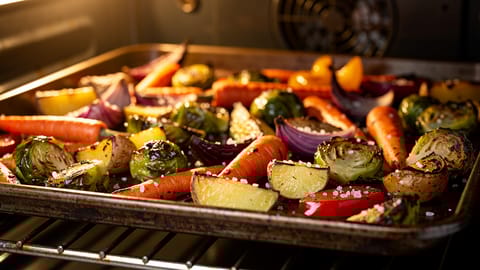
Roasting. With the lid off, a Dutch oven roasts vegetables, whole chickens, or casseroles. It works as an oven-within-an-oven, concentrating heat around the food.
For more cooking inspiration, check out our Dutch oven recipes collection.
What is a Dutch oven made of
Dutch ovens come in two main materials, each with trade-offs worth understanding.
Enameled cast iron is the most popular choice for home kitchens. A porcelain enamel coating covers the raw iron, creating a non-reactive surface that won't interact with acidic ingredients like tomatoes or wine. No seasoning required. Downsides: it's expensive, the enamel can chip if you drop it or use metal utensils, and the cooking surface isn't naturally nonstick.
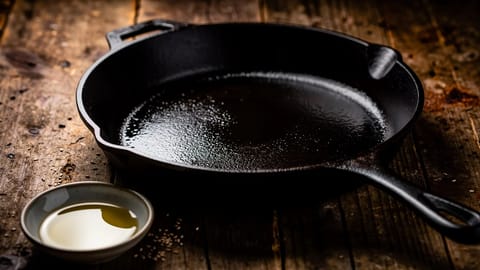
Bare (uncoated) cast iron is the traditional material. Less expensive, it develops a natural nonstick patina with seasoning and handles higher temperatures than enamel. The trade-off: it reacts with acidic foods, requires regular seasoning, and must be dried immediately to prevent rust.
A common split is enameled for braises and soups (no worrying about tomato sauce stripping seasoning) and bare cast iron for bread baking, where maximum heat matters more than a non-reactive surface. Lodge rates its enameled pots to 500°F (260°C) in the oven; bare cast iron seasoning only starts to break down well above that.
Dutch oven sizes
For most home cooks, a 5-6 qt Dutch oven covers nearly every task. If you buy one size, buy that one; a second, larger pot only earns its shelf space once you regularly cook for a crowd.
Dutch oven disadvantages
No piece of cookware is perfect. Here's what to consider before buying:
The weight is the biggest day-to-day issue. Moving a full Dutch oven from stovetop to oven takes two hands and some care. If lifting 12+ pounds is a concern, consider a 3.5 qt size or look at lighter enameled steel options (they don't retain heat as well, but they're half the weight).
Dutch oven substitutes
If you don't own a Dutch oven, these alternatives work in specific situations:
- Heavy-bottomed stockpot with lid works for soups, stews, and braising, but thinner walls don't retain heat as evenly
- Slow cooker handles low-and-slow cooking but can't sear or go in the oven
- Cast iron skillet with foil cover covers searing and short braises, but has no depth for stews
- Oven-safe stainless steel pot is lighter, works for braising but heats less evenly
None fully replaces a Dutch oven. The combination of stovetop-to-oven capability, heat retention, and a moisture-trapping lid is unique to this design.
Dutch oven care and cleaning
Hand wash with warm water and mild soap. Avoid the dishwasher since repeated cycles can dull the enamel.
For stuck food, fill with warm water and a tablespoon of baking soda, simmer for 10 minutes, then scrub gently. Never use metal utensils on the cooking surface; stick with wooden or silicone.
Avoid thermal shock: don't put a cold pot on a hot burner or run cold water over a hot pot. Let it cool naturally. Store with the lid slightly ajar for air circulation.
Wash with hot water immediately after use. A small amount of soap is fine and won't strip seasoning.
Dry completely and apply a thin layer of oil after every wash. Re-season periodically: coat with a thin layer of high smoke-point oil and bake upside down at 450°F (230°C) for one hour.
Never soak or leave wet. Rust starts quickly on unseasoned spots. If you see orange patches, scrub them off and re-season right away.
Dutch oven in Fond
Fond hasn't launched yet. This is how it will work at launch. Join the waitlist for early access.
Fond keeps the steps and timers of a recipe on screen in Cook mode, which suits long braises: set the timer for the oven stage and step away without watching the clock. Sort out the pot itself during mise en place, and browse the Dutch oven recipes collection for dishes built around it.