Pizza Dough FAQ
Quick answers to 25+ pizza dough questions. How long to let it rise, can you freeze it, what to do when it's too sticky, how to store it. Each answer leads with the "what to do" before the "why."
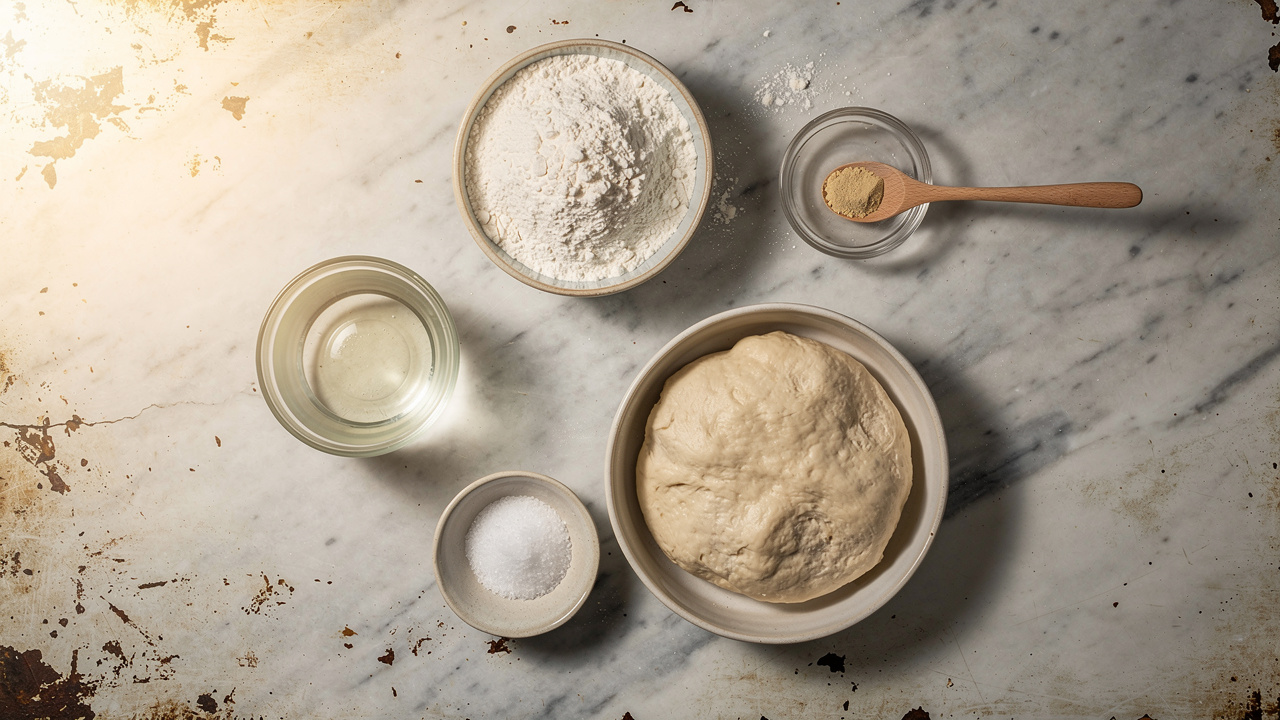
Every pizza dough question you've typed into a search bar, answered in one place. How long should it rise? Can you freeze it? Why is it so sticky? What flour should you use?
This page covers 25+ of the most common pizza dough questions — organized by topic so you can jump straight to what you need. Each answer leads with the practical "what to do" before explaining the "why" behind it. If you're just getting started, our beginner pizza dough guide walks you through the full process. If you already know the basics and want to dial in your recipe, use the pizza dough calculator to get exact measurements for any style.
Pizza dough rising & fermentation
How long should I let pizza dough rise?
It depends on yeast amount and temperature:
| Yeast (per 500g flour) | Temperature | Rise time | Flavor quality |
|---|---|---|---|
| 7g instant | Room temp (72°F / 22°C) | 1-2 hours | Mild |
| 3-5g instant | Room temp | 3-6 hours | Good |
| 1-2g instant | Fridge (38°F / 3°C) | 12-24 hours | Very good |
| 0.5g instant | Fridge | 24-72 hours | Excellent |
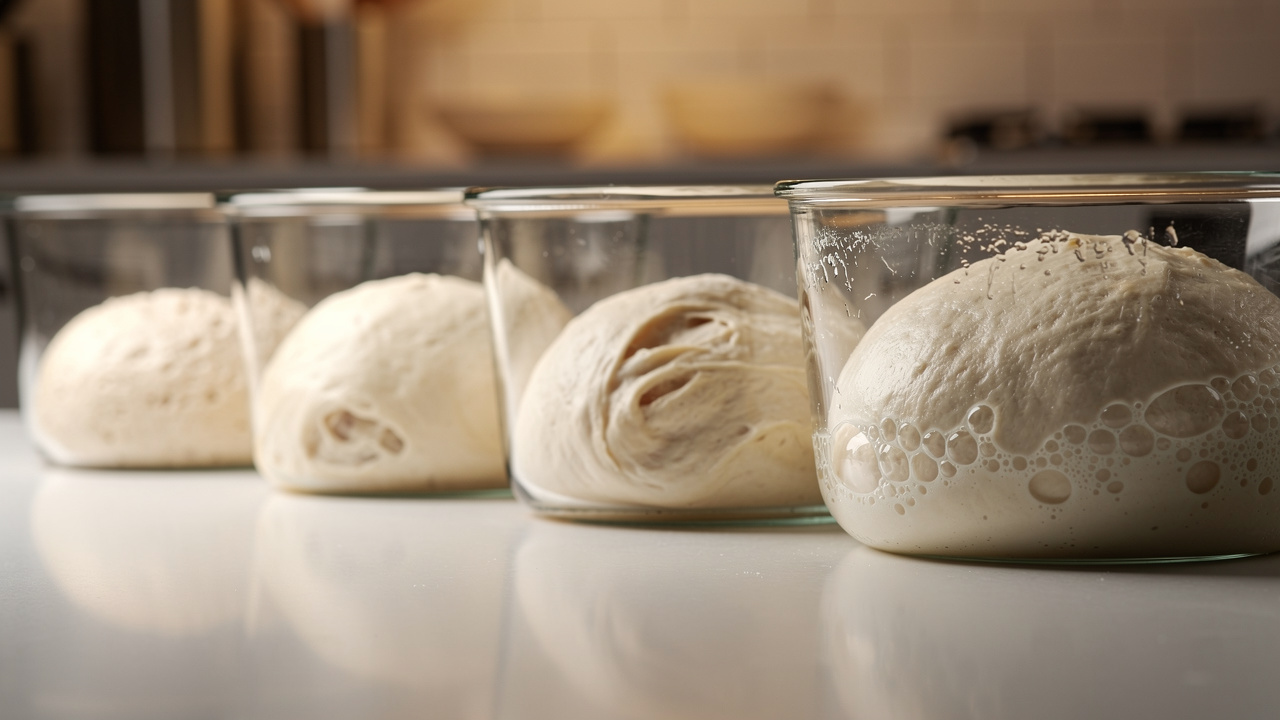
The dough is ready when it has roughly doubled in size and springs back slowly when you poke it with a floured finger. Less yeast + more time = better flavor. Slower fermentation gives enzymes time to break down starches into sugars and proteins into amino acids — the foundation of baker's percentage thinking.
Can pizza dough rise too long?
Yes. Over-proofed dough has used up its food supply (sugars) and weakened its gluten structure. Signs: the dough deflates when touched, smells strongly of alcohol, and won't hold its shape. At room temperature with standard yeast amounts, this usually happens after 4-6 hours.
The fix: If your dough is slightly over-proofed, punch it down, reshape into balls, and let it proof for 30-45 minutes. It won't be perfect, but it's salvageable. If it smells strongly of alcohol and is completely flat, it's too far gone. Start fresh.
In the fridge, dough can safely ferment for up to 72 hours with the right yeast amount (see our cold fermentation guide).
Can I let pizza dough rise overnight?
Yes, and it's one of the best methods. Use less yeast (1-2g instant per 500g flour) and refrigerate the dough. By morning you'll have well-fermented dough with noticeably better flavor. We recommend this for most home bakers. See our full overnight dough guide.
For a room temperature overnight rise (if your kitchen is cool, around 60-65°F / 15-18°C), use 1-2g instant yeast. In a warm kitchen, fridge is mandatory or the dough will over-proof.
Why didn't my pizza dough rise?
The most common causes, in order of likelihood:
- Dead yeast — test by sprinkling instant yeast into warm water (110°F / 43°C) with a pinch of sugar. It should foam within 10 minutes
- Water too hot — anything above 130°F (54°C) kills yeast. Use room temperature water to be safe
- Kitchen too cold — below 65°F (18°C), yeast works very slowly. Move the dough somewhere warmer (on top of the oven, or in an oven with just the light on)
- Salt touching yeast directly — always mix salt into flour first, or dissolve it in water
- Expired yeast — check the date. Store opened yeast in the freezer for the longest shelf life. King Arthur's yeast guide has a good primer on yeast types and storage
How do I know when pizza dough is done rising?
Three ways to check:
- Visual — the dough has roughly doubled in volume
- Poke test — press a floured finger about 1/2 inch into the dough. If the indent springs back slowly and partially, it's ready. If it springs back right away, it needs more time. If the indent stays put, it's over-proofed
- Jiggle test — gently shake the container. Well-proofed dough jiggles like jelly
Storing & freezing pizza dough
Can you freeze pizza dough?
Yes, and it works well. Pizza dough freezes for up to 3 months with minimal quality loss.
How to freeze:
- Make dough through the balling step
- Coat each ball lightly with olive oil
- Wrap tightly in plastic wrap
- Place in a freezer bag, squeeze out all air
- Label with date and weight
How to thaw:
Move to the fridge 8-12 hours before you need it, then let it come to room temperature for 1-2 hours before shaping.
Quality: Frozen-and-thawed dough is about 90% as good as fresh. You'll get slightly less oven spring and a slightly denser crumb. For weeknight pizza, that's a fair trade-off.
How long does pizza dough last in the fridge?
- High-yeast dough (5-7g per 500g flour): 24-48 hours max. After that, it over-proofs and the gluten breaks down
- Low-yeast dough (0.5-2g per 500g flour): 3-5 days. Made for cold fermentation
- No-yeast dough (baking powder): Use same day
Signs it's gone bad: strong alcohol smell, very slack and watery, gray discoloration, or visible mold.
Can I make pizza dough ahead of time?
Yes, and your pizza will be better for it. Dough made 1-3 days ahead (cold fermented in the fridge) has much more flavor than same-day dough. Most pizzerias actually prefer this method.
The overnight method is the easiest: mix before bed, refrigerate, bake the next day.
How to store leftover pizza dough?
Coat the dough ball with a thin layer of olive oil, place in an airtight container (or wrap in plastic), and refrigerate. Use within 48 hours for high-yeast dough, up to 5 days for low-yeast dough.
If you won't use it within those windows, freeze it instead.
Pizza dough texture & handling
Why is my pizza dough too sticky?
Usually it's fine. You just need more kneading time. Properly hydrated pizza dough (63%+) is supposed to feel tacky. Here's how to handle it:
- Keep kneading — stickiness drops a lot after 8-10 minutes as gluten develops
- Use wet hands — instead of adding flour (which changes the hydration ratio), wet your hands slightly
- Use a bench scraper — scrape the dough off the counter rather than pulling at it
- Only add flour as a last resort — 1 teaspoon at a time, max
If the dough is genuinely too wet (puddle-like, won't come together at all), you probably added too much water. Add flour 1 tablespoon at a time until it's workable.
For high-hydration dough (68%+) like no-knead, stickiness is normal. Use wet hands and work with confidence.
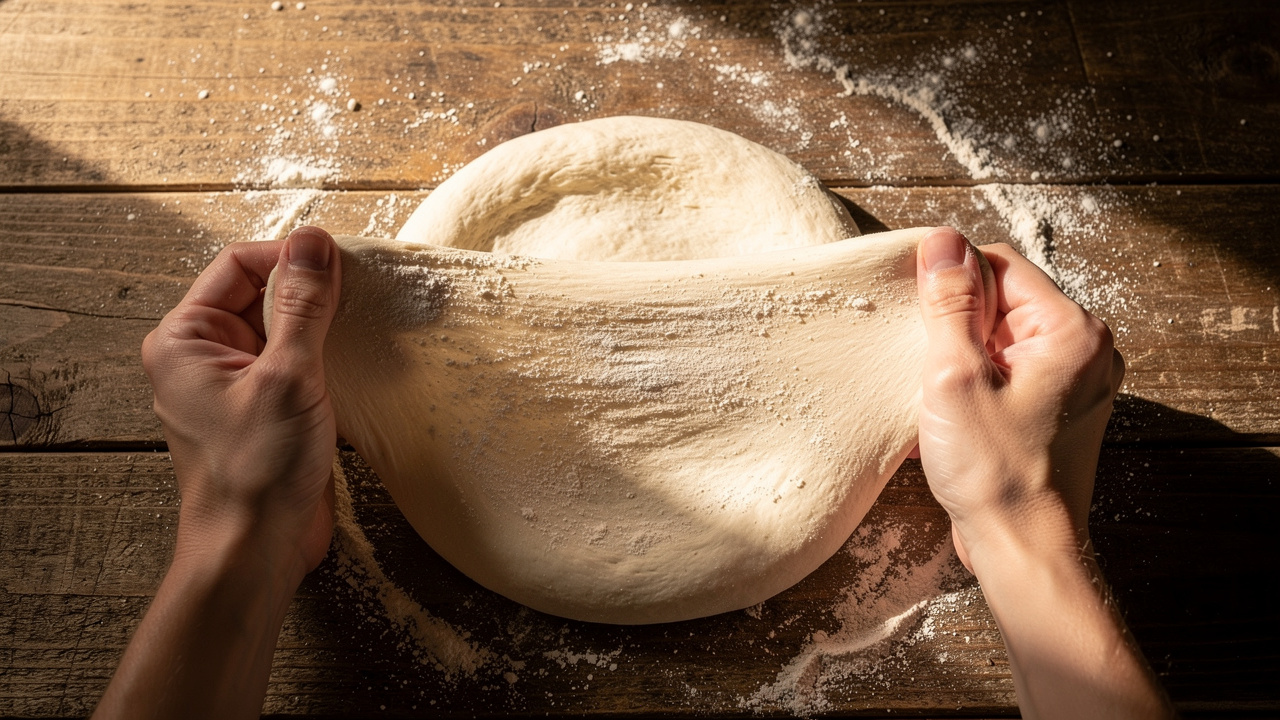
Why is my pizza dough too tough?
Three likely causes:
- Too much flour — the hydration is too low, making the dough tight and resistant. Next time, measure by weight
- Over-kneading — possible with a stand mixer (hard to do by hand). The dough gets tight and tears instead of stretching
- Not enough rest — gluten needs to relax. Let the dough sit 15-20 minutes before trying to stretch it
Quick fix: Walk away for 20 minutes. Cover the dough and let it rest. Gluten relaxes with time, and the dough will be much easier to work with.
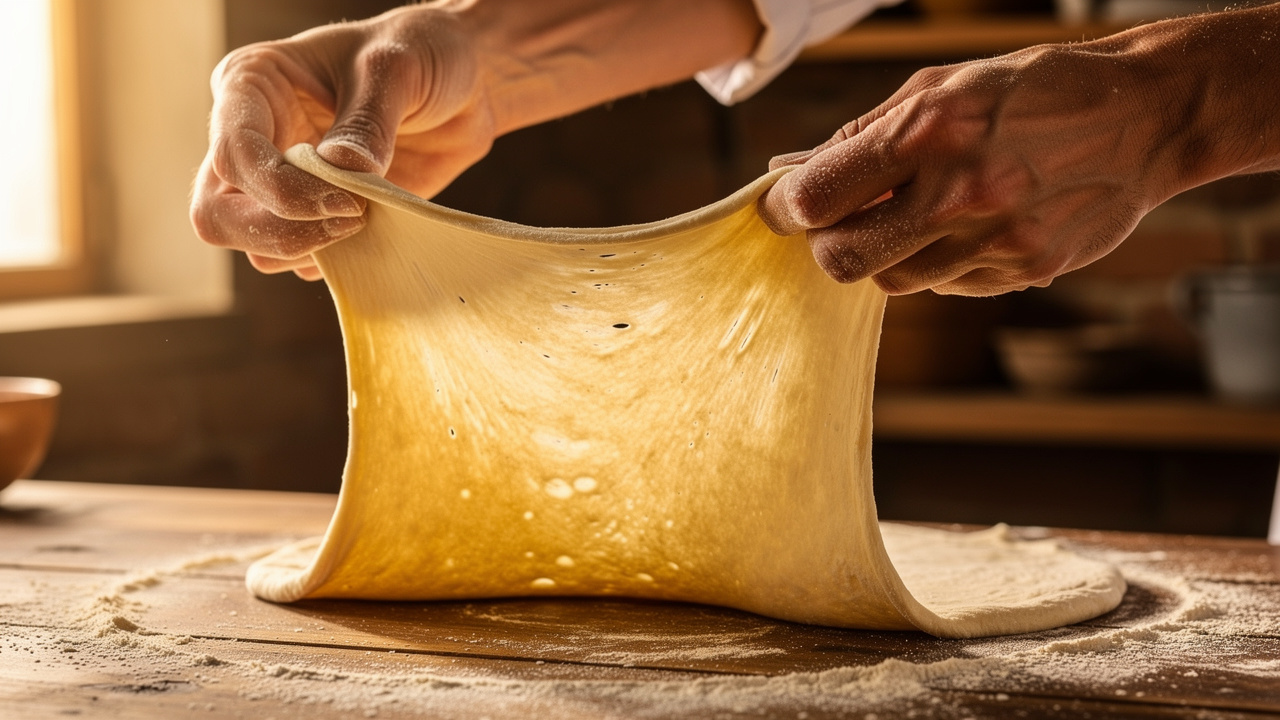
Why does my pizza dough tear when I stretch it?
- Not enough rest — cover it and wait 10-15 minutes
- Too cold — if it just came from the fridge, let it warm up for 1-2 hours
- Underdeveloped gluten — the dough wasn't kneaded long enough (or given enough time for no-knead methods)
- Pulling from the edges — stretch from the center outward using your knuckles, letting gravity help
- Over-proofed — the gluten has broken down. Reshape into a ball, let it rest 30 minutes, then try again
How thin should I stretch pizza dough?
It depends on the style:
| Style | Thickness | How to get there |
|---|---|---|
| Neapolitan | Paper-thin center, puffy rim | Stretch by hand only, leave 1" border |
| NY-style | Thin and foldable | Hand-stretch or roll thin |
| Detroit | 1/2 inch thick | Press into oiled pan |
| Home oven basic | 1/4 inch | Hand-stretch, don't obsess |
Don't worry about a perfect circle. Irregular shapes taste the same and honestly look better.
Pizza dough ingredients & ratios
What's the best flour for pizza dough?
For beginners: Bread flour (12-13% protein). Gives you a chewy, structured crust that's easy to handle.
For Neapolitan style: Italian Type 00 flour (Caputo Pizzeria or similar). Finely milled with moderate protein for a soft, tender crust.
For NY style: High-gluten flour (14%+ protein, like King Arthur Sir Lancelot). Maximum chew and structure.
For a softer crust: All-purpose flour (10-11% protein). Still makes good pizza, just less chewy.
See our flour guide for detailed comparisons.
How much yeast for pizza dough?
It depends on your timeline:
| Timeline | Instant yeast | Active dry yeast | Fresh yeast |
|---|---|---|---|
| 2-3 hours (same-day) | 5-7g | 5-7g | 10-15g |
| 6-8 hours (slow same-day) | 2-3g | 2-3g | 5-7g |
| 12-24 hours (overnight) | 1-2g | 1-2g | 3-5g |
| 24-48 hours (cold ferment) | 0.5-1g | 0.5-1g | 1.5-3g |
| 48-72 hours (cold ferment) | 0.3-0.5g | 0.3-0.5g | 1-2g |
All amounts are per 500g flour. Less yeast + more time = more flavor.
What hydration should I use?
| Hydration | Feel | Best for |
|---|---|---|
| 55-60% | Easy to handle, firm | Neapolitan (traditional), beginners |
| 60-65% | Slightly tacky, manageable | Beginner all-purpose, NY-style |
| 65-70% | Tacky, requires confidence | No-knead, lighter crusts |
| 70-80% | Very sticky, wet | Roman al taglio, Detroit |
| 80%+ | Batter-like | Focaccia, extreme hydration styles |
Start at 63% and work your way up. Every 5% increase noticeably changes how the dough handles and how the crust turns out. See our full hydration guide.
Do I need to add oil to pizza dough?
Depends on the style. Traditional Neapolitan uses no oil. NY-style and Detroit use 2-3% olive oil. Oil does a few things:
- Makes the dough slightly softer and easier to stretch
- Gives you a more tender crumb
- Helps the crust brown more evenly in home ovens
- Keeps the dough fresh longer
For beginners, 10-15g of olive oil per 500g flour is a nice touch but not required.
Do I need sugar in pizza dough?
No. Most good pizza dough uses no sugar at all. Flour already has enough starch for yeast to feed on, and fermentation produces its own sugars through enzyme activity.
Some NY-style recipes add 1-2% sugar to help browning in home ovens, which run cooler than commercial pizza ovens. It's optional and a matter of taste.
Baking
What temperature should I bake pizza at?
As hot as your oven goes. Most home ovens max out at 475-550°F (245-290°C). Preheat for at least 30 minutes with your baking surface inside.
| Oven type | Temperature | Bake time |
|---|---|---|
| Home oven (stone/steel) | 475-550°F (245-290°C) | 7-12 minutes |
| Home oven (broiler finish) | 500°F + broiler | 5-8 minutes |
| Pizza oven (Ooni, etc.) | 700-900°F (370-480°C) | 60-120 seconds |
Bottom line: higher temperature = better pizza. A pizza steel conducts heat faster than a stone and gets you closer to pizzeria results. Even an inverted baking sheet works if you preheat it properly.
Pizza steel vs pizza stone: which is better?
Pizza steel, for most home bakers. Steel conducts heat about 20x faster than ceramic stone, giving you a crispier bottom and better oven spring. It also never cracks, lasts forever, and doubles as a griddle.
Pizza stones work well too. They're cheaper and lighter. Just preheat for 45-60 minutes (vs 30 min for steel) and handle them carefully since they can crack with thermal shock.
See our full equipment guide for detailed comparisons.
Why is the bottom of my pizza burning?
Your baking surface is too hot compared to the air temperature above. Fixes:
- Move the stone/steel higher — put it on a higher rack so the top gets more heat
- Reduce preheat time — especially for steel, which holds heat aggressively
- Use parchment paper — adds a thin insulating layer between dough and the hot surface
- Check your pizza thickness — very thin dough cooks faster and burns more easily
Why is my pizza crust pale and soft?
Your oven isn't hot enough or your baking surface isn't fully preheated. Fixes:
- Max out your oven — use the highest temperature setting
- Preheat longer — 30 minutes minimum for steel, 45-60 for stone
- Use the broiler — switch to broil for the last 2-3 minutes to brown the top
- Try diastatic malt — 0.5% of flour weight helps browning at lower temperatures
- Try a pizza steel — transfers heat faster than stone for better browning
Methods & techniques
What's the easiest pizza dough method for beginners?
Our beginner pizza dough recipe. It's a simple same-day method with 2-3 hours total time. If even kneading feels daunting, try no-knead pizza dough: 5 minutes of mixing, then just wait.
What's the difference between pizza dough and bread dough?
They share the same basic ingredients but differ in ratios and handling:
| Factor | Pizza dough | Bread dough |
|---|---|---|
| Hydration | 58-70% typical | 65-80% typical |
| Fat | Optional (0-5%) | Optional (0-10%) |
| Sugar | Usually none | Often 2-5% |
| Kneading | Moderate | More thorough |
| Shaping | Flat disc | Shaped loaf |
| Baking | High heat, short time | Moderate heat, longer |
Can you use bread dough for pizza? Yes. You'll get a breadier, thicker crust. Can you use pizza dough for bread? Also yes. It makes great flatbread and focaccia.
Can I make pizza dough without a mixer?
Yes, and many experienced bakers prefer it. 8-10 minutes by hand produces dough just as good as a stand mixer. Hand-kneading also teaches you how the dough should feel, which helps you make better pizza over time.
If you don't want to knead at all, no-knead methods make great dough with no physical effort.
Can I use sourdough starter instead of yeast?
Yes. Sourdough pizza dough uses 15-20% sourdough starter instead of commercial yeast. The trade-off is longer fermentation (8-24+ hours) and a tangier flavor. A lot of people think sourdough pizza tastes the best. You can also go hybrid: sourdough discard plus a small amount of commercial yeast gives you sourdough flavor with a reliable rise.
Start making better pizza dough
Most pizza dough problems come down to three things: wrong hydration, wrong fermentation time, or wrong oven temperature. Now that you know what to adjust, the next step is getting your ratios right.
Use our pizza dough calculator to generate exact ingredient amounts for any style — Neapolitan, NY, Detroit, or your own custom recipe. Pick your style, set your number of dough balls, and the calculator handles the math.
If you're new to making pizza at home, start with our beginner pizza dough guide. For more in-depth reading on any topic covered here, browse the full pizza dough guide collection.
Frequently Asked Questions
With 7g instant yeast per 500g flour: 1-2 hours at room temperature. With 3-5g yeast: 3-6 hours. With 1-2g yeast in the fridge: 12-24 hours. The dough is ready when it has doubled in size and springs back slowly when poked. Less yeast and more time gives better flavor.
Yes, for up to 3 months. After dividing into balls, coat with olive oil, wrap in plastic, and freeze in airtight bags. Thaw in the fridge overnight (8-12 hours), then bring to room temperature for 1-2 hours before shaping. Quality is about 90% of fresh dough.
Properly hydrated pizza dough (63%+) is supposed to feel tacky — keep kneading for the full 8-10 minutes before judging. If still unworkable, add flour 1 teaspoon at a time. Use wet hands instead of extra flour when handling. For high-hydration dough (68%+), stickiness is completely normal.
As hot as your oven goes — typically 475-550°F (245-290°C) for home ovens. Preheat for at least 30 minutes with your pizza stone or steel inside. Higher temperature = better pizza. Use the broiler for the last 2-3 minutes to brown the top if needed.
For beginners: bread flour (12-13% protein) for a chewy, easy-to-handle crust. For Neapolitan: Italian Type 00 flour. For NY-style: high-gluten flour (14%+). All-purpose flour works in a pinch but gives a softer crust. Always measure flour by weight for consistency.