 Bastien
Kosher Salt
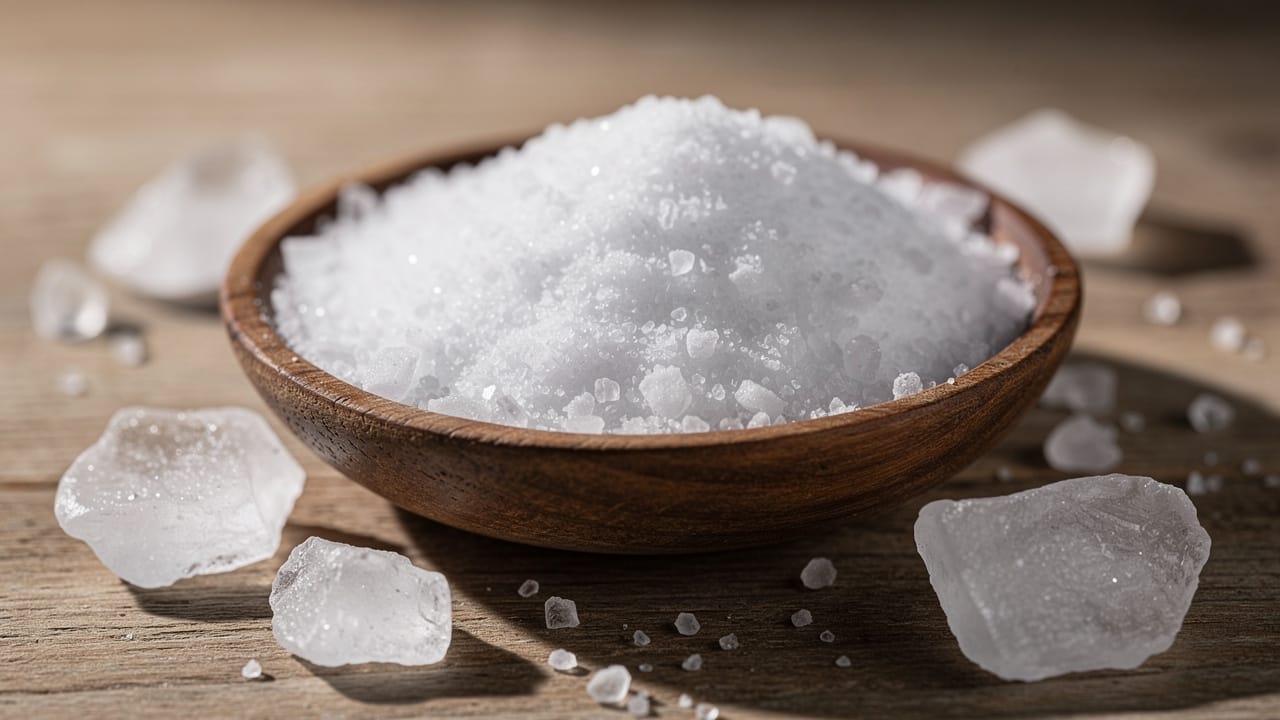
Kosher salt is a coarse-grained salt with large, flat crystals and no additives — preferred by chefs because it pinches easily, dissolves cleanly, and seasons more evenly than fine table salt.
Kosher salt is a coarse-grained salt with large, flat or hollow crystals and no added iodine. It is named for its traditional use in koshering meat, where the large crystals draw blood from the surface. Cooks prefer it because the flake size makes seasoning by hand more controllable than fine table salt.
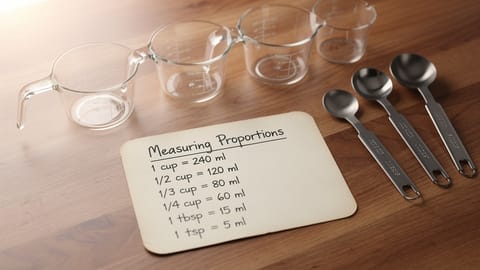
The salt itself is not necessarily certified kosher: "kosher salt" is short for "koshering salt". What sets it apart is crystal structure. The large, irregular flakes are easy to pinch, spread evenly across food, and dissolve without the faint metallic edge that iodized table salt can leave. The same structure is why kosher salt weighs less per teaspoon than table salt, which matters every time a recipe measures salt by volume. For recipes that measure salt by weight instead, see baker's percentages.
Why do chefs prefer kosher salt?
Professional cooks reach for kosher salt for practical reasons that affect every dish:
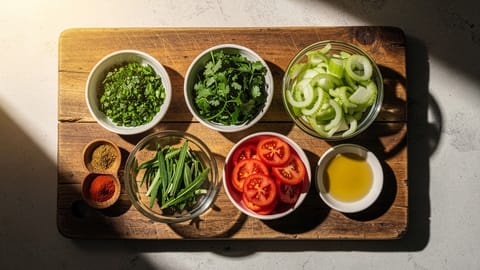
- Easy to pinch and control -- the large flakes sit between your fingers, letting you feel exactly how much you're adding. This tactile feedback is why mise en place setups almost always include a small bowl of kosher salt
- Even distribution -- flat crystals adhere to food surfaces better than fine granules, creating more uniform seasoning when searing meat or roasting vegetables
- No iodine -- kosher salt is not iodized, so it never carries the faint metallic note iodized salt can add to delicate dishes. Diamond Crystal has no additives at all; Morton adds a small amount of anti-caking agent
- Forgiving -- the larger crystal size makes it harder to accidentally over-salt. A pinch of kosher salt contains less sodium than the same pinch of table salt
- Dissolves cleanly -- no chalky residue or off-flavors from additives
Kosher salt vs table salt vs sea salt
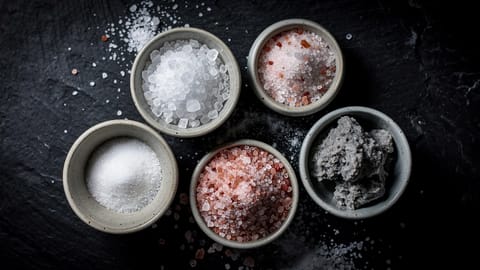
Sea salt falls between the two. Coarse sea salt works like kosher salt for cooking, while fine sea salt behaves more like table salt. Finishing salts (fleur de sel, Maldon) add texture and a mineral crunch to finished dishes but cost too much for everyday cooking.
When to use table salt instead: Baking recipes that call for salt by volume assume table salt's consistent density. Using kosher salt in baking without adjusting quantities can lead to under-seasoned results. For precise baking, a kitchen scale eliminates this problem entirely.
Diamond Crystal vs Morton: the conversion that matters
This is the most important thing to understand about kosher salt: the two dominant brands are not interchangeable by volume. They use different manufacturing processes that produce very different crystal structures.
Diamond Crystal uses a patented Alberger process that creates hollow, pyramid-shaped flakes. These flakes trap air, making the salt less dense by volume. Most professional kitchens and cookbook authors default to Diamond Crystal.
Morton uses a rolled process that creates flat, compact flakes. These pack more tightly, making Morton roughly 1.5-1.6x saltier than Diamond Crystal by volume.
How to convert between brands
- Recipe says Diamond Crystal, you have Morton: use about 2/3 the volume (or weigh it)
- Recipe says Morton, you have Diamond Crystal: use about 1.5x the volume (or weigh it)
- Recipe doesn't specify a brand: assume Diamond Crystal if the author is American. When in doubt, start with less and taste
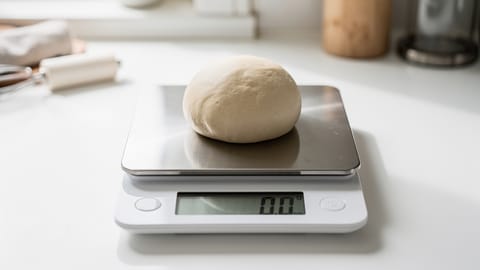
The safest approach is always to measure salt by weight. A kitchen scale removes all brand confusion.
How do you season with kosher salt?
Good seasoning is the single biggest difference between restaurant food and home cooking. These techniques apply whether you're searing a steak or roasting vegetables.
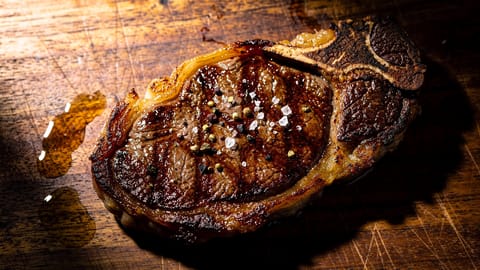
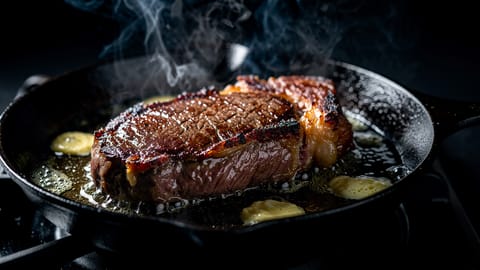
Season before searing. Salt meat 45 minutes to 24 hours before cooking. The salt initially draws moisture out, then the brine reabsorbs, seasoning the meat throughout and improving the Maillard reaction on the surface. A steak salted at least an hour ahead browns more evenly than one salted just before it hits the pan, because the surface has time to dry again.
What are the best kosher salt substitutes?
If you can't find kosher salt, here's what works:
- Coarse sea salt -- the closest substitute. Look for additive-free varieties with a similar flake size. Measure by weight for accuracy.
- Fine sea salt -- usable, but its density is closer to table salt. Use 1/2 the volume for Diamond Crystal, or 3/4 the volume for Morton.
- Table salt -- same ratios as fine sea salt: 1/2 the volume of Diamond Crystal, 3/4 the volume of Morton, or weigh to match. The flavor may have a slight metallic edge from iodine.
- Fleur de sel / Maldon -- too expensive for cooking, but fine in a pinch. Their flake structure is similar to kosher salt.
Outside the US, kosher salt is less common in stores. Coarse, additive-free sea salt is the standard substitute in most European and Latin American kitchens, and it behaves the same way in the hand.
Kosher salt in baking
Baking is the one area where salt type genuinely matters for accuracy. Most baking recipes assume table salt unless they specify otherwise, because its fine, uniform crystals measure consistently by volume.
If a baking recipe calls for "1 tsp salt" without specifying type:
- Use 1 tsp table salt (what the recipe likely means)
- Or 1.5 tsp Morton kosher salt
- Or 2 tsp Diamond Crystal kosher salt
- Or just weigh 6g of whatever salt you have
For bread baking specifically, salt is usually calculated as a baker's percentage of flour weight, typically 1.8-2.2%. At that level of precision, weighing salt is the only reliable method.
Storing kosher salt
Kosher salt doesn't expire and doesn't need special storage. Keep it in a small, open bowl or a salt cellar near the stove for easy access during cooking. The open container makes pinching fast and natural.
Avoid storing kosher salt in a salt grinder. The crystals are already the right size for cooking. Grinding them defeats the purpose.
If your kosher salt clumps in humid conditions, break it apart with your fingers. Unlike table salt, it contains no anti-caking agents, so minor clumping is normal and harmless.
Kosher salt in Fond
Fond hasn't launched yet. This is how it will work at launch. Join the waitlist for early access.
When a recipe in Fond specifies salt, the ingredient list distinguishes between kosher salt and table salt. Fond's recipe scaling adjusts salt quantities by weight, so you get accurate amounts regardless of which brand of kosher salt you use.