 Bastien
Beurre blanc
Beurre blanc is a warm French butter emulsion: a reduction of shallot, white wine and vinegar with about 225 g of cold butter whisked in. It tastes of butter sharpened by acid, holds between 50 and 60°C, breaks above about 70°C, and is not a mother sauce.
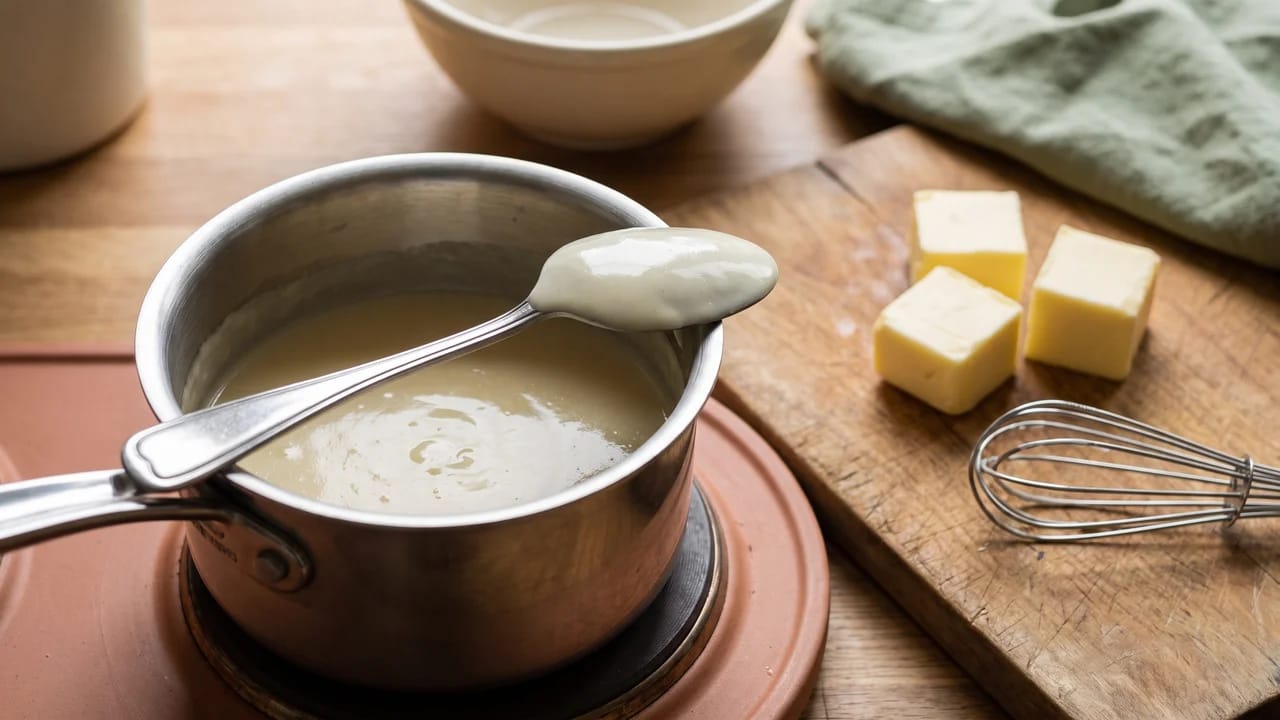
Beurre blanc is a warm emulsified butter sauce from the Loire Valley: a sharp reduction of shallots, dry white wine, and white wine vinegar, with cold butter whisked in cube by cube until it becomes a pale, silky sauce. The name means "white butter", and it's the classic partner for fish. It tastes of butter sharpened by acid, holds between 50 and 60°C, and is not one of the French mother sauces.
Legend credits it to a mistake. According to the story recorded on French Wikipedia, around 1890 the cook Clémence Lefeuvre, working at a riverside inn in Saint-Julien-de-Concelles upstream of Nantes, set out to make a béarnaise for a Loire pike and forgot the egg yolks and tarragon; locals still call it "beurre raté", the failed butter. The same article points out that a nearly identical "sauce blanche" already appears in a 1643 French cookbook, so the Nantes story is better read as the moment the sauce got its name and its fame.
What does beurre blanc taste like?
Like butter with a backbone. The reduction of wine and vinegar cuts the fat with a bright, almost lemony acidity, and the shallot leaves a soft cooked-onion sweetness underneath. Texture does half the work: it coats a spoon more than melted butter does, but it is lighter and more fluid than hollandaise. With no egg yolk in it, the flavor stays clean and sharp rather than rich and custardy, which is why it suits delicate fish instead of overwhelming it.
How do you make beurre blanc step by step?
The rhythm matters more than the recipe. Each wave of cold butter cools the sauce slightly, buying you margin before the next. Tip in half the butter at once and it slides into oil; cubes, patience and a whisk are the whole technique. Traditional recipes from Nantes use lightly salted butter and, per French Wikipedia, keep the pan below about 65°C; straining the shallots out at the end is what some cooks call beurre nantais.
Why does beurre blanc work?
Butter is already an emulsion of about 80% fat, 16% water, and a few percent of milk solids. Whisking cold butter into the warm, acidic reduction breaks that fat into microscopic droplets and suspends them in the reduction's water, held apart by butter's own emulsifiers (casein proteins and phospholipids). The result is thicker and creamier than melted butter because the fat is dispersed, not pooled: the same emulsification trick as mayonnaise, minus the egg.
The acid does two jobs: flavor, and lowering the pH, which helps the casein do its work. That's why the reduction is aggressive (wine and vinegar) instead of gentle.
What temperature does beurre blanc break at?
Above roughly 70°C the emulsion collapses: the fat droplets melt fully, merge, and float free as an oily slick. Below about 30°C the butterfat starts crystallizing and the sauce stiffens, then splits when reheated carelessly. The working band is 50-60°C, warm enough to stay liquid, cool enough to stay bound.
If it breaks hot, pull the pan, add a tablespoon of cold water or cream, and whisk hard; the emulsion usually reforms around the new water. If that fails, start a fresh tablespoon of reduction or cream in a clean pan and whisk the broken sauce into it gradually, as you would rescue a mayonnaise.
Can you reheat beurre blanc?
Holding it, yes; reheating it from cold, mostly no. A finished sauce keeps for an hour or two at 50-60°C in a warm spot on the stove, in a thermos, or over a pan of barely steaming water, whisked now and then. In the fridge it sets into a firm shallot butter, and putting that straight into a hot pan melts the fat out of the emulsion.
The workaround is to rebuild rather than reheat: warm a tablespoon of water or cream over the lowest heat and whisk in the cold sauce a small piece at a time, exactly like the rescue for a broken batch. If you would rather not fuss, treat leftover beurre blanc as a compound butter and melt it over steamed vegetables or potatoes, where splitting doesn't matter.
Beurre blanc vs hollandaise vs béarnaise
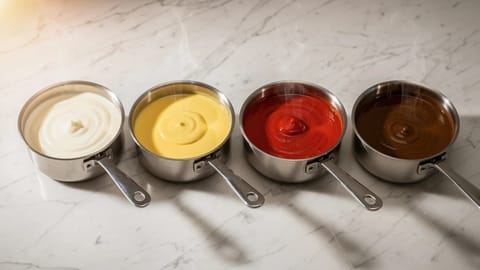
All three are warm butter sauces; the emulsifier and the flavoring set them apart.
Béarnaise is the sauce beurre blanc was supposedly meant to be in the Nantes legend: the same shallot-vinegar reduction, but finished with yolks and tarragon. Skip the yolks and you have the lighter sauce.
Is beurre blanc a mother sauce?
No. The five French mother sauces (béchamel, velouté, espagnole, tomate, hollandaise) are bases that generate families of derivatives. Beurre blanc stands apart: no roux, no stock, no egg. Its closest relative on the family tree is hollandaise, the other warm butter emulsion, but hollandaise is built on egg yolks while beurre blanc relies on butter's own emulsifiers, which makes it both quicker and more fragile.
It has its own small family, though. Swap the white wine and vinegar for red and you get beurre rouge; add citrus juice to the reduction for a lemon or citrus beurre blanc; finish with fresh herbs, saffron, or vanilla and the sauce carries them all.
What do you serve beurre blanc with?
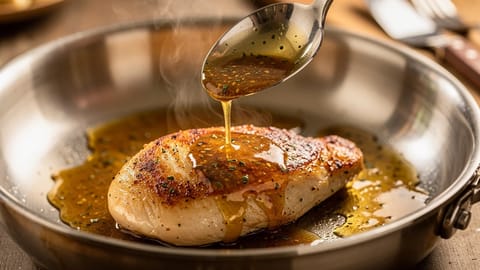
Its birthplace answer is Loire river fish, pike above all. The modern answer is nearly any delicate protein: salmon, sole, halibut, scallops, lobster, even poached chicken. It is the ten-minute upgrade that makes a plain steamed fillet read as a restaurant plate. Vegetables love it too; asparagus, leeks, fennel, and steamed potatoes are the standards.
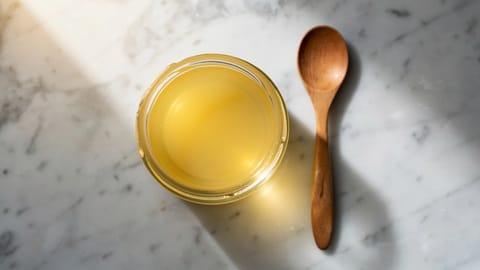
The rule is subtlety pairing with subtlety. A sauce built from butter and bright acid gets erased next to braised beef or heavy spice. It's the opposite instinct from a pan sauce, which is built to stand up to seared meat; beurre blanc is finesse, not force. And unlike clarified butter, which strips the milk solids out for high heat, beurre blanc keeps every one of them for texture.
When does beurre blanc go wrong?
Three failure modes cover almost every ruined batch, and each one has a fix:
It went above 70°C. Pull the pan, whisk a tablespoon of cold water or cream in a clean corner of the pan (or a fresh pan), and whisk the broken sauce back into it a spoonful at a time. The emulsion usually rebuilds.
Either the reduction wasn't concentrated enough or the butter went in too fast over heat that's too high, melting instead of emulsifying. Reduce a splash more wine and vinegar in a separate pan and whisk the thin sauce into it off the heat.
The reduction was under-reduced (raw alcohol and acid remain) or the wine was poor. Simmer the base until it's nearly syrupy before any butter goes in, and use a wine you'd drink. A pinch of sugar can patch a batch that's already made.
In Fond's cook mode, the low-heat hold steps run on timers, which is exactly the babysitting this sauce wants.