 Bastien
Broiling
Broiling cooks food with intense direct heat from an oven broiler, usually from above, to brown or crisp the exposed surface quickly.
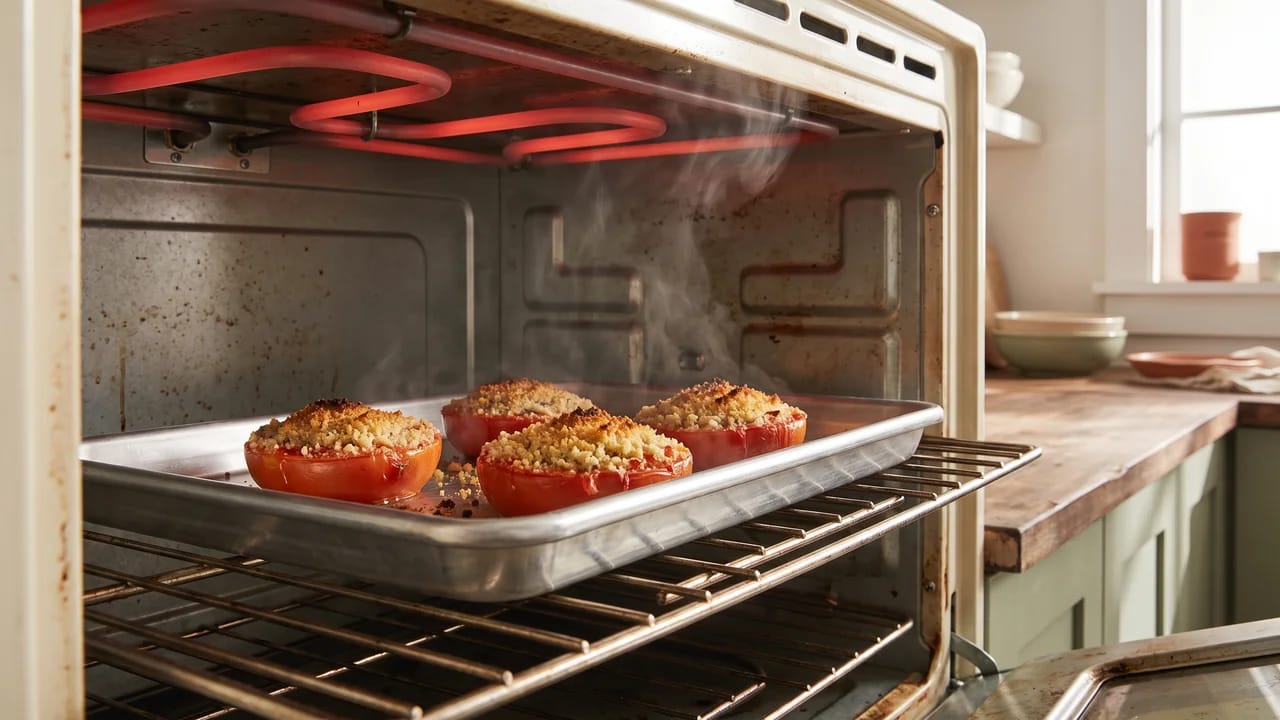
Broiling is an oven method that exposes one side of food to intense direct heat so the surface browns or crisps quickly. In most electric ovens the broiler is at the top of the main cavity. Some gas ranges put it in a drawer below the oven, so check the appliance manual before moving the rack or choosing a pan.
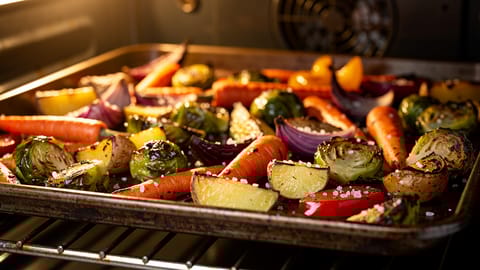
Broiling works well for melting and browning cheese, blistering vegetables, toasting bread, and cooking or finishing relatively thin foods. It is fast and concentrated. Stay close.
What does broiling mean in an oven?
Broiling means cooking close to an oven's broiler element or burner. Whirlpool's broiling guide describes it as high, direct heat applied to one side of the food. That makes broiling different from ordinary baking, which heats the oven cavity more evenly.
The exposed surface heats first. As it dries and gets hot enough, browning reactions such as the Maillard reaction and caramelization can change its color and flavor. The center may lag behind, which is why broiling is easier to control on thin food or as a finishing step.
The word can also refer to the appliance part. An electric oven usually has a visible upper element. A gas range may have an overhead burner or a separate broiler drawer. If the control says "broil" but no upper element is visible, the manual will show where the broiler is.
Is broiling the same as grilling?
Broiling and grilling both use direct radiant heat. The main difference is direction: an oven broiler usually heats from above, while a grill heats from below.
They are not interchangeable in every recipe. A broiler does not reproduce smoke from charcoal or drippings, and its usable area may be smaller. It can still give thin food fast surface browning when an outdoor grill is not practical.
What is the difference between broiling and baking?
Baking cooks with heat distributed through the oven cavity. Broiling concentrates high heat near one surface. Baking is better when a dish needs time to cook through; broiling is better when the top needs color or a thin item can finish before the exterior burns.
Setting an oven to a high baking temperature is not the same as broiling. The active elements, airflow, and distance from the heat source differ. Use the mode named in the recipe unless the recipe explains an alternative.
How do you broil in the oven?
Start with the oven manual. Door position, preheating, broil levels, rack limits, and approved cookware vary by model.
Rack position changes the rate of browning. Food closer to the broiler browns faster; moving it farther away gives the center more time. KitchenAid's broiling guidance recommends testing rack positions and notes that a high position can sear the outside before the inside is done.
Warning: Do not leave the oven door open by default. Some ovens require a closed door and switch the broiler off when it opens. Use the position stated in your model's manual.
How long does broiling take?
There is no dependable universal broiling time. Broiler output, rack position, food thickness, starting temperature, and the pan all change the result. A recipe time is a checkpoint, not proof of doneness.
Use the finish cue that matches the job:
| Task | Useful finish cue |
|---|---|
| Brown a cheese topping | Melted, bubbling, and spotted with brown |
| Toast bread | Dry, crisp surface with the color you want |
| Blister vegetables | Dark patches plus the tenderness required by the recipe |
| Finish a cooked dish | Even surface browning without scorching the edges |
| Cook meat or fish | Desired browning plus a safe internal temperature |
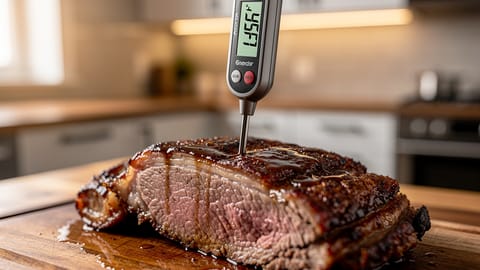
For meat and seafood, including poultry, appearance alone does not establish food safety. Check the thickest part with an instant-read thermometer and use the applicable value in the FoodSafety.gov temperature chart.
What should you not broil?
Avoid using the broiler as the only method for a thick food that will burn outside before it cooks through. Roasting first and broiling briefly at the end is often easier to control. Add sugary glazes late because the exposed sugar can darken faster than the food cooks.
Only use cookware that its maker rates for broiling. Do not assume glass, coated pans, parchment, silicone mats, or a favorite baking dish can tolerate direct broiler heat. The pan and oven instructions take priority.
What are common broiling mistakes?
The food was too close to the heat, too thick for the selected setting, or left too long between checks. Lower the rack or use baking or roasting for most of the cooking, then broil to finish.
The surface may be wet, the pan may be too far from the active element, or the broiler may be cycling normally. Dry the surface when the recipe permits, confirm the correct mode, and adjust one rack level at a time.
That can be normal for the appliance. Close the door and follow the manual instead of trying to defeat the door switch.
Broilers have hotter and cooler zones. Center the pan, then rotate it if the manual and recipe allow.
Broiling in Fond
Fond hasn't launched yet. This is how it will work at launch. Join the waitlist for early access.
Fond's cook mode keeps the current recipe step visible and exposes a timer when the recipe includes one. For a broiling step, the recipe and the oven manual still decide the rack position, door position, broil level, and doneness cue.