 Bastien
Medium Rare
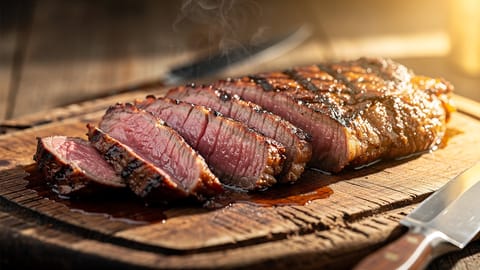
Medium rare is a steak doneness cooked to an internal temperature of 130-135°F (54-57°C): a warm red-pink center, juicy texture, and the doneness most steakhouses and chefs treat as the default.
Medium rare is a steak doneness cooked to an internal temperature of 130-135°F (54-57°C), giving a warm red-pink center, a thin browned crust, and a juicy, tender bite. It sits one step up from rare and one below medium, and it's the doneness most steakhouses, butchers, and chefs treat as the default for a good cut.
The reason it's the reference point is texture. At 130-135°F the muscle proteins have firmed up enough to lose that raw, slippery feel, but not so much that they've squeezed out their moisture. Push past 140°F and the meat starts drying out fast. A steak pulled at 54°C and one pulled at 60°C are different foods: one is silky and pink, the other grey and chewing toward leather.
What temperature is medium rare?
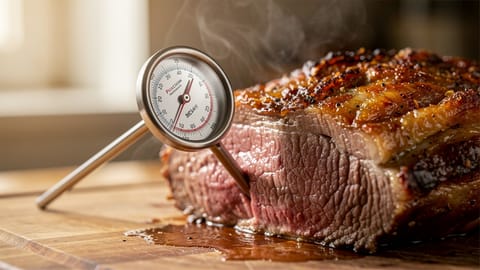
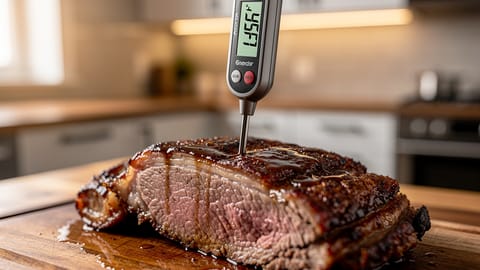
Medium rare is 130-135°F (54-57°C) measured at the thickest part of the steak with an instant-read thermometer. ThermoWorks lists it as 130-134°F, and most chefs aim for the lower half of that range because the steak keeps climbing after it leaves the pan.
That climb is carryover cooking. A thick steak can gain several degrees while it rests, so you pull it early. ThermoWorks suggests about 5-7°F ahead of your target: pull a steak at 128°F and it coasts up to around 132°F by the time you slice it.
Color is a useful cross-check but not a reliable one. A properly medium-rare steak is warm pink-red throughout, not the bright cherry-red of rare and not the faint pink of medium. Lighting, the cut, and even the animal's diet shift the color, so the thermometer always wins.
Is medium rare 135 or 145°F?
This is the most common confusion, and both numbers are right depending on who you ask. Food safety agencies publish 145°F (63°C) as the minimum for whole cuts of beef, with a rest afterward in the US guidance (Wikipedia); Health Canada's chart lists 63°C as "medium-rare" for whole cuts (Health Canada). Chefs and steakhouses serve medium rare at 130-135°F (54-57°C).
The gap exists because the agency number is a conservative safety floor, not a flavor target. For a whole, intact muscle like a steak, the risk lives almost entirely on the surface, and a hard sear destroys the bacteria there. The interior of an intact steak is essentially sterile to begin with.
Note: Ground beef is different. Bacteria get mixed throughout, so burgers need 160°F (71°C) all the way through. The 130-135°F range applies to whole, intact cuts only.
If you want both safety and texture, hold the steak at temperature instead of blasting past it. Pasteurization depends on time as well as temperature: a steak held at 54-55°C long enough (well over an hour for a typical thickness, per the tables in Douglas Baldwin's guide) is pasteurized while still medium rare. That is exactly what sous vide at 54°C does.
How is medium rare different from medium?
The practical difference is a few degrees and a noticeable jump in firmness and dryness. Medium rare stays juicy and red-pink; medium loses some of that, trading tenderness for a more uniform, less bloody look.
Fattier cuts like ribeye can take a touch more heat because the rendering fat keeps them moist, which is why some people prefer ribeye at the high end of medium rare or even medium. A lean filet, on the other hand, turns dry the moment it crosses into medium. Match the doneness to the cut.
What is the full steak doneness scale?
Every doneness level maps to a temperature window. Charts differ by a few degrees from one source to the next; these bands follow ThermoWorks, with the pull row added to account for carryover.
Note the two medium-rare rows: one is the pull temperature (when you take it off the heat) and one is the serving temperature (after the rest). The few degrees between them are carryover doing its job.
How do you cook a steak to medium rare?
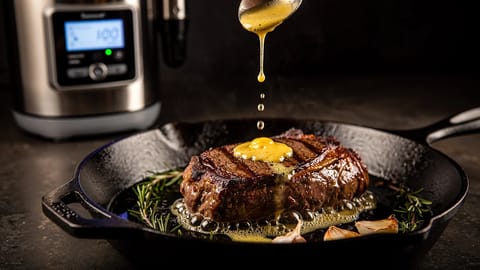
The reliable method is a hot sear plus a thermometer. Forget the finger-poke test until you've calibrated your hand against actual readings.
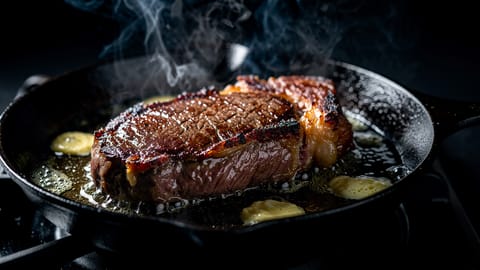
For thick steaks over 4 cm, use a two-stage method: a low oven (or the cool side of the grill) to bring the interior up gently, then a final blazing sear. This reverse-sear approach gives you edge-to-edge pink instead of a grey band under the crust. The hard sear at the end also drives the Maillard reaction, which is where most of a steak's roasted, savory flavor comes from.
Tip: Time-based steak charts ("3 minutes per side") only work if your steak, pan, and stove match the chart's assumptions. A thermometer works every time, and a basic instant-read model costs less than one good steak.
How long do you cook a medium rare steak?
Timing depends on thickness and heat, which is exactly why temperature beats the clock. As a rough starting point for a steak seared in a hot pan:
| Steak thickness | Per side (high heat) | Total to medium rare |
|---|---|---|
| 2 cm (0.75") | 2 min | ~4-5 min |
| 2.5 cm (1") | 2.5-3 min | ~5-6 min |
| 3.5 cm (1.5") | 3 min sear + finish in oven | ~8-10 min |
| 5 cm (2") | Reverse sear | ~25-40 min |
These are starting points, not gospel. A colder steak, a cooler pan, or a thicker cut all push the time up. Check with a thermometer at the low end of the range, then keep going if you need to. You can always cook a steak more; you can't uncook it.
Is medium rare steak safe to eat?
A medium rare whole-muscle steak is generally considered safe for healthy adults. The bacteria that cause foodborne illness live on the surface of intact cuts, and the high-heat sear that builds the crust also destroys them. The pink interior of a steak is not "raw" in any dangerous sense, even though it sits below the food danger zone ceiling of 60°C.
The picture changes for a few specific cases. Ground beef, mechanically tenderized steaks, and cuts that have been needled or injected have surface bacteria pushed into the interior, so they need higher temperatures. Pregnant people, young children, older adults, and anyone immunocompromised should follow the official minimum of 145°F (63°C).
If you want the chef's texture with full peace of mind, sous vide is the answer: holding a steak at 54°C for long enough pasteurizes it while keeping it medium rare. Time at temperature, not just peak temperature, determines safety.
What are the most common medium rare mistakes?
You're cooking to your target temperature instead of your pull temperature, or skipping the thermometer entirely. Pull at 125-130°F and let carryover cooking finish the job during the rest.
The pan was hot enough but the steak was thick. The outer layers overcook before the center catches up. Use a reverse sear: gentle oven heat first, then a fast sear at the end.
A wet surface or a pan that wasn't hot enough. Pat the steak bone-dry and let the pan get smoking before the steak goes in. Moisture is the enemy of browning.
You skipped the rest. Give the steak 5-10 minutes after cooking so the muscle fibers relax and reabsorb their juices. Cutting immediately dumps them on the board.
Tips for perfect medium rare every time
After resting, slice against the grain for the most tender bite, especially on cuts like flank or skirt where the muscle fibers run long. Cutting across those fibers shortens them and makes each piece easier to chew.
Tender cuts shine at medium rare: ribeye, strip, sirloin, tenderloin, and flank. Tougher braising cuts like chuck or brisket need long, slow cooking to break down connective tissue and aren't suited to quick medium-rare cooking. One special case: dry-aged steaks have lost water during aging and tend to cook faster than fresh ones, so start checking them earlier.
Medium rare in Fond
Fond hasn't launched yet. This is how it will work at launch. Join the waitlist for early access.
A steak recipe in Fond can carry the numbers that matter as part of its steps: the pull temperature, the sear time per side, and the rest. In Cook Mode, the sear and rest steps run their own timers from the step text, and the screen stays awake while your hands are busy. When you find the pull temperature that gives you the doneness you like for a particular cut, record it in the recipe's notes so the next steak starts from your number.