 Bastien
Levain
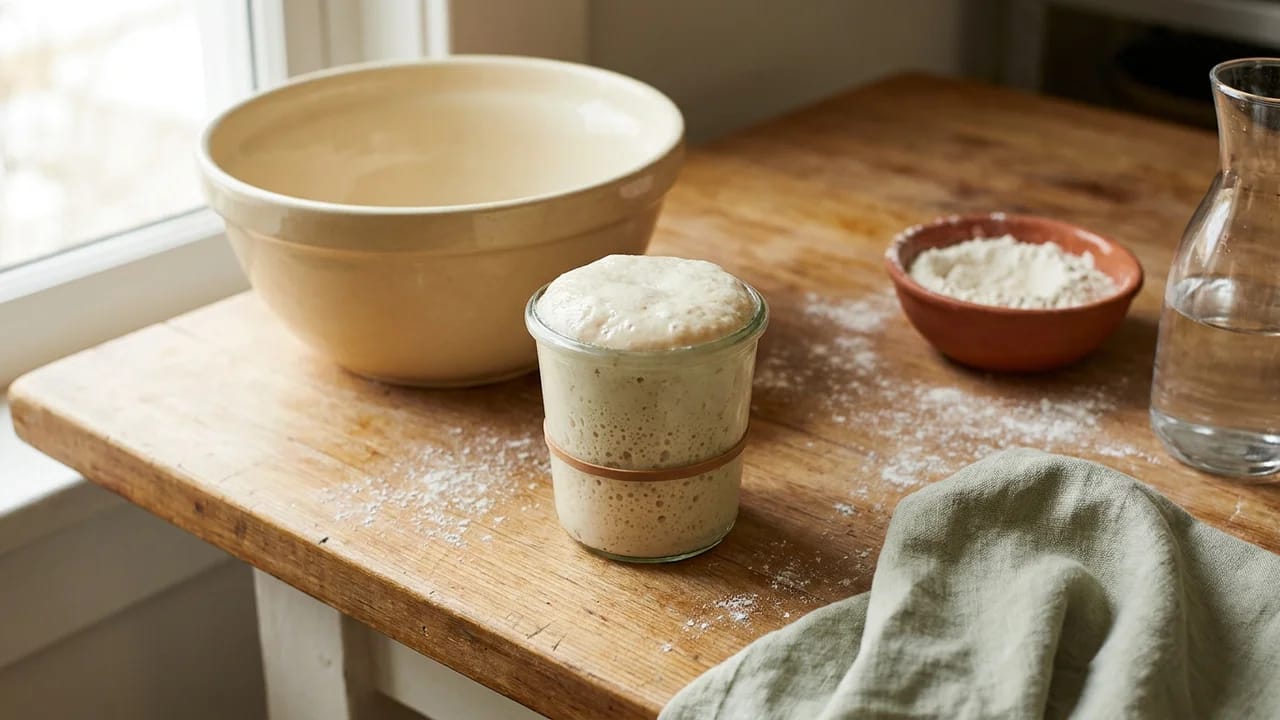
Levain is a naturally-leavened preferment built from a small amount of sourdough starter, flour, and water, mixed hours before baking to leaven a specific loaf of bread.
Levain is a naturally-leavened preferment, built from a small amount of sourdough starter, flour, and water, mixed a few hours before baking to leaven a specific loaf of bread. The word is French for "leaven," and it's pronounced luh-VAN. It's the engine that makes a sourdough loaf rise, using wild yeast and bacteria instead of commercial yeast.
The key idea is that a levain is a build, not the mother. You take a spoonful of your ongoing starter, feed it fresh flour and water, and let it ferment until bubbly and active, then use the whole thing in one bake. The mother stays in the fridge for next time.
The distinction matters in practice. A loaf built on a fresh, vigorous levain mixed the night before behaves very differently from one made by scooping straight from a sluggish fridge starter: same recipe, more predictable rise. Most inconsistent sourdough traces back to the leaven going in past its peak or before it.
What is levain in baking?
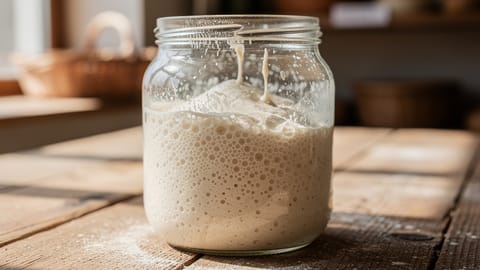
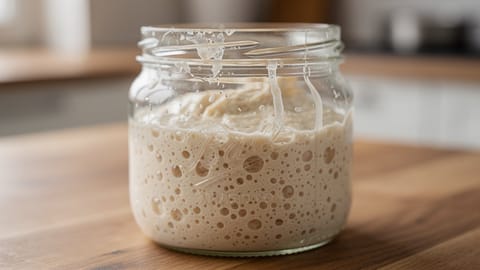
In baking, levain is an active sourdough preferment made by mixing a little of your established starter with fresh flour and water, then letting it ferment until it's full of bubbles and roughly doubled. You build it specifically for one recipe and use all of it in that bake.
The wild yeast in the levain produces carbon dioxide that makes bread rise, while lactic and acetic acid bacteria develop the tangy flavor and improve keeping quality. A well-built levain is the difference between a flat, dense sourdough and one with an open, airy crumb.
Bakers often adjust a levain's flour, hydration, or fermentation temperature to tune flavor. A stiffer, cooler levain leans sweeter and milder; a wetter, warmer one turns more sour, because warm, wet conditions favor the acid-producing bacteria.
What is the difference between levain and sourdough starter?
This is the most common confusion, and the distinction is build versus mother. Your sourdough starter (the "mother") is the colony you keep alive indefinitely with regular feedings. A levain is a portion of that starter, freshly built up for a single bake and used entirely.
In practice, you can bake straight from a ripe, well-fed starter and many people do. But building a dedicated levain lets you scale up the exact amount you need and tailor its flavor, without disturbing or depleting your mother. For a big bake, a levain is the cleaner approach.
How do you make a levain?
Building a levain is simple: combine starter, flour, and water, then wait. A common ratio is 1 part starter to 5 parts flour to 5 parts water by weight (1:5:5), though bakers vary it widely.
Timing depends on temperature and the ratio. A warm kitchen and a higher starter percentage ferment faster: a 1:1:1 build (equal weights of starter, flour, and water) ripens in about 3-4 hours at 25-26°C, while a 1:5:5 needs most of a night at room temperature. In the final dough, the levain usually accounts for somewhere between 6% and 30% of the flour weight, depending on the formula. The float test is the classic readiness check: drop a spoonful into water, and if it floats, the levain is full of gas and ready to leaven your bread flour dough.
Tip: Build your levain on a schedule that matches your bake. An overnight levain (built before bed, used in the morning) fits most home routines and gives the wild yeast plenty of time to get vigorous.
How is levain different from poolish and biga?
All three are preferments, but the leavening agent is the dividing line. A levain is leavened by wild yeast from a sourdough starter; poolish and biga are leavened by a pinch of commercial yeast.
| Preferment | Leavening | Hydration | Flavor |
|---|---|---|---|
| Levain | Wild yeast (sourdough) | Varies | Tangy, complex |
| Poolish | Commercial yeast | ~100% (liquid) | Mild, nutty |
| Biga | Commercial yeast | ~50% (stiff) | Mild, malty |
That difference shapes flavor and timing. Levain brings the sour, complex notes and long fermentation of true sourdough, while poolish and biga give a milder flavor boost in a shorter, more predictable window. For a deeper comparison of the yeasted preferments, see poolish vs biga.
What are common levain mistakes?
The levain wasn't ripe when you used it. Build it ahead and use it at peak, when it's domed, doubled, and floats. An under-fermented or collapsed levain has lost its leavening power.
Your levain over-fermented or was built too warm and wet. For a milder flavor, use the levain sooner, build it stiffer, or ferment it somewhere cooler to slow the acid-producing bacteria.
The mother starter was weak, or the room is too cold. Make sure your starter is active and recently fed before building, and give the levain a warmer spot (around 24-26°C) to ferment.
Use the float test: drop a small spoonful in water. If it floats, it's full of gas and ready. If it sinks, give it more time and check again.
Tips for using levain
Once you treat the levain as a fresh, purpose-built leaven rather than a scoop from the jar, your sourdough gets more reliable. It's the same principle behind any preferment: a healthy, active culture going into the dough is what drives a strong fermentation and a good rise.
Levain in Fond
Fond hasn't launched yet. This is how it will work at launch. Join the waitlist for early access.
Fond's cook mode schedules the levain build alongside the rest of a sourdough recipe, so you know when to mix it and when it should be ready. Timers account for the 4-12 hour ferment window, and recipes note the target ratio and the float-test cue so you use the levain at its peak.