 Bastien
Poolish vs biga: what each pre-ferment actually changes in your dough
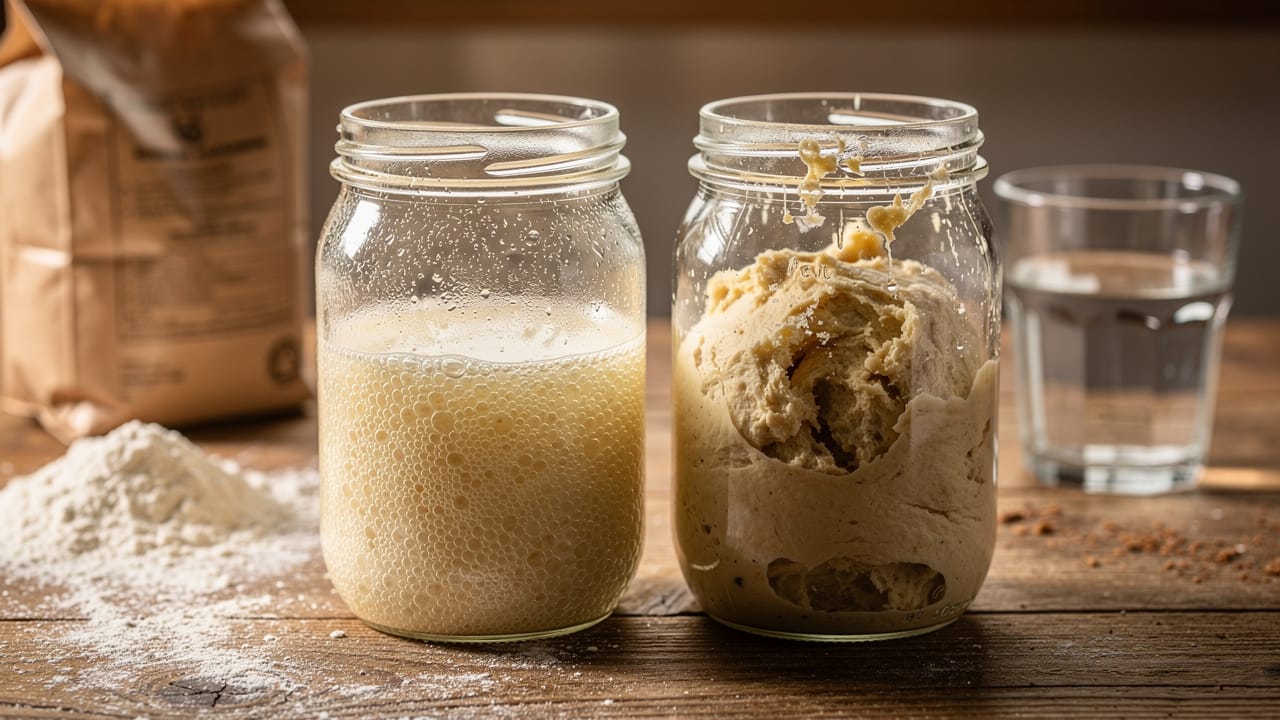
Poolish is the liquid one at 100% hydration, biga is the stiff one at roughly 50-60%. The handling difference is real and immediate. The flavor difference is smaller than the internet suggests once you account for the water each one brings.
TL;DR: Water is the whole difference. Poolish is liquid at 100% hydration, equal weights of flour and water, and it stirs into the final dough in seconds. Biga is stiff, usually quoted at 50-60%, and has to be torn up and worked in. That handling gap is real and you feel it the first time. The flavor gap is smaller than the internet suggests: when Modernist Bread baked the same bread from six pre-ferments between 50% and 100% hydration, holding the total dough hydration constant, the loaves came out nearly identical. Pick the one you find easier to handle, then subtract its flour and water from the final dough.
What a pre-ferment is, and the families it comes in
A pre-ferment is a portion of the recipe's flour, water and yeast mixed and left to ferment before the final dough is made. BAKERpedia describes what that head start buys you: gluten-forming proteins develop, the flour hydrates more fully, flavor and aroma compounds accumulate, and the lower pH extends the finished bread's shelf life.
Poolish and biga get all the attention in pizza, but they are two members of a larger family, and knowing the others makes the comparison easier to hold onto.
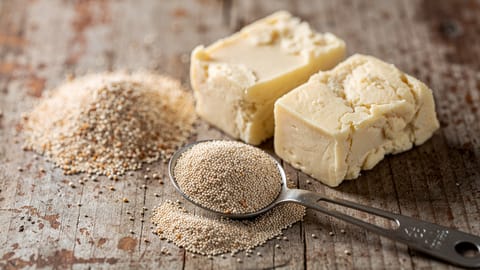
The first four all use commercial yeast, which is what separates them from a sourdough starter. You mix them once, use them, and mix a new one next time. No feeding schedule, no culture to keep alive, and results that repeat.
Poolish explained
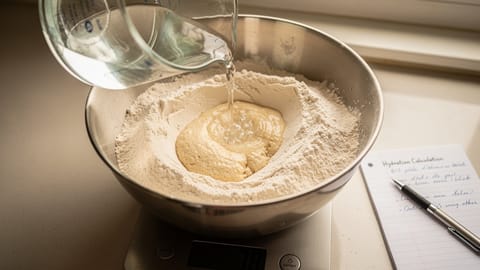
Poolish is the liquid one. Equal parts flour and water by weight, which is 100% hydration, plus a small amount of yeast. The texture is closer to pancake batter than dough. BAKERpedia traces it to Poland in the 1840s, from where Viennese bakers carried it into Austria and then to Paris, where it became the basis of French bread production.
Two things happen inside a poolish that matter for pizza. Proteases go to work on the flour's protein, which softens the dough and cuts the mixing time you need later. And as protein breaks down it releases amino acids, the raw material for the Maillard reactions that brown and flavor a crust.
The practical advantage is the one you notice immediately. Being liquid, poolish disperses into the final dough with barely any mixing, which matters for high-hydration styles where overworking damages the gluten network. You get the benefit of a long ferment without paying for it in mixer time.
Yeast dose and time are two ends of the same lever. BAKERpedia publishes the trade-off directly, measured on fresh (compressed) yeast as a baker's percentage of the poolish flour, at a dough temperature of 26-29°C (79-84°F):
For an overnight pizza schedule you want the bottom of that table, which is why home recipes call for yeast quantities that look like typos. A kitchen scale reading to 0.1g is genuinely useful here.
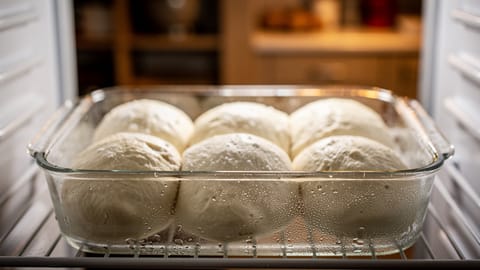
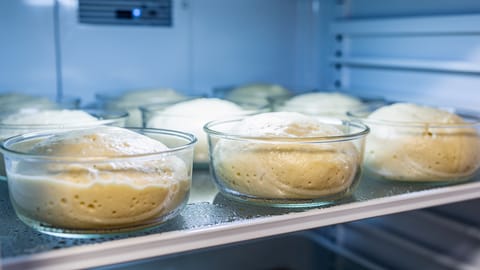
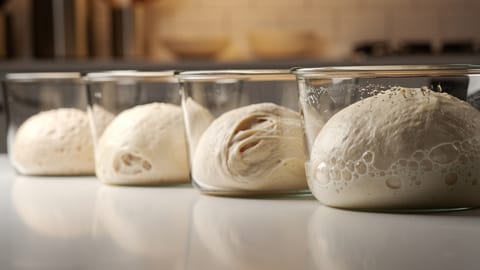
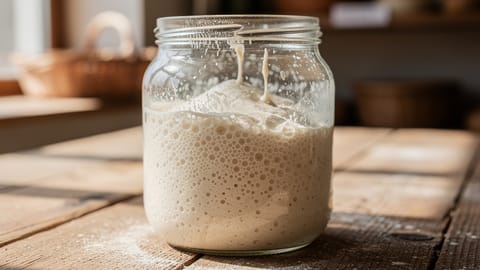
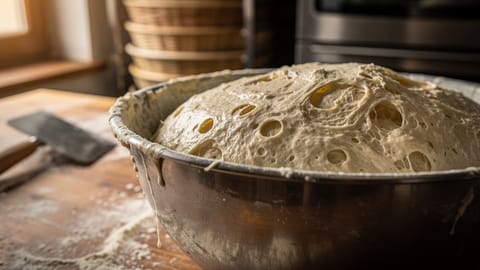
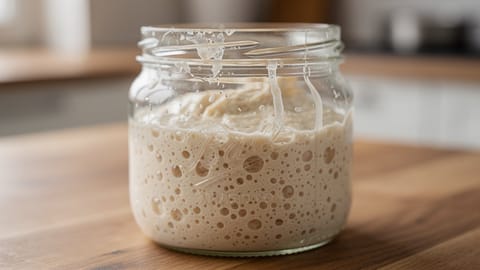
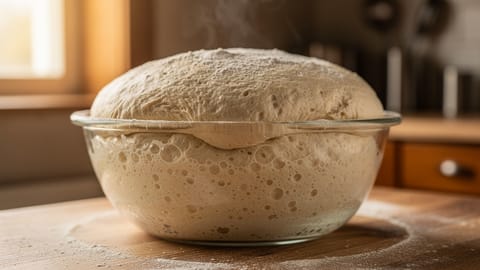
Ripe poolish is domed and has just started to fall back in the centre, with a wrinkled surface and bubbles across the top. It should smell sweet and fermented. Let it run well past that and you get the failure BAKERpedia warns about: the gluten breaks down, and acidity and alcohol climb past the point where the dough benefits.
Pizza styles that suit poolish
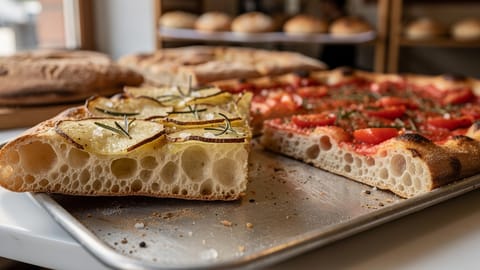
- Roman pizza al taglio, where the dough is wet and needs to stretch without fighting back
- High-hydration artisan styles generally
- Focaccia and flatbreads
- Any dough you plan to mix by hand
Biga explained
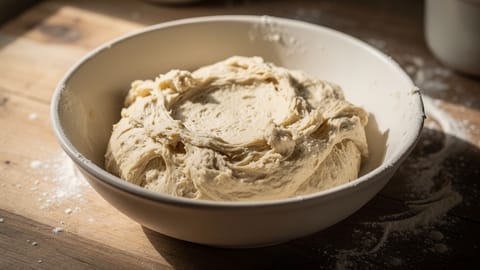
Biga is the stiff one. Same three ingredients, much less water, so it comes together as a shaggy, dry-looking dough rather than a batter. BAKERpedia puts it plainly: biga is to the Italians what poolish is to the French, made from flour, water and yeast with no salt in it.
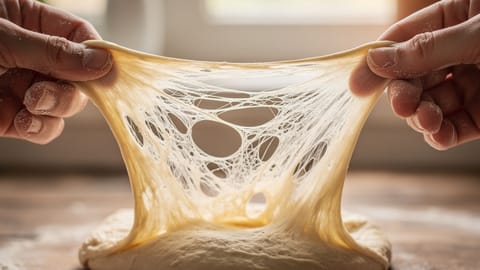
The mechanism is water availability. With so little free water, yeast cells move and metabolize more slowly, and they propagate more slowly too, which is what stretches the fermentation out and lets flavor accumulate. Meanwhile the stiff consistency pushes gluten development along, which is why biga's original purpose was to give dough strength rather than to add taste.
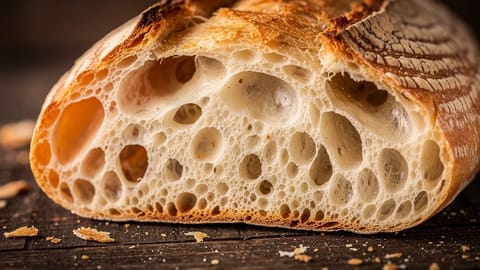
That strength is worth being precise about, because the usual shorthand, biga equals a tighter crumb, is only half right. BAKERpedia lists biga as a standard tool for breads that need a light, open crumb structure with plenty of cells, and gives ciabatta at 40% biga as the reference example. What biga actually supplies is strength, and what that strength does to the crumb depends on how wet the final dough is. In a very wet dough like ciabatta it holds the walls up around big irregular holes. In a leaner pizza base the same strength reads as a tighter crumb and more chew.
There is a real trade-off attached. BAKERpedia warns that pairing biga with a strong flour can cost you extensibility, and that if the dough starts fighting you, more water or an autolyse will bring the balance back.
Published windows for biga run from about 8 to 24 hours, which sounds like disagreement but is really the same trade-off in disguise: BAKERpedia's 8-16 hours assumes a controlled 15-20°C, while home schedules that quote 12-24 hours assume a colder corner and less yeast. Neither number is the instruction. The cue is.
Judging biga is harder than judging poolish because you cannot see much through the surface. The reliable cue is the same one BAKERpedia gives for the professional version: domed, and just beginning to recede in the centre. Tear a piece open and the interior should be full of cells and smell bready and nutty rather than sharply sour.
Pizza styles that suit biga
- Traditional Neapolitan pizza and contemporary Neapolitan variants
- New York-style pizza, where chew is the point
- Thick crust and pan pizzas
- Long cold schedules that need the dough to hold up
Poolish vs biga: side-by-side comparison
Most of the rows below describe how the two behave in your hands, which is where the difference is largest and least disputed. The flavor rows are the conventional description, and they are the ones worth reading with some skepticism.
How different are poolish and biga, really?
This is the part most comparisons skip, and it is the most useful thing on the page.
Modernist Bread noticed that baking books could not agree on what these words meant. One author's biga was another's poolish or sponge, and the hydration levels attached to each name ranged all over the place. So they ran the test: the same lean bread recipe, six different commercial-yeast pre-ferments from 50% to 100% hydration in 10% steps, with the water in the final dough adjusted each time so that every loaf ended up at 69% total hydration.
The loaves came out nearly identical. Any difference in taste was, in their words, exceedingly subtle.
What did differ was the work. Stiff pre-ferments are hard to distribute evenly through a dough; a 100% hydration poolish dissolves into the mixing water and disappears. That is the difference you will actually feel on a Saturday afternoon.
So take the flavor claims as directional rather than decisive. A pre-ferment of any kind will beat a straight dough on flavor. Which pre-ferment matters much less than whether you got the net hydration right and let it ripen properly. If you enjoy tearing up a stiff biga, do that. If you would rather pour something into a bowl, use poolish. Both will make better pizza than the same dough mixed straight.
When to use poolish vs biga
Choose poolish when the dough is wet and you want it to stay easy to handle. Anything above 70% hydration, anything you are mixing by hand, anything where you want to stretch a base thin without it snapping back. It also suits delicate toppings, since its flavor stays in the background.
Choose biga when you need the dough to hold up. Long cold schedules, thicker bases, pan pizzas, and any dough that has to sit for two or three days without going slack. The stronger, breadier flavor stands up to bold toppings rather than getting buried by them.
Can you use both? Some formulas do, splitting the pre-ferment between a small poolish and a small biga. It works, but you now have two containers to watch and two ripeness windows to hit, and given how small the flavor difference turned out to be in controlled testing, it is hard to argue the complexity pays for itself.
About the tiga. You will see "tiga" used for a biga run wetter than usual, around 70% hydration. It is community shorthand rather than a baking term, and Modernist Bread's finding is exactly why it exists: nobody ever agreed where biga stops and poolish starts, so people invented a word for the middle. A wetter biga is genuinely easier to mix in than a stiff one while still firm enough to build strength. Think of hydration as a dial from 50% to 100% and put your pre-ferment wherever suits your mixing method.
A note on the indirect method. Using a pre-ferment at all, the indirect method, suits nearly every pizza style. Neapolitan, New York, Roman and Sicilian doughs all benefit. Deep-dish, Detroit, St. Louis and Grandma-style pizzas are the styles where it earns least, because those crusts are meant to read as plain bread under the toppings and a long pre-ferment pulls them away from that.
How to make poolish for pizza dough
The recipe below is a 20% poolish, meaning a fifth of the total flour ferments overnight. Scale everything proportionally if your dough is bigger.
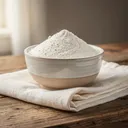 100gBread flour20% of total flour
 100gWatercool
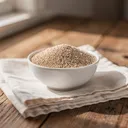 0.1gInstant yeastor 0.3g fresh
Use cool water, not warm. This runs against most people's instinct with yeast. Warm water gets you a fast rise and a flat taste, because the yeast races through the sugars before the flour's enzymes have done any of the slow work that makes a poolish worth the wait. Cool water buys you those hours.
Use a clear container. You can read the bubble structure from the side, which tells you far more than the top view does. Wet your hands with cold water before handling sticky starter and it will let go of you instead of climbing up your fingers.
Storage. Ripe poolish is best used shortly after it peaks. Once it has collapsed and gone flat, the gluten has started breaking down and the acidity and alcohol have climbed, which is BAKERpedia's warning about over-fermentation in practice. Refrigeration slows everything and buys you time; a strong solvent or vinegar smell means you have run past the point where it helps.
Cause: Room too cold, yeast inactive, or water was too hot (killed yeast).
Fix: Move to a warmer spot (22-24°C / 72-75°F). If no activity after 16 hours, start over with fresh yeast and cool, not hot, water.
Cause: Slightly over-fermented: the gluten network has weakened.
Fix: Still usable if it smells pleasant. Stir gently and use immediately. Next time, reduce fermentation by 2-3 hours or use less yeast.
Cause: Over-fermented well past peak.
Fix: Discard and start fresh. Reduce time or yeast in next batch. Consider cooler water or a cooler spot.
Cause: Yeast is dead (old packet or killed by hot water), or flour is heavily treated.
Fix: Test your yeast by dissolving a pinch in warm water with a bit of sugar: it should foam within 10 minutes. Use untreated bread flour.
How to make biga
Same 20% principle, half the water, and a cooler spot. If you can find somewhere that sits near 15-20°C (59-68°F), which is what BAKERpedia specifies, the timing below will behave. A warm kitchen will move faster, so watch the biga rather than the clock.
100gBread flour20% of total flour50-60gWatercool (15-18°C / 60-65°F)0.2gInstant yeastor 0.6g freshCool water here too, for the same reason. The low hydration is already slowing the yeast down; cool water keeps that slow pace steady rather than letting the biga sprint through the first few hours in a warm bowl.
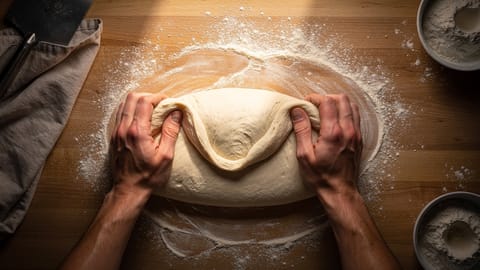
Cover it tightly. A biga has too little water to spare, and an exposed surface will skin over and crack. Plastic wrap pressed onto the surface works better than a loose lid.
Storage. A ripe biga tolerates the fridge well and is easier to time than poolish for that reason. What you are avoiding is the same over-fermentation failure: sharp sour smell, a slack surface, and a structure that has given up.
Cause: Moisture loss from loose covering or dry environment.
Fix: Cover more tightly with plastic wrap directly on the surface. If already cracking, the biga is still usable: peel off the dry layer and use the moist interior.
Cause: Over-fermented or environment too warm.
Fix: If mildly sour, use immediately: it will still work but flavor will be more acidic. If strongly sour, discard. Next time reduce fermentation time or move to a cooler spot.
Cause: Under-fermented: yeast hasn't had enough time or warmth.
Fix: Give it more time. If your kitchen sits below 15°C (59°F), use slightly warmer water to compensate, or find a warmer spot.
Cause: Biga plus a strong flour, which BAKERpedia notes can cost you extensibility.
Fix: Raise the hydration of the final dough, or add a 20-30 minute autolyse before the salt goes in.
Incorporating pre-ferments into pizza dough
Pre-ferments commonly carry 15-30% of the total flour weight in baker's percentages, and 20-25% is a sensible default for pizza. Higher percentages push the effect further: BAKERpedia's ciabatta reference runs biga at 40% of the formula, and notes a poolish can go as high as 60% of the final dough's total weight.
Tip: The most common mistake with pre-ferments is forgetting to subtract the pre-ferment's flour and water from the final dough totals. Work out your hydration from the combined weight of all flour and all water across both stages. Our pizza dough calculator handles this arithmetic for you.
400gBread flourplus 100g in poolish = 500g total215gWaterplus 100g in poolish = 315g total (63%) 15gSalt3% of total flour1gInstant yeast0.2% of total flour400gBread flourplus 100g in biga = 500g total255gWaterplus 50g in biga = 305g total (61%)15gSalt3% of total flour1gInstant yeast0.2% of total flour
Notice that the two doughs land within two percentage points of each other on total hydration. That is deliberate, and it is the whole trick behind swapping one pre-ferment for the other.
Converting a direct dough to use a pre-ferment
If you already have a pizza dough you like, say from our overnight pizza dough guide, moving it to a pre-ferment takes five minutes of arithmetic:
The total flour and water stay the same. You are only fermenting part of the flour in advance, which is why the swap is safe on a recipe you already trust.
Adjusting and scaling pre-ferments
Temperature moves the timeline more than anything else. Warmer is faster, cooler is slower, and the effect is large enough that a fixed hour count is worth less than a ripeness cue. Our pizza dough fermentation guide covers how far a few degrees will shift a schedule and how to reset the yeast dose to match.
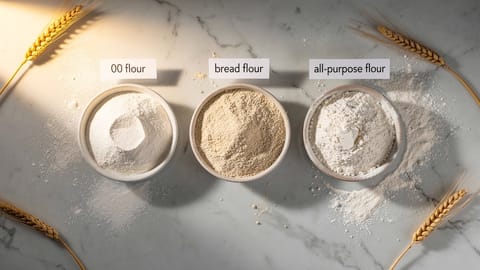
Flour choice matters more for long ferments. BAKERpedia's specification for pre-ferment flour asks for enough amylase activity to sustain a long fermentation without added sugar, and prefers a moderate to high level of damaged starch. In practice that means a decent bread flour rather than a weak all-purpose. A strong flour above 13% protein is specifically suited to fermentations over ten hours. Save the 00 and whole wheat experiments until you can judge ripeness by eye.
Scaling is proportional. Multiply or divide everything, including the yeast, and keep the container roomy enough that a poolish at peak has somewhere to go.
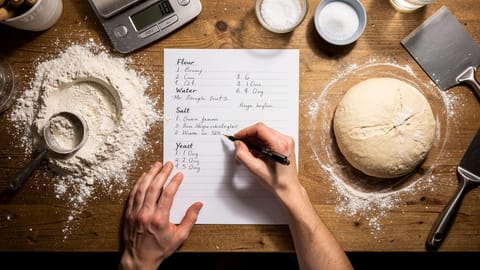
Keep notes. Room temperature, yeast dose, when it peaked, how the dough felt. Pre-ferment behaviour shifts with the seasons and with a change of flour brand, and a short written record will get you to consistency faster than any recipe will.
Poolish vs biga vs sourdough, levain and sponge
The three-way comparison comes up constantly, so here is where the other pre-ferments sit.
Sourdough and levain are the same thing at different hydrations, and both are maintained cultures rather than fresh mixes. Wild yeast and lactic acid bacteria, days to establish, regular feeding, and a distinctly sour flavor that neither poolish nor biga will give you. That sourness is the reason to keep one, and the maintenance is the price. Our sourdough pizza dough guide covers the schedule.
A sponge is the industrial cousin and the one people confuse with biga most often. BAKERpedia puts sponge-and-dough at 60-90% of the total flour, 58-65% hydration, and compressed yeast at 1.5-5% of total flour, fermented 2-8 hours at 24-29°C. Note the yeast: an order of magnitude more than a poolish, which is why it runs in hours rather than overnight. It is built for throughput and a soft crumb, not for the slow enzymatic work that makes a long pre-ferment interesting.
Pâte fermentée is a piece of finished, salted dough held back from a previous batch. The salt is what makes it different in kind: it slows the yeast, so the flavor stays milder than an unsalted poolish or biga of the same age.
If you want sourdough's tang without giving up the reliability of commercial yeast, you can run both. A small sourdough starter at 10-15% of the flour alongside a smaller poolish or biga gives you acid from one and predictable lift from the other.
Choosing between poolish and biga
Start from your mixing method rather than from a flavor chart. If you mix by hand, or your dough is wet, or you would rather not fight anything, use poolish. If you want the dough to survive three days in the fridge and still hold a shape, use biga. If you cannot decide, use poolish, because the one difference that testing consistently confirms is that it is easier to incorporate.
- Poolish is 100% hydration and liquid; biga is stiff and usually quoted at 50-60%, though published figures disagree
- The handling difference is large and immediate: poolish dissolves into the mixing water, biga has to be torn up and worked in
- The flavor difference is small. Modernist Bread baked six pre-ferments from 50% to 100% hydration into identical bread and could barely taste them apart
- Read the pre-ferment, not the clock. Both are ripe when domed and just starting to recede in the centre
- Biga supplies strength, not a fixed crumb. In a wet dough that means ciabatta holes; in a lean pizza base it means chew
- Whichever you pick, subtract its flour and water from the final dough
Ready to try one? The pizza dough calculator works out the split between pre-ferment and final dough for any style and hydration, and the pizza dough FAQ has quick answers to everything adjacent.