 Bastien
Biga
A stiff Italian pre-ferment with 50-60% hydration, used to add structure, flavor complexity, and a nuttier taste to bread and pizza doughs.
Biga is a stiff Italian pre-ferment: a portion of flour, water, and a tiny amount of yeast mixed and fermented before the final dough. With hydration between 50% and 60%, biga has a firm, dough-like consistency that sets it apart from wetter pre-ferments like poolish. It must be torn into pieces before incorporating into the final mix, and it rewards patience with deeper flavor and stronger dough structure.
Italian bakers have relied on biga for generations in classic breads like ciabatta and Pugliese, in enriched doughs like panettone, and increasingly in artisan pizza. King Arthur Baking's professional reference notes that in Italy the word is used loosely for any pre-ferment, stiff or loose; in English-language baking it almost always means the stiff version described here.
How biga works
The lower hydration creates an environment where fermentation proceeds more slowly and produces different byproducts compared to a 100% hydration poolish. Here is what that means for your dough:
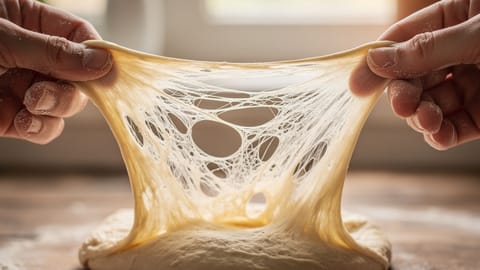
- More dough strength: The stiffer consistency encourages gluten development during the long ferment, giving the final dough better structure
- Nuttier flavor: The drier environment favors specific organic acids and alcohols, creating a deeper, toastier taste profile rather than the mild tang of poolish
- Better volume and oven spring: Stronger gluten means the dough traps gas more effectively, producing taller loaves and a more structured crumb
- Longer shelf life: The acids and enzymes produced during the long ferment help the finished bread stay fresh a little longer
The science comes down to water activity. Less available water slows yeast metabolism, so fermentation takes longer. That extra time lets enzymes break down starches into sugars, developing flavors that a short, fast ferment cannot match.
Biga formula
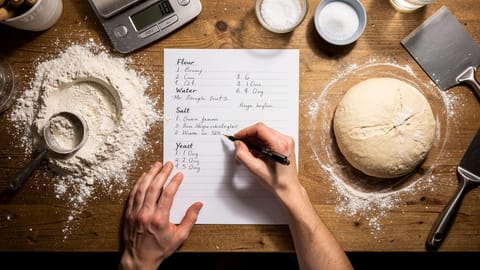
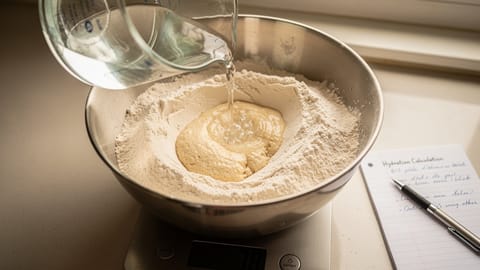
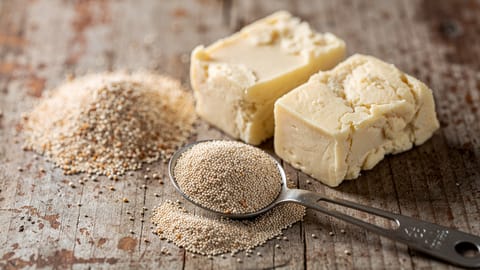
The yeast amount is deliberately tiny. With only 0.1g of instant yeast per 100g of flour (the figure both BAKERpedia and King Arthur Baking give), fermentation stays slow and controlled. Using more yeast speeds things up but sacrifices flavor complexity. The result should feel firm and slightly rough, not smooth like a finished bread dough.
Express the formula in baker's percentage to scale it easily.
Scaling your biga
Most biga bread recipes call for 20-40% of the total flour weight as biga. For a pizza dough using 500g total flour:
- 20% biga: 100g flour, 55g water, 0.1g yeast (subtle flavor boost)
- 30% biga: 150g flour, 82g water, 0.15g yeast (balanced flavor and structure)
- 40% biga: 200g flour, 110g water, 0.2g yeast (pronounced nutty flavor, strong structure)
Higher biga percentages give more flavor but require careful hydration management in the final dough, since the biga flour has already absorbed water.
How to make biga
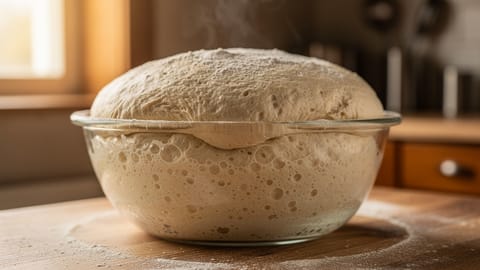
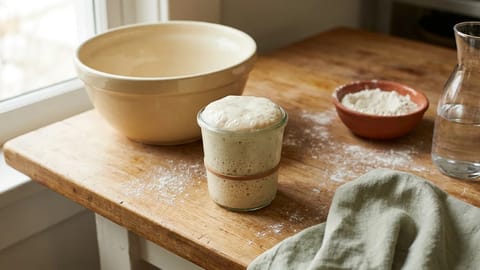
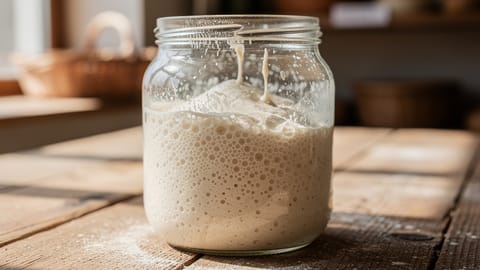
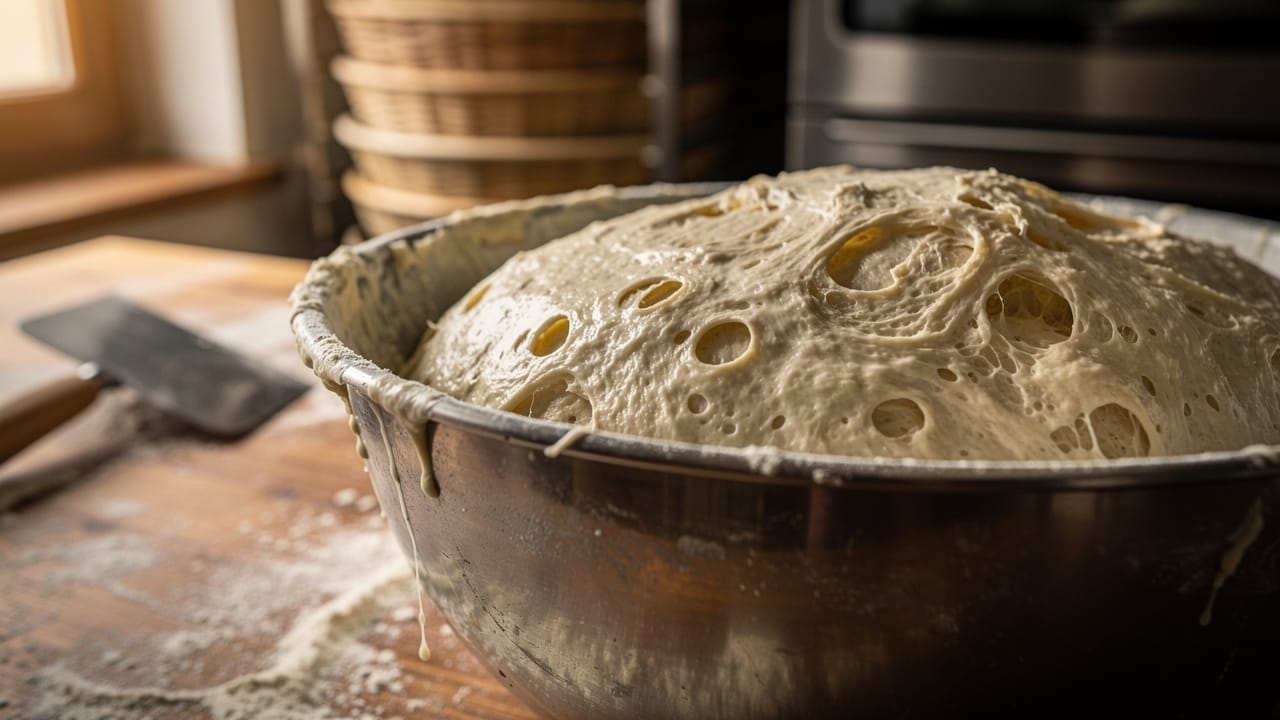
The biga is ready when it has roughly doubled, the surface is slightly domed, and it smells pleasantly yeasty, not sour. To incorporate it, tear the biga into walnut-sized pieces and add them to your final dough mix along with the remaining flour, water, salt, and yeast.
Timing and temperature
BAKERpedia puts the usual window at 8-16 hours between 15 and 20°C; the cooler end of that range is what stretches a biga to a full day.
Reading your biga
- Ready: Roughly doubled, slightly domed top, pleasant yeasty aroma, springs back slowly when poked
- Under-fermented: Has not doubled, dense when torn open, bland smell. Give it more time.
- Over-fermented: Collapsed or concave surface, sour or alcoholic smell, sticky and slack texture
Biga tolerates a wider fermentation window than poolish because the lower water activity acts as a natural brake on yeast activity. A biga left at 24°C for 24 hours will over-ferment, though. Adjust time and temperature together.
Cold fermentation option
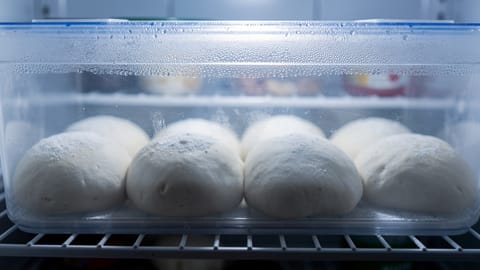
For even more flexibility, you can start biga at room temperature for 2-3 hours, then move it to the fridge (4-6°C) for up to 48 hours. This cold fermentation approach slows things down further and develops even more complex flavors. Pull it out 1-2 hours before mixing to take the chill off.
Common uses
- Ciabatta: Many Italian bakers prefer biga over poolish for ciabatta. The extra structure supports the high hydration of the final dough while still producing an open crumb
- Pugliese bread: This traditional bread from Puglia relies on biga for its characteristic chewy texture and nutty crust
- Artisan pizza: Biga adds complexity to pizza dough without the extreme extensibility of poolish. It works especially well in Neapolitan-style pizza and NY-style pizza dough where you want structure and flavor
- Panettone: Some recipes use biga as the initial ferment before building the enriched dough with butter and eggs
- Focaccia and flatbreads: A short biga (8-12 hours) adds subtle depth without overcomplicating the recipe
Poolish vs biga
Both are pre-ferments, but they behave differently. For a deeper comparison, see the full poolish vs biga guide.
When to choose biga: You want a nuttier flavor, more dough strength, or a longer fermentation window. Biga is forgiving if you cannot mix the dough at the exact right moment.
When to choose poolish: You want a more open crumb, milder flavor, or a shorter timeline. Poolish mixes into the final dough more easily since it is already liquid.
Troubleshooting biga
The environment may be too cold, or the yeast may be dead. Check that your yeast is fresh and that room temperature is at least 18°C. A tiny amount of yeast needs warmth to get going.
The hydration is too high. Next time, reduce water by 5g. If it is already mixed, dust with flour and let it ferment. It will still work, just with slightly different characteristics.
It over-fermented. You can still use it if the smell is mild, as the sourness will dilute in the final dough. If it smells strongly of alcohol or vinegar, start over.
The hydration is too low. Add a few grams of water and knead briefly. Aim for a dough that is stiff but cohesive.
The biga added a lot of pre-developed gluten. Let the final dough rest longer (try a 30-minute autolyse before adding salt) and use gentle folding during bulk fermentation rather than aggressive kneading.
In Fond
Fond hasn't launched yet. This is how it will work at launch. Join the waitlist for early access.
Fond's Pizza Workshop has biga as a built-in pre-ferment option. Select it, set the share of flour that goes into the biga, and the pizza dough calculator splits flour, water and yeast between the biga and the main dough automatically. The workshop builds the biga at 55% hydration and schedules 16 to 24 hours for it to ripen, so a same-day schedule is not offered when a pre-ferment is selected.