 Bastien
Sautéing
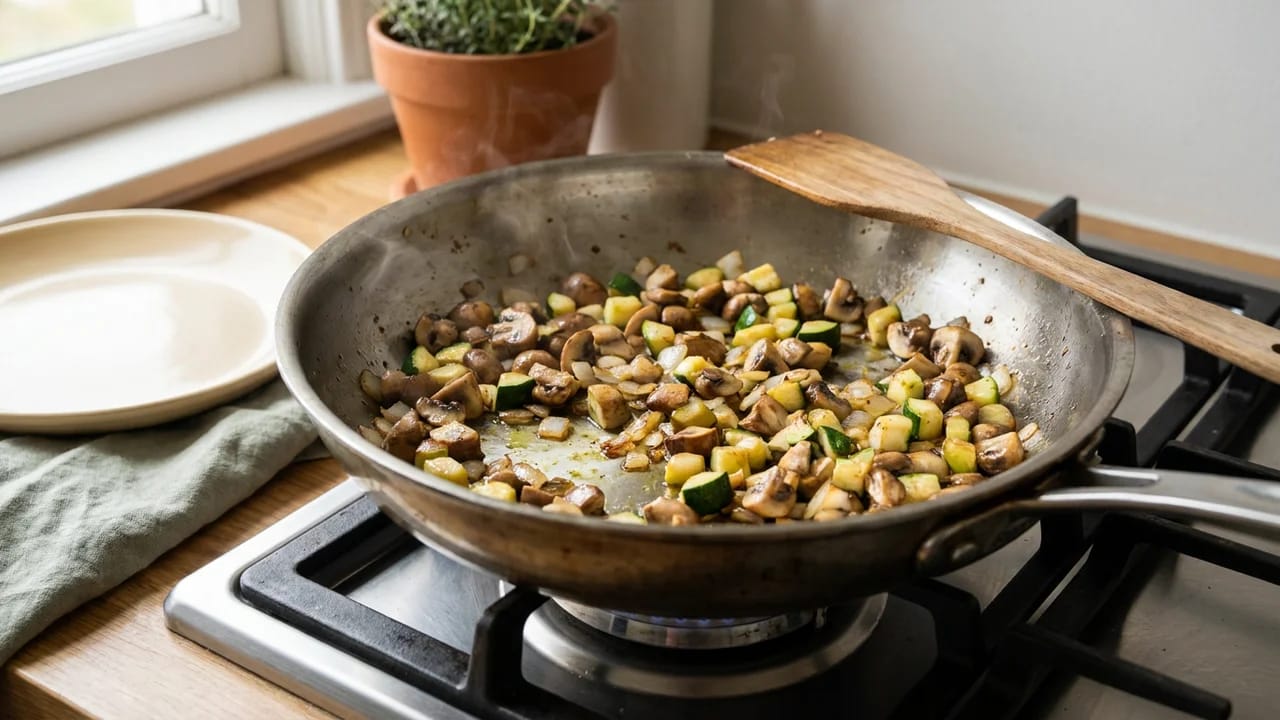
Sautéing is cooking small or thin pieces of food fast in a wide pan over medium-high heat with a little fat, keeping them moving so they brown on the outside before they overcook inside.
Sautéing is a fast, dry-heat cooking method: small or thin pieces of food cooked in a wide pan over medium-high heat with a little fat, kept in motion so every side browns before the center overcooks. The name is the technique; sauter is French for "to jump," after the wrist flick that makes the food hop in the pan.
It's the most-used move in most home kitchens by a mile. Weeknight cooking is mostly sautéing with different accents, and the difference between doing it well and doing it vaguely is the difference between browned and beige.
How do you sauté step by step?
The counterintuitive part is step 4. Browning needs contact time, so the food should rest between tosses; cooks who stir non-stop end up steaming. The other classic failure is crowding: pile the pan two layers deep and the temperature crashes, moisture pools, and the Maillard reaction never starts. Two batches beat one crowded one, every time.
What does sautéing do to the food?
Surface temperatures in a sautéing pan run 160-200°C, squarely in Maillard territory, so the outside of each piece browns and builds hundreds of new flavor compounds while the inside cooks by conduction. Because the pieces are small and the exposure short, the inside stays juicy; the technique trades the deep crust of a steak for speed and evenness.
The fat is a messenger, not a medium. A tablespoon of oil evens out pan contact, conducts heat into the food's crevices, and carries fat-soluble flavors (garlic, chili, herbs) across the whole batch. That's why oil choice matters at these temperatures; the smoke point guide covers which oils hold up and which burn.
Sautéing vs searing, sweating, and stir-frying: what's the difference?
Four pan techniques, four intents:
| Technique | Heat | Motion | Goal |
|---|---|---|---|
| Sautéing | Medium-high | Frequent tossing | Browned outside, fast cook-through |
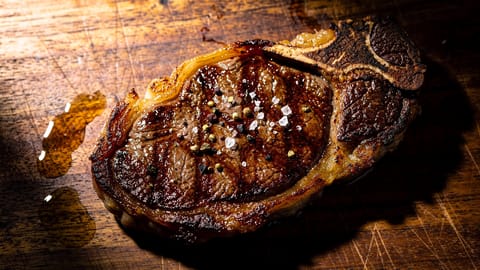
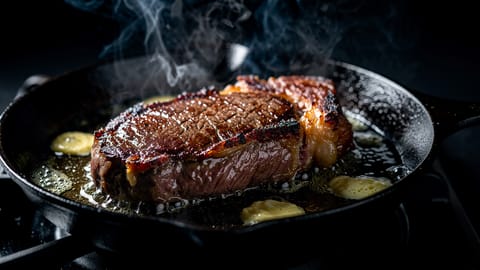
| Searing | High | None | Deep crust on a large piece, interior finished separately |
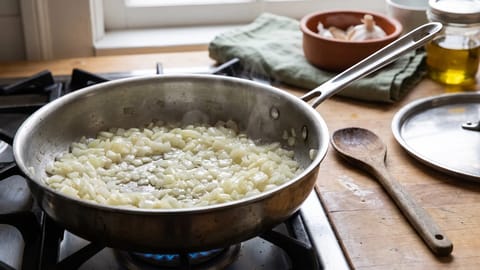
| Sweating | Low-medium | Occasional stir | Soften without any color |
| Stir-frying | Maximum | Constant | Small pieces, 2-3 minutes, wok flavor |
The borders are drawn by heat and motion. Onions sweated go translucent and sweet; the same onions sautéed go golden and caramel-edged. A chicken breast seared stays put and builds crust; sliced and sautéed, it cooks through in five minutes. Choosing the wrong one isn't fatal, but it's why "the recipe said onions, mine taste raw" happens.
When should you sauté (and when shouldn't you)?
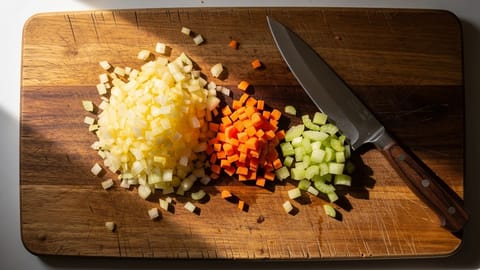
Sautéing is the right call for tender vegetables, aromatics, and thin proteins: the mirepoix under a stew, mushrooms for pasta, shrimp, green beans, sliced chicken. It's the wrong call for anything dense or tough. A whole chicken thigh sautés into a burnt-outside, raw-inside argument; carrots cut thick need a head start from steaming or roasting; braising cuts need hours that no pan toss will replace.
A useful test: if a piece can cook through in under ten minutes without its surface burning, it's a sauté candidate. If not, cut it smaller or pick another technique.
Sautéing chicken deserves its own note, since it's the most-searched version of the technique. Slice breasts crosswise into 1 cm strips or cube thighs, dry them, and give the pan 30 extra seconds of preheat; chicken dumps more moisture than vegetables and needs the thermal headroom. Strips cook through in 5-6 minutes and stay juicier than any whole sautéed breast ever will.
What are the most common sautéing mistakes?
In Fond's cook mode, any step with a time in it carries a tappable timer, which mostly matters for the step everyone skips: the quiet 30 seconds when you're supposed to leave the pan alone.