 Bastien
What is braising? Meaning, and how it differs from stewing
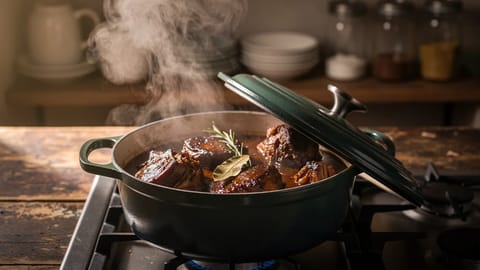
Braising is a two-step cooking method: brown food at high heat, then simmer it covered in liquid that comes a third to two-thirds of the way up, until it is fork-tender.
Braising is a cooking method that uses dry heat and wet heat in sequence: you sear food at high temperature first, then cook it slowly in a covered pot with a modest amount of liquid until it turns tender. It takes cheap, tough cuts and makes them worth serving to people you like, and it does most of the work while you are somewhere else.
This entry explains what braising is. For the step-by-step method and cut-by-cut times, see our guide on how to braise meat.
The word is pronounced BRAY-zing and it comes straight from the French braiser. Braising is a combination method because those two heat families do different jobs. The browning builds color and flavor; the long covered stretch does the actual cooking; and the liquid you cooked in becomes the sauce.
What separates a braise from a stew is scale and submersion. A braise uses large pieces and partial liquid, so the top of the food steams under the lid while the bottom simmers. A stew uses small pieces and usually covers them. Roasting uses no liquid at all.
How do you braise meat step by step?
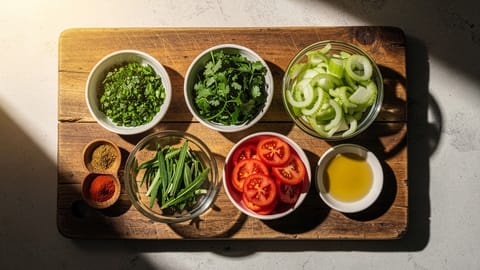
Good braising follows a reliable sequence. Have your mise en place ready before you start.
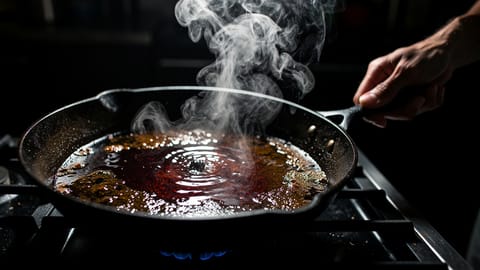
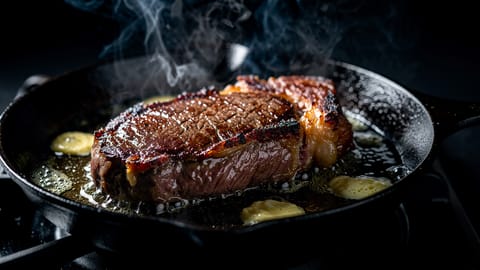
The searing step triggers the Maillard reaction, which builds the aroma compounds that carry through the whole braise. When you deglaze with stock, you are dissolving that caramelized fond into what becomes your sauce.
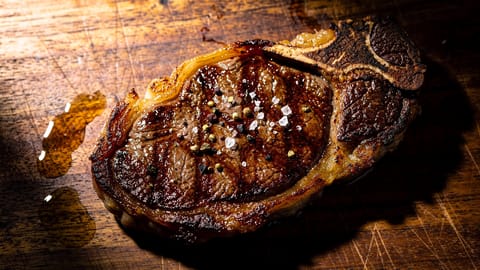
The sear is the step people rush, and rushing it shows up in the sauce more than in the meat. Professional practice draws a line between proteins here: red meats are browned hard, white meats and poultry only until golden, and salt sitting on the surface slows browning down. If you salted well ahead, pat the surface dry again before it hits the fat.
What are the best cuts for braising?
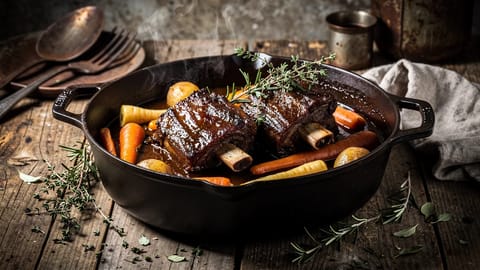
The best braising candidates are tough, collagen-rich cuts. Tender steaks and lean cuts dry out during long cooking. Braising beef like chuck or short ribs is the most common entry point, but pork shoulder and lamb shanks respond just as well.
| Protein | Best cuts | Approximate time | Notes |
|---|---|---|---|
| Beef | Chuck roast, short ribs, brisket, oxtail, cheeks | 2.5-4 hours | Short ribs braise well bone-in |
| Pork | Shoulder (butt), shanks, ribs, cheeks | 2-3.5 hours | Shoulder is the most forgiving cut |
| Lamb | Shoulder, shanks, neck | 2-3 hours | Shanks are a classic single-serving braise |
| Chicken | Thighs, legs, whole legs | 45-90 minutes | Dark meat only; breast dries out |
| Veal | Shanks (osso buco), shoulder | 2-3 hours | Cross-cut shanks expose the marrow |
| Vegetables | Cabbage, leeks, fennel, endive, artichokes | 30-60 minutes | Use stock for richer flavor |
Times are for a covered pot at 150-160°C and they are a planning aid, not a doneness test. Cut-by-cut numbers for fourteen different cuts live in the braising time chart.
Why does braising tenderize tough meat?
Tough cuts are tough because of connective tissue, and there are two kinds of it. Collagen turns into gelatin and water under long, slow cooking with moisture present; elastin is not broken down by cooking at all. Collagen is the white connective tissue and it is what braising exists for. Elastin is the yellow kind, concentrated in tendons and in the tough sheets people call silverskin, and no extra hour in the oven will soften it. Trim it off before you start, because a braise that stays chewy in one spot is usually elastin rather than impatience.
Collagen conversion is a trade between temperature and time. It does not need much heat: sous vide work on tough cuts runs at 65-70°C (149-158°F), well below braising temperature but hot enough to break connective tissue down over 12 to 48 hours. A braise reaches the same place faster by running hotter. The liquid holds a simmer, roughly 85-94°C (185-200°F), and the meat sits near that for the whole cook.
The gelatin does not stay in the meat. It dissolves into the cooking liquid, which is where braising sauces get their body and that faintly sticky feel on the lips. One pot, two results. Confit works on a similar clock with fat standing in for the liquid.
One thing braising does not do is add moisture. The apparent juiciness comes from connective tissue breaking down, not from water moving into the meat. A braised chuck roast has lost water like anything else you cooked; it simply stops reading as dry once the collagen has gone. That also explains what happens when you overshoot. A braise held well past fork-tender turns stringy, not soggy.
Braising vs stewing and other methods
People confuse braising and stewing constantly. The usual line: braising uses partial liquid and larger cuts, stewing submerges smaller pieces completely. Both are low and slow, but braising gives you a more concentrated sauce and distinct pieces of meat rather than a homogeneous mixture.
Not every reference draws that line. Gisslen's Professional Cooking uses "braising" for both, on the grounds that the procedure is identical and only the size of the pieces changes. Home recipes usually keep the two words separate, which is the convention this page follows.
| Method | Heat type | Liquid | Temperature | Best for |
|---|---|---|---|---|
| Braising | Dry + wet | Partial (a third to two-thirds) | Low (150-160°C oven) | Large tough cuts |
| Stewing | Wet | Fully submerged | Low simmer | Small pieces of meat |
| Roasting | Dry | None | High (190-230°C) | Tender cuts, vegetables |
| Poaching | Wet | Fully submerged | Very low (70-85°C) | Delicate proteins |
| Searing | Dry | None | Very high (230°C+) | Surface browning only |
What are the types of braising?
"Braise" covers a wider family than most recipes let on. Sorted by what goes in the pot:
| Type | What it is | Example |
|---|---|---|
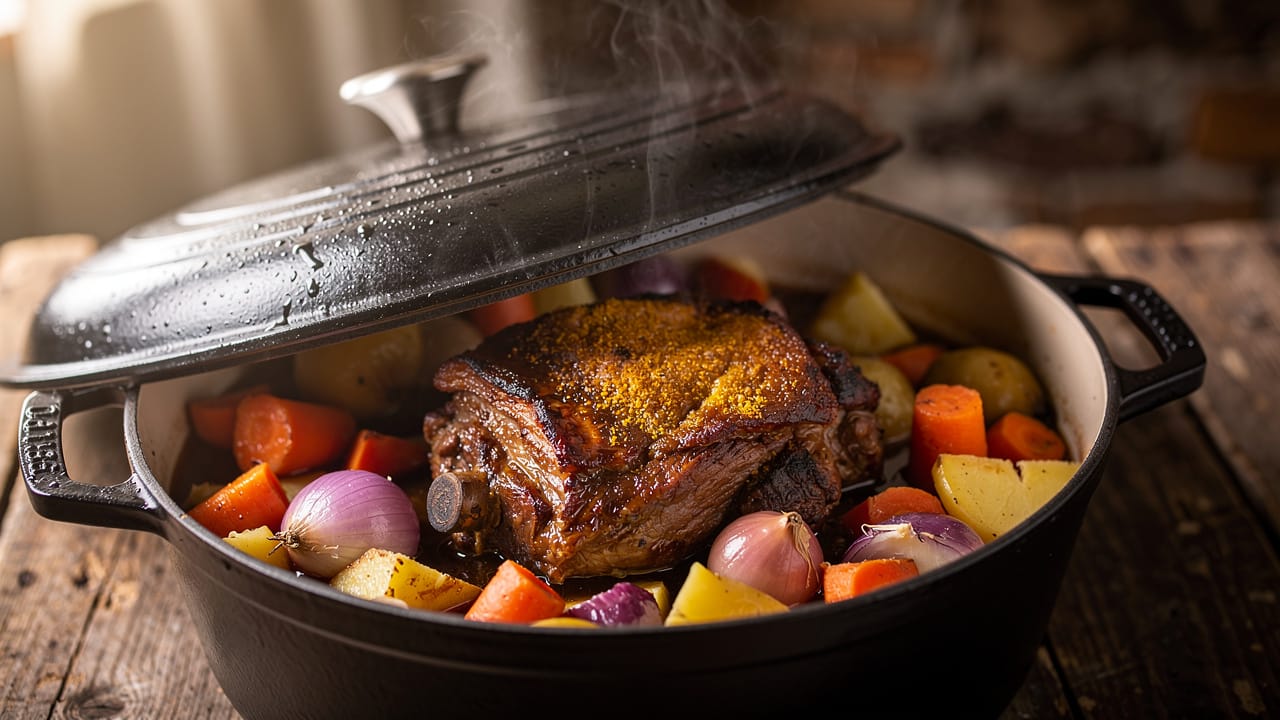
| Large cut | One big piece braised whole, then sliced and sauced | Pot roast |
| Portion cut | Cut to serving size before braising rather than after | Short ribs, lamb shanks, Swiss steak |
| Stew | Bite-sized pieces, usually with enough liquid to cover | Beef stew, chili |
| Dry braise | Browned, covered, cooked in the moisture it releases | Pork chops under a lid |
| White braise | Stiffened in fat without taking color, moistened with a pale liquid | Fricassee |
Two of those are worth a second look. A dry braise adds no liquid at all: you brown the food, clamp the lid on, and let the trapped steam do the rest, which means any sauteed or roasted dish you decide to cover has effectively become a braise. And a white braise is the reason fricassee and blanquette are not the same thing. The fricassee meets hot fat first without browning; the blanquette goes straight into stock, so it is simmered rather than braised.
What liquid should you braise in?
The liquid becomes the sauce, so this is not a filler decision.
Wine does two jobs at once. Red suits beef and lamb, white suits chicken and pork, and the acidity is not only about taste: acid helps dissolve collagen, which is why so much of the traditional repertoire is built on wine or tomato. Most of the alcohol cooks off over three hours, though not all of it does, and what stays behind is fruit, acid and tannin. Cook with something you would drink, since a wine that tastes harsh in the glass tastes harsher concentrated.
Stock is the other half of most braises and it decides how good the sauce gets. Homemade stock carries gelatin that supermarket broth mostly does not, and the difference shows up in the finished sauce rather than in the pot.
Canned tomatoes bring acid and body together, and they anchor most Italian braises for exactly that reason. Dark beer works with pork and beef, and Belgian ales bring a sweetness that suits the same cuts.
Most braises use a mix, and half wine, half stock is a reliable starting point. A spoonful of soy sauce in a beef braise is worth trying: the umami reads as depth rather than as soy, and it fills in a gap that wine alone leaves.
Tips for better braising
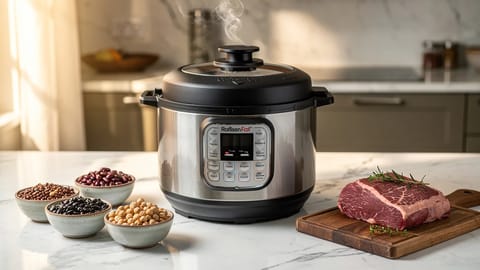
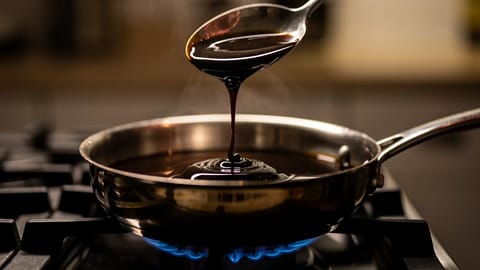
A braise reheats better than almost anything else, which makes it a natural fit for batch cooking: cook once on Sunday, eat better on Wednesday. If you want somewhere to start, most of the Dutch oven recipes collection is braising by another name, and the one pot meals guide uses the same sear-deglaze-simmer sequence on a weeknight timeline. Use an instant-read thermometer if you want to confirm the pot is simmering rather than boiling, and when the meat is done, reduce the braising liquid into a concentrated sauce. On a weeknight, pressure cooking covers the same ground in a fraction of the time, at the cost of some of the sauce.
Classic braised dishes around the world
| Dish | Origin | What gets braised |
|---|---|---|
| Pot roast | United States | Beef chuck with root vegetables |
| Boeuf bourguignon | France | Beef in red wine with mushrooms and pearl onions |
| Carbonnade flamande | Belgium and northern France | Beef in dark beer, sweetened and thickened with mustard bread |
| Osso buco | Italy | Veal shanks in white wine and tomato |
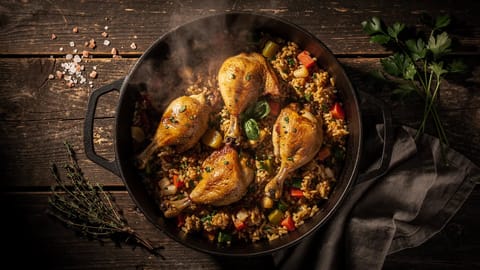
| Coq au vin | France | Chicken in red wine |
| Carnitas | Mexico | Pork shoulder braised until it shreds |
| Red-braised pork belly (红烧肉) | China | Pork belly in soy, sugar and Shaoxing wine |
| Ragu bolognese | Italy | Finely cut meat braised for hours |
Braising vegetables
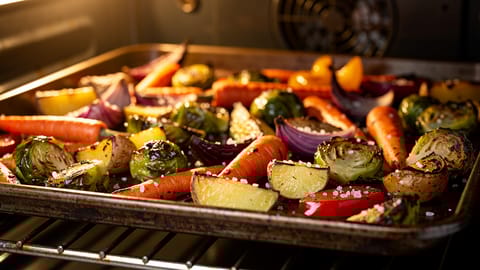
Braising isn't only for meat. Fennel, leeks, cabbage wedges, endive, and artichokes all respond well to a gentle braise. Cut the cooking time to 30-60 minutes and use stock as the braising liquid for richer flavor. The technique is the same: sear or brown the vegetables first, add liquid partway up, cover, and cook low until tender.
Belgian endive is the one to try first if you have never braised a vegetable. Forty minutes in chicken stock with butter takes most of the bitterness out and leaves something silky and lightly caramelized, and it asks nothing of you while it happens.
Braising in Fond
Fond hasn't launched yet. This is how it will work at launch. Join the waitlist for early access.
Fond's Cook mode guides you through each braising step with built-in timers. The recipe view shows braising time and temperature at a glance, and you can scale ingredients for larger batches using recipe scaling.