 Bastien
Simmering
Simmering is cooking food in liquid held just below boiling — 85-96°C (185-205°F) — where small bubbles rise gently without a full rolling boil, used for stocks, stews, sauces, and delicate proteins.
Simmering is cooking food in liquid held just below the boiling point, around 85-96°C (185-205°F), where small bubbles rise gently and break the surface without the violent churn of a full boil. It's the gentle middle ground between poaching and boiling, and it's how almost every stew, stock, sauce, and braise actually cooks.
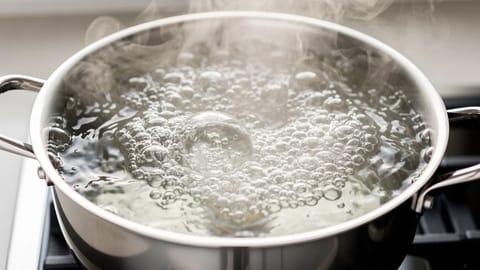
The visual cue is the giveaway. At a simmer you see a steady stream of small bubbles rising lazily, with an occasional larger bubble breaking the surface. It's active, but calm. A rolling boil churns the whole surface; a simmer barely ripples it.
What does simmering mean?
To simmer means to cook something in liquid kept just below the boiling point, so the liquid moves gently instead of churning. Recipes use the word three ways:
- "Bring to a simmer": heat the liquid until small bubbles rise steadily, then hold it there. It's a target, not a boil you back off from.
- "Bring to a boil, then simmer": get the liquid hot fast, then lower the heat until the bubbling calms. This is the most common instruction for stews, beans, and sauces.
- "Simmer for 20 minutes": keep the liquid at that gentle bubble for the stated time, adjusting the heat as the pot warms up or the liquid reduces.
The word comes from an older English verb for a low, steady hum, which is a fair description of what a simmering pot sounds like. Trust the bubbles over the dial: every stove's "low" is different, so "simmer on medium-low" means nothing until you look in the pot.
What temperature is a simmer?
A simmer is roughly 85-96°C (185-205°F), which is below water's boiling point of 100°C (212°F) at sea level. There's a range because "simmer" covers a few intensities, from a barely-moving low simmer to a brisk simmer just shy of a boil.
You don't need a thermometer once you can read the bubbles. A low simmer (around 85-90°C) shows tiny bubbles rising occasionally. A standard simmer (90-96°C) has a steady stream of small bubbles. Push past that and you're at a rolling boil.
Most recipes that say "simmer" want that gentle, steady-bubble stage. It cooks food through without the rough agitation that toughens proteins or clouds a stock.
Bare simmer, gentle simmer, brisk simmer, boil
Cooks use a handful of terms for the steps between "hot" and "boiling". They describe what the surface looks like, not an exact temperature, but they map roughly like this:
| Term | Approx. temperature | What you see | Typical use |
|---|---|---|---|
| Bare simmer | 82-88°C (180-190°F) | A bubble every second or two, surface barely moves | Poaching, stocks, custards, milk |
| Gentle simmer | 88-93°C (190-200°F) | Small bubbles rising steadily, light ripple | Stews, braises, beans, sauces |
| Brisk simmer | 93-99°C (200-210°F) | Constant small bubbles, surface clearly moving | Reducing sauces, cooking grains |
| Brisk or rolling boil | 100°C (212°F) | Large bubbles churning the whole surface | Pasta, blanching, sterilizing |
"Brisk" is the word that confuses people. A brisk simmer is still below the boil; a brisk boil is a full boil. If the surface is heaving rather than rippling, you're boiling.
What is the difference between simmering and boiling?
The difference is temperature and bubble intensity. Simmering holds at 85-96°C with small, gentle bubbles; boiling is a full 100°C with rapid, rolling bubbles that churn the whole surface.
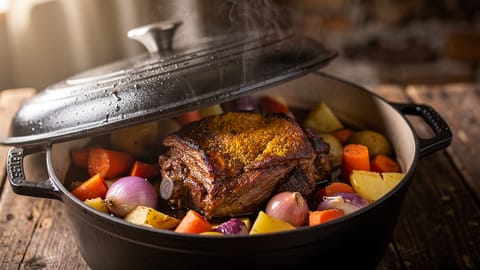
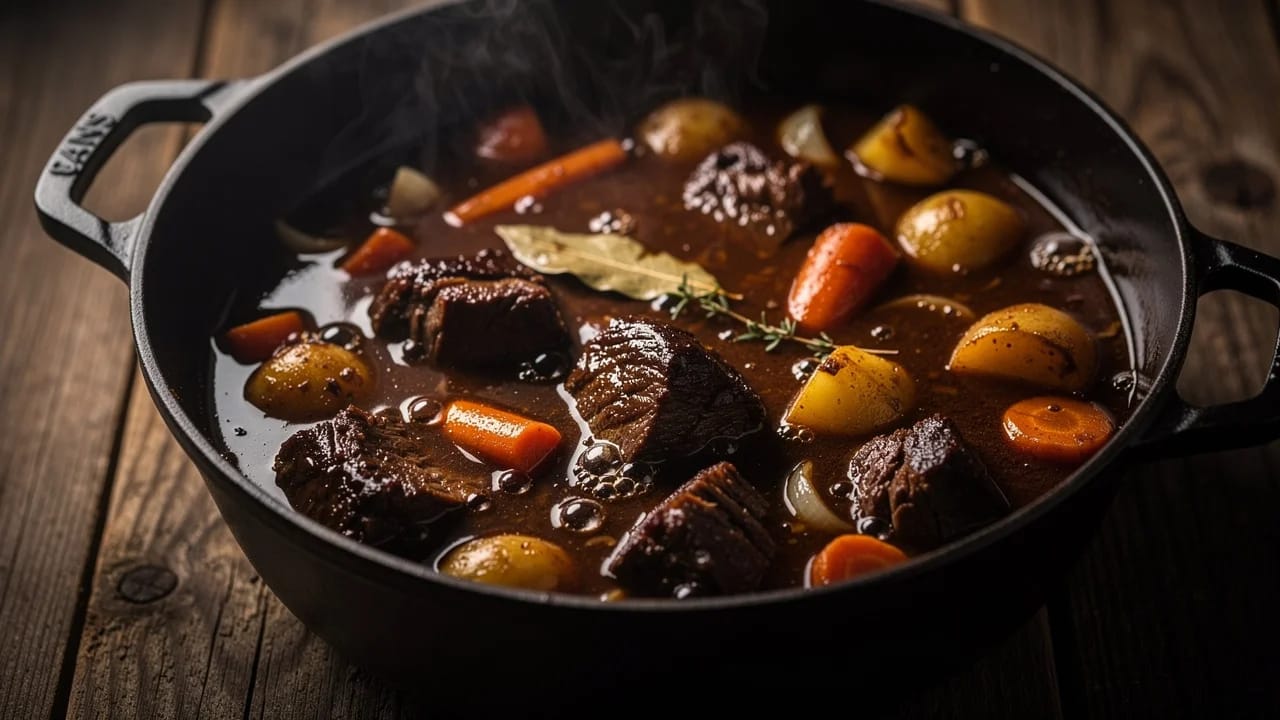
This is why so many recipes say "bring to a boil, then reduce to a simmer." You boil to get the liquid hot fast, then drop to a simmer so the food cooks gently. A stock simmered stays clear; a stock boiled turns cloudy because the rapid bubbling emulsifies fat and breaks up proteins. For tough cuts, a long, low simmer is what melts collagen into gelatin without squeezing the meat dry.
Why do you simmer instead of boil?
Simmering is gentler, and that gentleness protects food in three ways. It keeps proteins tender, since a hard boil seizes and toughens meat, fish, and eggs.
It keeps liquids clear. A stock or consommé simmered slowly stays clean and bright, while boiling churns fat and protein into a cloudy mess.
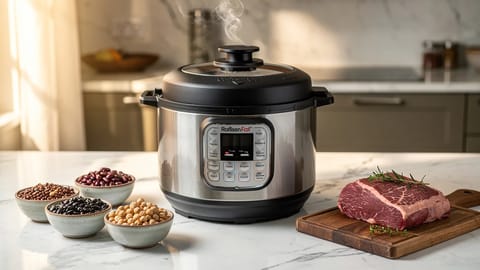
And it lets flavors develop slowly. A braise or stew held at a simmer for hours melts connective tissue into silky gelatin and lets flavors meld, something a fast boil can't do without overcooking the outside. When you want that same breakdown in a fraction of the time, pressure cooking raises the temperature above the boiling point to get there faster.
Note: Boiling a delicate sauce or a milk-based dish often causes it to break or scorch. A gentle simmer keeps emulsions stable and prevents the bottom from catching.
Should you simmer with the lid on or off?
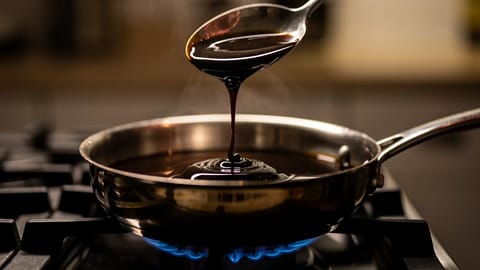
It depends on what you want. Keep the lid on (or partially on) to trap heat and cook slowly without much evaporation, which is right for long braises and stews. Take the lid off when you want the liquid to reduce and concentrate, as with a pan sauce or a reducing stock.
A partially covered pot is a useful middle setting. It holds heat well while letting some steam escape, which keeps the simmer steady and lets the liquid slowly thicken. If your simmer keeps creeping up to a boil with the lid on, crack it open or lower the heat.
How do you maintain a steady simmer?
The trick is matching the heat to the pot, then adjusting by eye rather than by the dial number.
Heavy pots hold a simmer more steadily than thin ones because they retain heat. If your simmer keeps stalling or surging, a heavier pan and a diffuser (or moving the pot slightly off-center on the burner) helps keep it even.
What are common simmering mistakes?
You let it boil instead of simmer. Rapid bubbling emulsifies fat and breaks up proteins, clouding the liquid. Keep stocks at a bare, gentle simmer and never let them reach a rolling boil.
The simmer was too aggressive, closer to a boil. High heat seizes proteins. Drop to a low, gentle simmer and give tough cuts time to break down.
The heat was too high or the sauce wasn't stirred. Lower to a gentle simmer, stir occasionally, and use a heavy pot. Milk and thick sauces catch easily at higher heat.
Your burner is set too high or the lid traps too much heat. Lower the heat in small steps and crack the lid to let some steam escape.
Tips for simmering
Simmering is the quiet engine behind most slow-cooked food, from a Sunday braise to a clear stock. Learn to hold a gentle simmer and the gap between home cooking and restaurant results narrows fast.
Simmering in Fond
Fond hasn't launched yet. This is how it will work at launch. Join the waitlist for early access.
Fond's cook mode tells you when a step needs a gentle simmer versus a full boil, so you keep tough cuts tender and stocks clear. Timers handle long braises and reductions, and recipes flag when to cover the pot and when to leave it open to concentrate the liquid.