 Bastien
How to make your own spice blends
Homemade spice blends come down to one ratio: 4 parts base, 2 parts middle, 1 part accent. This guide covers the formula, 10 blend recipes with exact parts, toasting, and how long each blend keeps.
TL;DR: Build blends salt-free with 4 parts base, 2 parts middle, 1 part accent. Toast whole spices before grinding, mix ground ones straight, label with a date, and use within 6 months. The 10 recipes below cover tacos to garam masala.
A homemade spice blend is a ratio, not a secret. Nearly every mix on the store shelf reduces to 4 parts of a base flavor, 2 parts of a supporting middle, and 1 part of an accent, and once you see that pattern you can clone a taco packet from memory or invent something new without a recipe. Most people start blending for the same reason: they read a taco seasoning packet in the supermarket and find salt and maltodextrin listed ahead of any spice. A shelf of labeled house blends follows, and the packets never come back.
What is the basic ratio for a spice blend?
The 4:2:1 structure maps to how you taste a seasoned dish. The base (4 parts) is the flavor that names the blend: chili powder in taco seasoning, paprika in a barbecue rub, coriander in garam masala. The middle (2 parts) fills it out with warmth or depth; cumin and garlic powder live here. The accent (1 part) is the note that arrives last: cayenne heat, cinnamon sweetness, smoked paprika's campfire edge.
A "part" is whatever measure you like. Test a new idea in teaspoons; promote it to tablespoons once it earns shelf space. And keep salt out of stored blends. Salt-free mixes scale cleanly, and they let you season the dish itself instead of guessing what the blend already contains. Choosing which spices belong together in the first place is a pairing question, and the spice pairing chart covers it food by food.
Which blends should you make first? The 10-recipe chart
Parts are by volume; 1 part = 1 tablespoon fills a small jar. All salt-free except everything bagel.
| Blend | Recipe (in parts) | Use it on |
|---|---|---|
| Taco seasoning | 4 chili powder, 2 cumin, 1 smoked paprika, 1 garlic powder, 1 oregano, 1/2 onion powder, 1/2 black pepper | Ground beef, beans, fajitas |
| BBQ rub | 4 paprika, 2 brown sugar, 1 garlic powder, 1 onion powder, 1 black pepper, 1/2 cayenne | Pork shoulder, ribs, chicken |
| Italian herbs | 2 basil, 2 oregano, 1 thyme, 1 rosemary, 1/2 garlic powder | Tomato sauce, pizza, dressings |
| Herbes de Provence | 2 thyme, 1 rosemary, 1 savory, 1 oregano, 1/4 lavender (optional) | Roast chicken, vegetables |
| Cajun seasoning | 2 paprika, 1 garlic powder, 1 onion powder, 1 oregano, 1 thyme, 1/2 cayenne, 1/2 black pepper | Shrimp, chicken, dirty rice |
| Curry powder | 2 turmeric, 2 coriander, 1 cumin, 1/2 ginger, 1/2 mustard powder, 1/4 cayenne | Lentils, chicken curry, roasted cauliflower |
| Garam masala | 2 coriander, 1 cumin, 1 cardamom, 1/2 black pepper, 1/2 cinnamon, 1/4 clove | Finishing curries, dal, squash |
| Ras el hanout (short) | 1 cumin, 1 coriander, 1 cinnamon, 1 ginger, 1/2 turmeric, 1/2 paprika, 1/4 allspice | Couscous, tagines, carrots |
| Quatre épices | 2 white pepper, 1 nutmeg, 1 ginger, 1/2 clove | Pâtés, stews, gingerbread |
| Everything bagel | 2 sesame, 1 poppy seed, 1 dried garlic, 1 dried onion, 1 flaky salt | Bagels, eggs, avocado toast |
Every one of these is a 4:2:1 family member with the proportions bent to taste, which is the honest secret of blending: the ratio gets you to 90%, your palate argues about the rest.
How do you make a spice blend step by step?
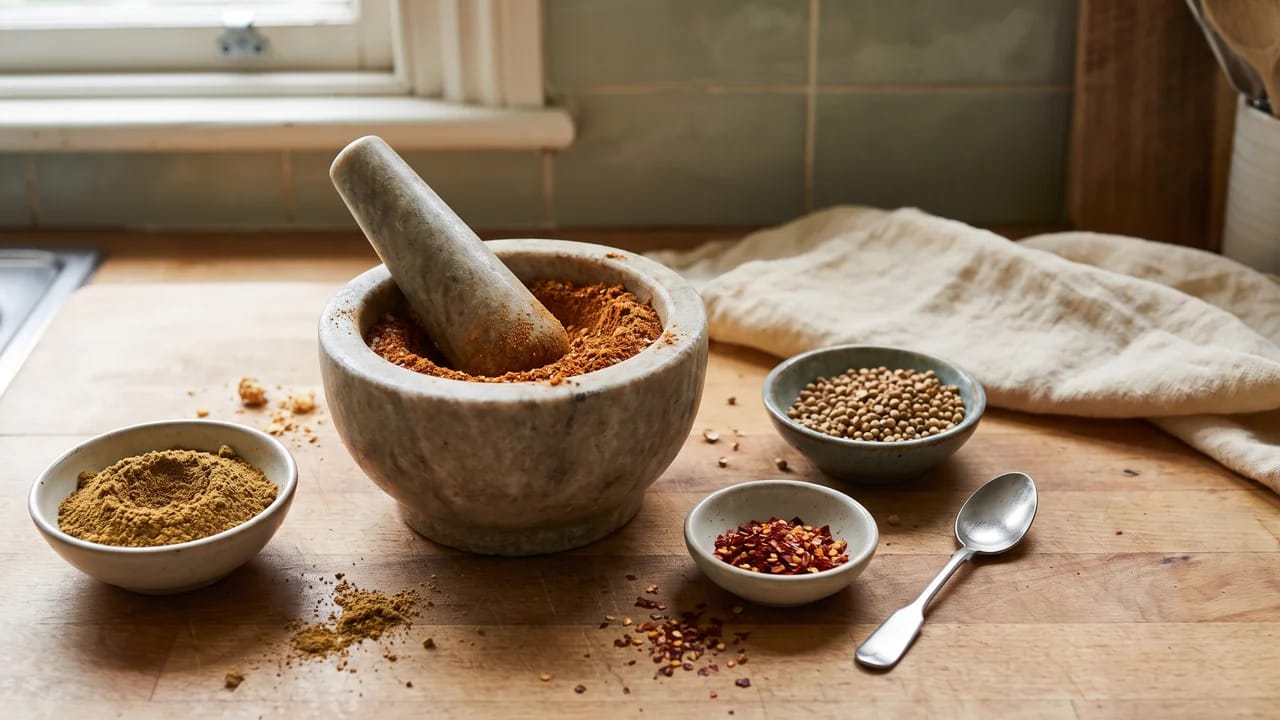
The cooling step matters more than it looks: grinding warm spices turns volatile oils into paste and gums up the grinder. A cheap electric coffee grinder reserved for spices does the fine work, and a mortar and pestle gives a coarser rub texture. Whatever you grind in will hold a ghost of cumin forever, so don't share the machine with your coffee beans.
Should you toast spices before blending?
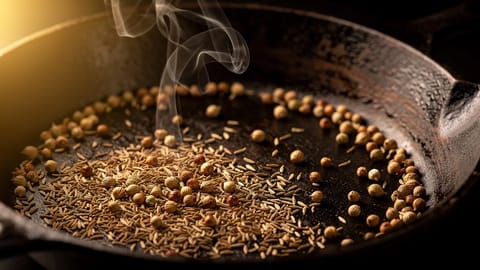
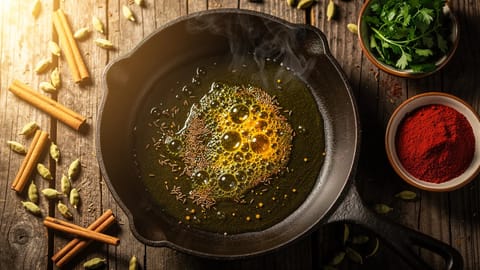
Whole spices, yes, almost always. A 1-2 minute dry toast rebuilds and multiplies the aroma compounds, and the difference in a curry powder or garam masala is loud enough that side-by-side batches taste like different brands. The full technique, including when to bloom a finished blend in fat at the pan, is in how to toast and bloom spices.
Pre-ground spices are the exception: they toast unevenly and scorch in seconds, so mix them straight. A hybrid approach works well in practice: toast and grind the whole seeds (cumin, coriander, cardamom), then whisk in the powders (turmeric, paprika, ginger).
Whole spices or pre-ground?
A workable rule: seeds and pods whole (cumin, coriander, cardamom, clove), roots and leaves pre-ground (turmeric, ginger, oregano, basil). It buys most of the aroma for half the effort. Whichever route you take, the raw material matters; the essential spices guide covers which 15 jars are worth stocking in the first place.
How long do homemade spice blends last?
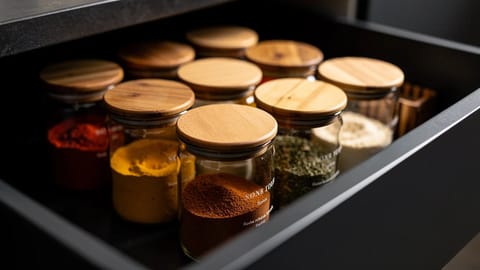
Six months at full strength, then a long slow fade. McCormick's own guidance gives ground spices 2-4 years and whole spices 3-4 before they are spent, and that is the ceiling for safety, not for flavor. Blends fade on the same clock as their most fragile ingredient, and ground spices lose aroma faster than whole ones because more surface area is exposed to oxygen. Store blends the way you store single spices: airtight glass, dark cupboard, away from the heat of the stove. The spice storage guide has the full shelf-life chart.
Two habits stretch the window. Make small batches (a jar you finish in three months beats a bulk jar that dies at month eight), and date every label. The nose test settles arguments: rub a pinch between your fingers, and if it smells like dust, it's compost, not dinner.
How do you use a blend once it's made?
Timing decides how much flavor survives. Rubs go on before cooking; ground blends bloom in the first minute of hot fat; delicate finishing blends like garam masala are added in the last five minutes, off the boil. The complete schedule is in when to add spices during cooking.
Quantity guideline: about 1 tablespoon of blend per 500 g of main ingredient for rubs and braises, half that for delicate dishes, then salt the dish separately. For a worked example, the best seasoning for chicken applies exactly this logic to one bird. One warning from the barbecue file: the BBQ rub above carries sugar, so keep it to indirect heat or it blackens fast.
Blending dos and don'ts
Start with taco seasoning tonight; it's the highest-payoff blend on the chart and the one most likely to retire a packet from your life. Once the 4:2:1 reflex sets in, spice blending stops being recipes to follow and becomes a system you own, one labeled jar at a time.