 Bastien
When to add spices during cooking: timing guide for layered flavor
Spice timing changes the flavor of a dish more than most people realize. This guide breaks down the five moments when spices should go in, explains why ground and whole spices behave differently, covers fresh versus dried herbs, and settles when to season ground beef.
TL;DR: Most spices go in early, during the fat-cooking stage, so heat and oil can pull out their flavor compounds. Fresh herbs, finishing salts, and a few volatile spices go in at the end. Salt goes in layers throughout. Ground beef gets its salt as it hits the pan and its dry seasoning after browning. Get the timing right and your food improves without adding more ingredients.
A lot of home cooks add every spice at the same moment the liquid goes in. Chili, curry, stew, soup, it makes no difference. Everything at once, straight into the simmering broth. Then they wonder why the result tastes one-dimensional next to a restaurant version made with the same ingredients.
The usual answer is timing rather than quantity or brand. When a spice enters the pan changes how it tastes. A teaspoon of cumin added to hot oil tastes like a different spice than the same teaspoon stirred into simmering water. Both are cumin. Both are the correct amount. Only one of them does its job.
The five timing windows
Think of cooking as five distinct windows, each suited for different kinds of spices. Knowing which window belongs to which spice is most of the battle.
Window 1: Before cooking starts
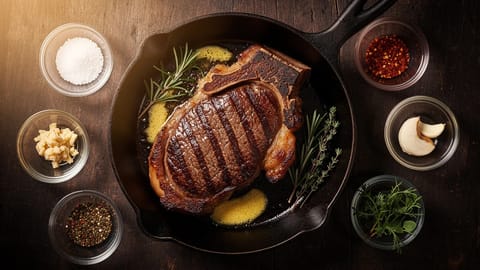
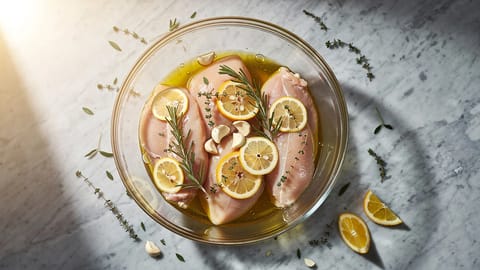
This window is for salt and acidic marinades on whole cuts of protein. Salt applied ahead of cooking draws moisture to the surface, dissolves into it, and gets reabsorbed into the meat, seasoning it from within. America's Test Kitchen's salting guide gives steaks and chops about an hour and a large roast 6 to 24 hours. This is why professional cooks salt their steaks long before the pan hits heat.
Spice rubs applied in this window also benefit from the time. The flavors penetrate the surface layer, and the salt in the rub acts as a carrier. For short cooks like a grilled chicken breast, apply the rub at least 45 minutes ahead or right before cooking; the awkward middle ground pulls moisture out without giving it time to go back in. For larger cuts, 1-24 hours is appropriate. Marinades work differently but follow a similar principle of giving flavor time to move into the food.
Ground meat is the exception to early salting, and it gets its own section below.
Window 2: Hot fat, no liquid yet
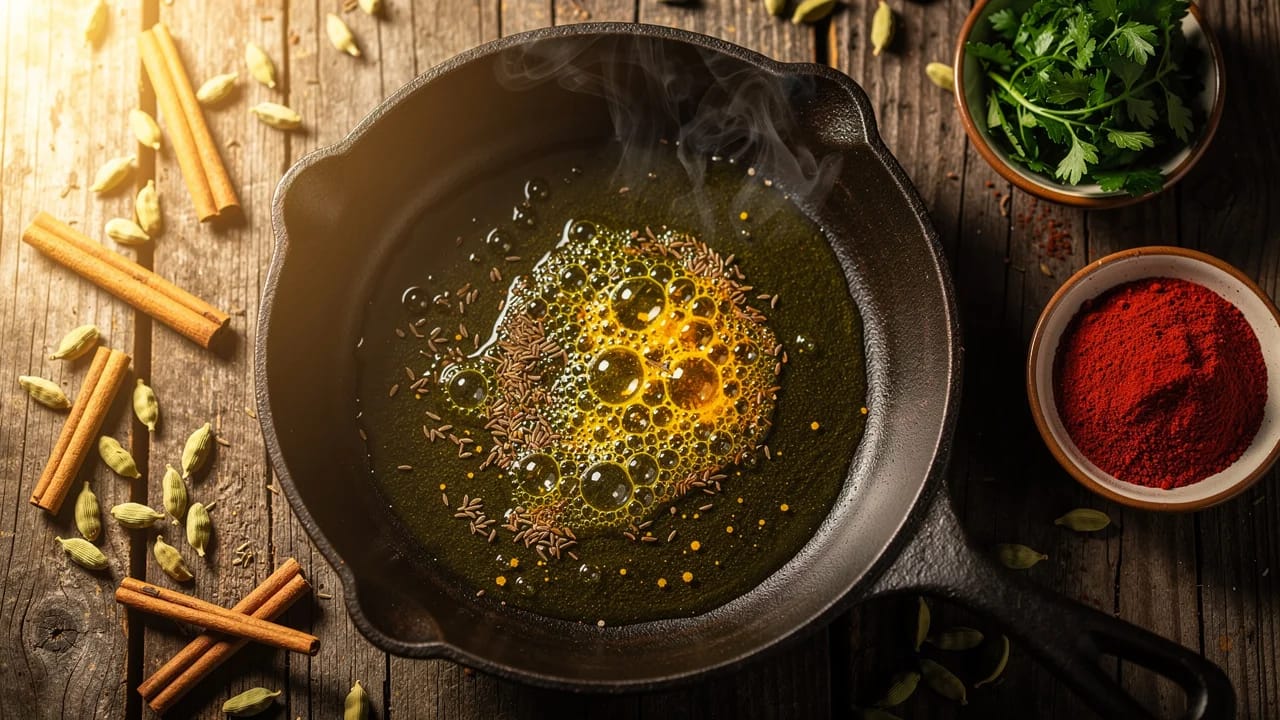
This is the single most important window, and the one most home cooks skip. Your pan is hot, your oil or butter is shimmering, and you add aromatics and whole spices. This is where blooming happens.
Whole spices like cumin seeds, mustard seeds, cardamom pods, and cinnamon sticks go in first. They need a minute or two to release their oils into the fat. Ground spices go in slightly later, after the aromatics (onions, garlic, ginger) have softened. They only need 30-60 seconds before they risk burning.
If you skip this window and dump spices straight into liquid later, fat-soluble flavor compounds stay locked inside the spice. America's Test Kitchen explains the mechanism: many of the flavor compounds in spices are fat-soluble, and briefly cooking them in fat turns those compounds from a solid into a liquid state so they can spread through the dish. The broader food science behind seasoning points the same way. Water-only cooking leaves most of those compounds behind.
Window 3: Building the base
Liquid has been added. The dish is now simmering or braising. This window is for tough dried herbs and spices that need long contact with moist heat to release their flavor: bay leaves, dried oregano, dried thyme, smoked paprika (the whole-flavor-not-garnish kind), star anise, cloves.
Tough herbs with woody stems do their work here. A few sprigs of fresh thyme or rosemary thrown into a braise at this stage release flavor over the course of an hour. You would not toss tender basil or parsley in here because the heat would cook them into nothing.
Window 4: The last 30 minutes
As the dish finishes, some flavors need to be refreshed. Ground spices that were added at window 2 have mellowed into the background, and a second, smaller dose wakes the dish back up. This is especially true for long braises and slow-cooker dishes.
This is also when delicate ground spices like garam masala, Aleppo pepper, or za'atar go in. These are blends built around fragile aromatic oils that evaporate with prolonged heat. Add them early and you cook off the top notes. Add them in the last 15-30 minutes and they stay bright.
Window 5: Off the heat, at plating
Last stop. This is the window for soft fresh herbs (basil, parsley, cilantro, dill, chives, tarragon), finishing salts (flake salt, fleur de sel), citrus zest, sumac, freshly cracked pepper, and chili oil drizzles.
These ingredients live and die by their volatile oils. A few seconds of residual heat, a quick stir, and they are at peak flavor. Longer than that and you start losing what makes them special. Chopped parsley stirred in at window 3 tastes like wet grass. The same parsley added at plating tastes bright and green.
Whole spices vs ground spices
The same spice behaves differently depending on form. A whole cumin seed and a teaspoon of ground cumin call for different timing.
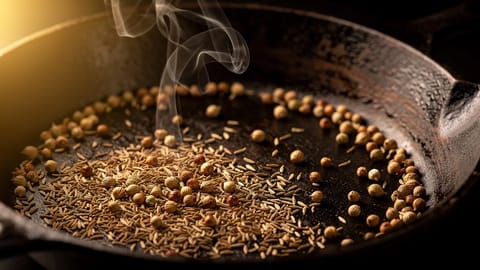
Whole spices have a protective seed coat that buffers them against heat. You can toast them in a dry pan, simmer them in a liquid for an hour, or bloom them in oil without much risk. They release flavor slowly, which is exactly what you want in a long-cooked dish.
Ground spices are the opposite. Massive surface area, no protection, volatile oils ready to evaporate or burn. Hit them with direct dry heat and they go bitter in under a minute. Hit them with fat for 30-60 seconds and they bloom. The technique of heating them in fat is laid out in the guide on how to bloom and toast spices, and it is one of the biggest single upgrades a home cook can make.
Tip: Buy whole spices when you can. Grind them as you need them. Properly stored spices last far longer whole than ground, and freshly ground tastes noticeably stronger than pre-ground of the same age. The storage guide has the shelf-life timelines.
Fresh herbs vs dried herbs
The timing split between fresh and dried herbs trips up a lot of home cooks. They are not interchangeable. The cooking times are opposite.
Dried herbs are concentrated, with most of their water already removed. Their flavor compounds are locked in the dried plant matter and need hot liquid and time to re-hydrate and release. They go in early, with the liquid, and a good practical starting point is at least 15-20 minutes of simmering.
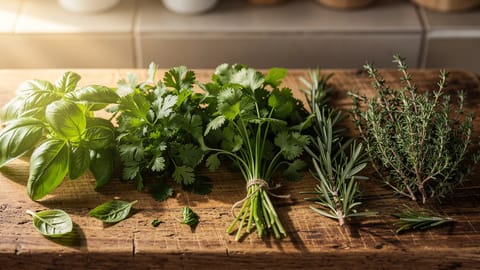
Fresh herbs split into two camps. Hardy herbs with woody stems (rosemary, thyme, sage, oregano, bay) survive long cooking and can go in at windows 2-3. Soft herbs with tender leaves (basil, parsley, cilantro, dill, chives, mint, tarragon) are fragile. Their volatile oils evaporate fast, and their color fades to drab olive. These go in at the final stretch, ideally off the heat.
The usual substitution is 1 tablespoon fresh = 1 teaspoon dried. Taste of Home's conversion guide calls this 3:1 ratio a starting point and notes that finely ground dried herbs (ground sage rather than rubbed sage, for instance) are more potent per spoon, so you may want closer to 2:1. The flavor profile is not identical either (dried oregano tastes earthier and warmer than fresh), but the intensity is in the same ballpark. If you store fresh herbs properly, you can use the fresh form more often without throwing half of it away.
Salt is its own category
Salt breaks the rules of spice timing because it is not a spice in the usual sense. It is a mineral with two jobs: seasoning and moisture management. Both jobs take time.
Salting in layers is one of the biggest habits separating home cooks who struggle with flat food from cooks whose food tastes seasoned. A pinch when you sweat the onions. Another when you add the protein. A third when you add liquid. A final adjustment at the end once the dish has reduced.
Salt added only at the end sits on the outside of the food and tastes sharp and superficial. Salt added in stages dissolves into each layer and seasons from within. Cook's Illustrated tested this with roasted carrots and beef stew: the batches salted early were seasoned throughout, and the batches salted at the end were seasoned only on the outside and tasted too salty. The principle is the same as seasoning a steak ahead of searing. Time matters as much as quantity.
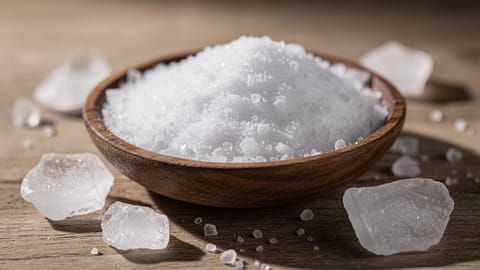
Different salts also behave differently by volume. A teaspoon of Morton kosher salt is much saltier than a teaspoon of Diamond Crystal kosher salt, and both are saltier than a teaspoon of table salt. The different salt types guide explains the crystal-size math so you can trust your measurements.
When to add seasoning to ground beef
Ground beef breaks the early-salting rule. On a steak, salt has time to dissolve and travel back into the meat. In ground beef, salt does something else: it dissolves a muscle protein called myosin, which forms a sticky gel that binds the meat together. Cook's Illustrated found that patties salted 30 minutes ahead cooked up dry and springy at the surface, while patties salted right before cooking stayed tender and juicy. That springy, sausage-like bite is exactly what you want in a sausage and not what you want in a burger or taco filling.
So the rule for ground beef is the reverse of the rule for steak. Salt it as it goes into the pan, or work the salt in just before shaping burgers, and never leave salted ground beef sitting for 15 or 20 minutes.
Dry spices follow the window 2 logic. Brown the meat first, so the surface gets the Maillard color you want, then add cumin, chili powder, paprika, or oregano to the rendered fat for 30-60 seconds before any liquid goes in. Add them while the meat is still pale and releasing water and they steam instead of bloom, and you taste raw spice dust.
A taco seasoning packet is the same idea with the liquid built in. McCormick's directions are: brown 1 lb of ground beef over medium-high heat, drain the fat, stir in the seasoning mix and 3/4 cup of water, bring to a boil, then simmer for 5 minutes. The order matters. Seasoning added to raw meat stews in the meat's own moisture, and the short simmer at the end is what thickens the sauce and coats every crumble. The same sequence works for a homemade blend of chili powder, cumin, garlic powder, and oregano, and for ground turkey or chicken.
Common mistakes (and how to fix them)
You probably added the ground spices to water instead of blooming them in fat first. Next time, heat oil in the pan, add your ground spices for 30-60 seconds until they turn fragrant and the oil takes on color, then add tomatoes or liquid. If the dish is already done, bloom a pinch of fresh spices in oil in a small pan and stir it in at the end.
Added too early or cooked too long. Soft fresh herbs go in during the last 2 minutes, ideally off the heat. For a tomato sauce, tear the basil and add it after you turn off the burner. For pesto and dressings, keep it uncooked.
Two things. First, salt the meat as it goes into the pan, not 15-20 minutes before; salting ground beef ahead of time makes it springy without seasoning it better. Second, add your dry spices after browning and draining but before any liquid. If you add them while the meat is still pale and releasing water, they will not bloom, and you will taste raw spice dust.
Long cooking mutes delicate flavors. Add a second round of spices in the last 30 minutes: a teaspoon of garam masala, fresh-cracked pepper, lemon zest, or chopped fresh herbs. The first round built the base. The second round wakes it back up.
Added too late, without enough fat to bloom it. Push the beans aside, create a well, add a spoonful of oil, and sprinkle the paprika into the hot oil for 15-30 seconds before stirring it back in. Alternatively, cook a small batch of paprika in oil separately and stir the infused oil into the chili.
How to rescue under-seasoned food
You taste the dish. It needs more spice. What do you do? Most people dump more spice in and hope for the best, which is exactly why rescue attempts often taste worse than the original.
The better move is to bloom the extra spice separately first. Take a small pan, heat a tablespoon of oil or butter, add your ground spices, cook for 30-60 seconds until fragrant, then stir the whole infused fat into the main dish. You get the bloomed flavor without the raw, dusty taste of dumping spices into an already-cooked pot.
Works for curries, stews, soups, bean dishes, and braises. Also works to revive leftover takeout that has lost its punch after a day in the fridge. A quick bloom of fresh spices in butter, stirred into leftover rice or dal, brings everything back to life.
If the dish needs brightness rather than warmth, go the other direction. A squeeze of citrus, a grating of zest, a pinch of flake salt, a drizzle of olive oil, a handful of chopped herbs. Often a flat dish is not missing spice at all. It is missing acid or fat or fresh green, and no amount of extra cumin will fix that. This is where understanding umami flavor and how it interacts with salt and acid also helps.
Practical rules for the next meal
Putting it all together
Pick one dish you cook often. A chili, a curry, a pasta sauce, a weeknight stir-fry. Apply the window framework to that one dish. Bloom your ground spices in oil before the liquid goes in. Add soft herbs at the end. Salt in layers. Then notice what changed.
It is a small adjustment in technique and a big adjustment in result. You do not need fancier spices, a new brand, or an expensive cookbook. You need to think about when each ingredient enters the pan. For the full list of spices worth keeping on hand, see the essential spices for home cooking guide. Good spices used at the wrong time still taste flat. Decent spices used at the right time taste great.
- Most ground spices bloom in fat at the start of cooking, not in liquid later
- Whole spices can go in earlier and survive longer cooking than ground
- Soft fresh herbs go in during the last 2 minutes, off the heat
- Dried herbs need early addition and time to rehydrate
- Salt in stages throughout the cook, not only at the end
- Ground beef is the exception: salt it as it hits the pan, add spices after browning
- Long cooks (braises, slow cooker) need a second spice dose near the end
- Rescue under-seasoned dishes by blooming fresh spice in a separate pan and stirring it in
Timing tells you when each spice goes in; the spice pairing chart tells you which ones belong in the pot together in the first place.
Sources
- How to Bloom Spices — America's Test Kitchen
- Salting Meat — Cook's Illustrated, America's Test Kitchen
- Science: When Should You Add Salt During Cooking? — Cook's Illustrated, America's Test Kitchen
- When to Salt Burgers — Cook's Illustrated, America's Test Kitchen
- Ground Beef Taco Recipe — McCormick
- Fresh to Dried Herb Conversion — Taste of Home