 Bastien
All-Purpose Flour
All-purpose flour (AP flour) is white wheat flour milled to a middle protein content of about 9-12%, strong enough for bread and cookies but soft enough for cakes. It is the flour a recipe means when it says only "flour", and the same product as plain flour or harina de trigo.
All-purpose flour (AP flour, or APF on packaging and in recipes) is refined white wheat flour milled to a middle-of-the-road protein content, roughly 9-12%, from hard wheat or a blend of hard and soft wheat. It's the flour a recipe means when it says only "flour": strong enough to build structure in bread and cookies, soft enough not to toughen a cake.
The name is honest marketing. One bag handles most of a home kitchen's flour work, from a Tuesday béchamel to Sunday pancakes, and it is the same product that other countries sell as plain flour, harina de trigo, farine T55 or harina 000.
What does all-purpose flour mean?
Millers grind wheat kernels and strip out the bran and germ, keeping only the starchy endosperm. All-purpose flour is that endosperm, ground and blended to land in the 9-12% protein band. BAKERpedia describes it as a general-use wheat flour milled from hard red wheat or a blend of hard and soft wheats, often around 80:20, suitable for bread, biscuits, pizza, cookies and muffins as well as for thickening gravies and sauces. Because bran removal strips nutrients, it is usually enriched with vitamins and minerals, and it is sold bleached or unbleached.
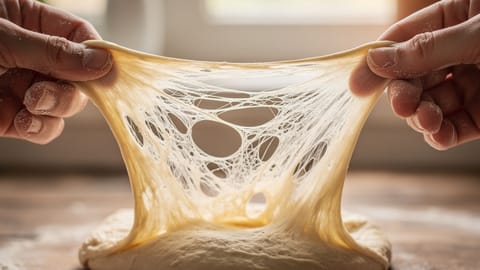
Protein matters because flour protein becomes gluten when wet and worked, and gluten is the structure of everything baked. Brands sit at different points in the band: some US all-purpose flours mill close to 12% and behave almost like bread flour, while Southern soft-wheat brands sit near the bottom of the range, which is why the same biscuit recipe behaves differently across bags. Removing the germ also removes most of the oils, which is what buys white flour its long shelf life compared with whole wheat.
"AP flour" and "APF" mean exactly the same thing. Recipe writers and forum posts abbreviate it; the bag usually spells it out.
Is all-purpose flour the same as plain flour?
Same product, different passport. What North America calls all-purpose, the UK and Australia call plain flour. Other countries classify by ash content or grind rather than protein, but these are the working equivalents:
| Country | Name | Notes |
|---|---|---|
| UK / Australia | Plain flour | Direct 1:1 equivalent |
| Mexico / Latin America | Harina de trigo (todo uso) | The standard bag without a qualifier; no leavening |
| Spain | Harina común or harina floja | Often at the low end of the protein band |
| France | Farine T55 | T45 is finer, closer to pastry flour |
| Italy | Tipo 0 | Tipo 00 is a finer grind, not necessarily weaker |
| Argentina | Harina 000 | 0000 is finer, for pastry |
| India | Maida (approximate) | Finer, softer; slightly lower protein |
| Germany | Type 550 | Ash-content system, like France |
The one that trips people up is Italian 00: the number describes grind fineness, not strength. A 00 pizza flour can carry more protein than American all-purpose.
What is all-purpose flour in Spanish?
The question comes up constantly because Spanish-language packaging rarely says "todo uso". In Mexico and most of Latin America, plain harina de trigo is the all-purpose flour; some brands add "todo uso" or "multiusos" on the label. In Spain look for harina común or harina floja; in Argentina, harina 000. The trap is harina preparada or harina leudante, which already contains baking powder and salt, the equivalent of self-rising flour.
When should you use all-purpose flour?
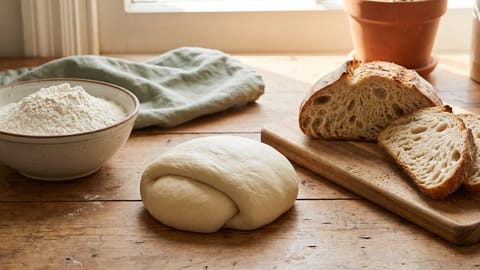
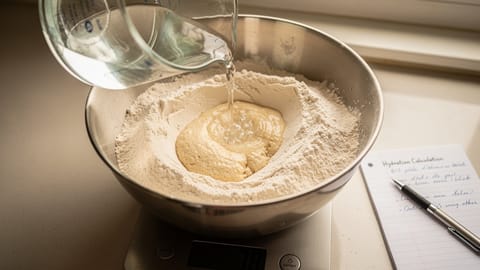
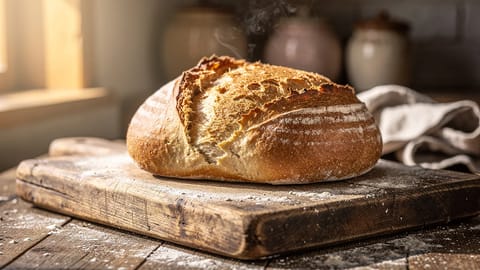
Reach for it when a recipe doesn't argue otherwise: cookies, muffins, pancakes, waffles, pie crusts, quick breads, roux-thickened sauces, and dusting surfaces. It also makes genuinely good rustic bread; a 70% hydration no-knead loaf with all-purpose comes out a touch less chewy than with bread flour, and plenty of people prefer it that way.
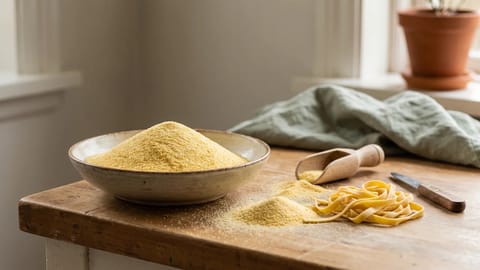
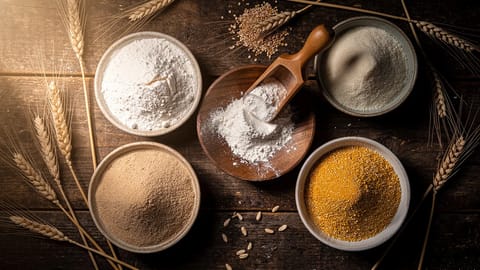
Trade up when you're at the extremes. Chewy bagels, lofty sourdough, and pizza with real pull want bread flour and its 12-14% protein. Feather-light sponge cakes want cake flour at 7-9%. Pasta and couscous traditions lean on semolina. The full map of which flour does what lives in our types of flour guide.
What's the difference between bleached and unbleached?
Freshly milled flour is slightly yellow and bakes worse; aging fixes both. Unbleached flour ages naturally over weeks in contact with air. Bleached flour gets a similar result in days using benzoyl peroxide or chlorine, which whitens the color and weakens the proteins slightly.
Bleached flour's softer proteins and altered starch surface absorb more fat and sugar, which is why old-school American recipes for high-ratio cakes and tender biscuits assume it. Unbleached flour tastes cleaner and browns a little better. In the European Union flour bleaching agents are not permitted, so flour sold there is unbleached whether or not the label says so. Unbleached is the safer default for everything.
How do you substitute all-purpose flour?
Going between flours is a protein problem, so most substitutions are about accepting or correcting a texture shift:
| Swap | What changes |
|---|---|
| Bread flour, 1:1 | Slightly less chew, slacker dough; reduce water about 1 tbsp per cup |
| Cake flour, 1:1 | Sturdier, less tender crumb; or use 1 cup minus 2 tbsp AP per cup of cake flour |
| Self-rising flour | AP + 1.5 tsp baking powder + 0.25 tsp salt per cup |
| Whole wheat, up to 50% | Denser, nuttier; add 1-2 tsp water per cup swapped |
| Maida, 1:1 | Marginally more tender; fine for flatbreads and cakes |
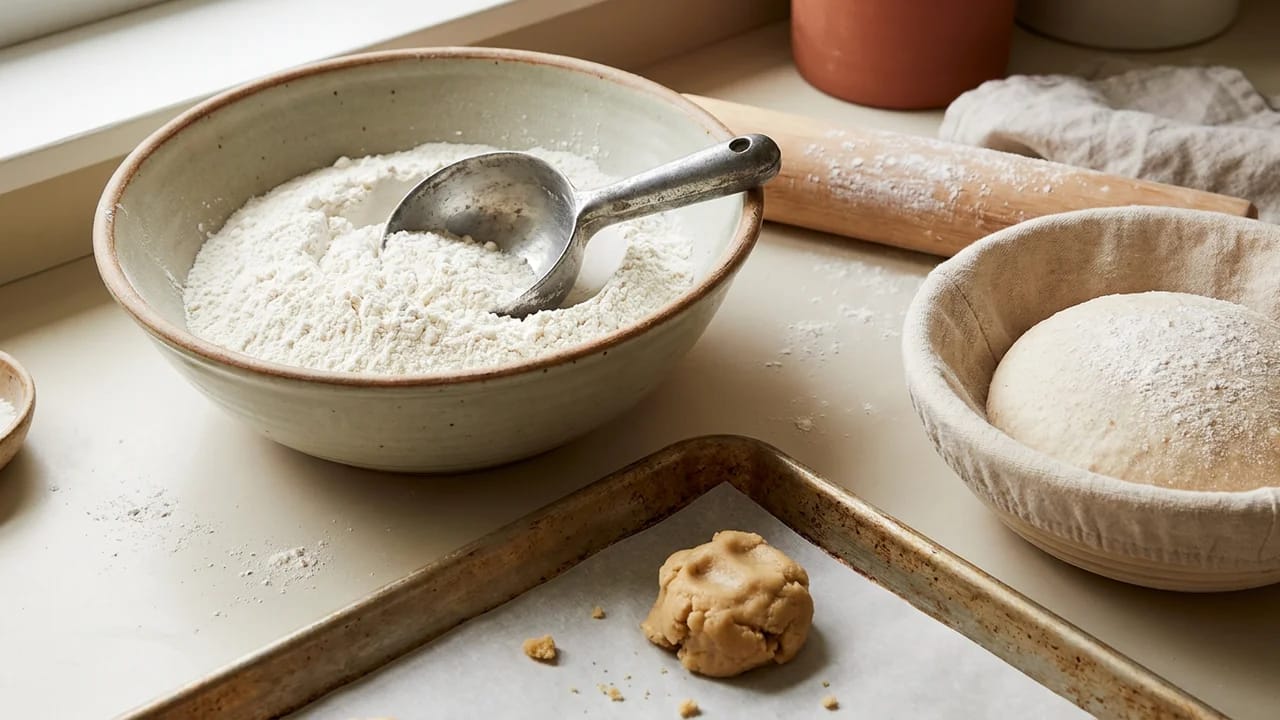
Weigh instead of scooping when precision matters: a spooned-and-leveled cup is about 120-125 g, while a scooped one packs 140-150 g. That silent 20% surplus is behind most "dry and cakey" cookie complaints, and it's why bread bakers work in percentages instead of cups.
How should you store all-purpose flour?
Airtight container, cool dark cupboard, 6-8 months. The enemies are moisture, pantry moths, and the slow oxidation of what little oil remains. For longer holding, the freezer keeps flour good past a year and kills any moth eggs that arrived with the bag; let it come to room temperature before baking so it doesn't chill your dough.
White flour's stability is the practical difference from whole wheat, which carries its oily germ and can go rancid within a few months at room temperature. If a bag smells like old crayons or damp cardboard, it's done. Fond's weight-based measurements make the scale habit easy: import a cup-based recipe and it converts to grams, so the flour you weigh matches the flour the author meant.