 Bastien
Boiling
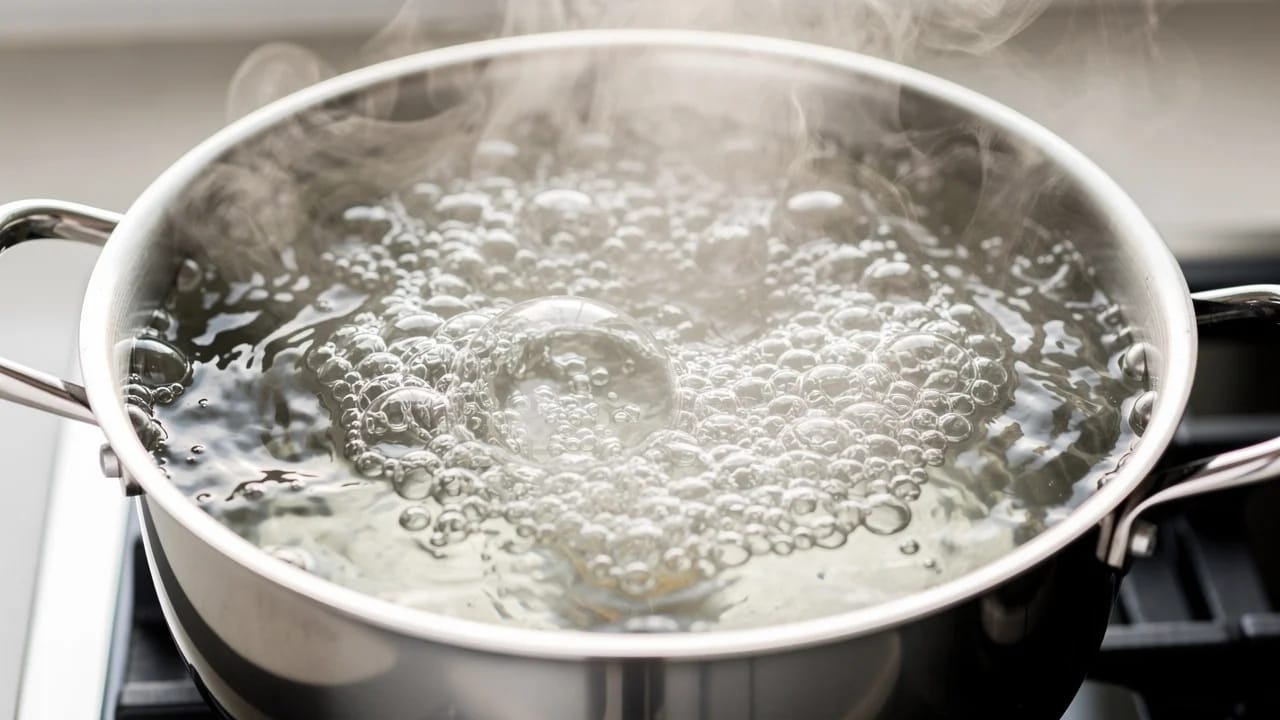
Boiling is a moist-heat cooking method that cooks food in liquid at its boiling point, identified by bubbles rising rapidly and breaking across the surface.
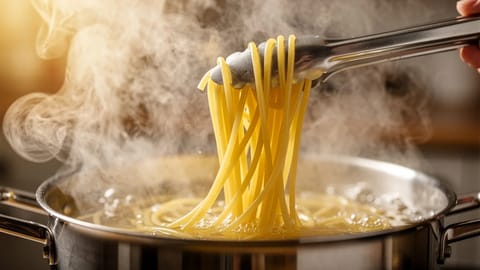
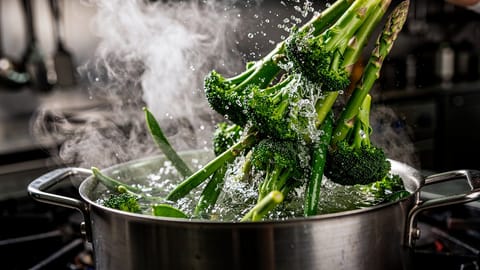
Boiling is a moist-heat cooking method in which food cooks in water or another liquid at its boiling point. At a full or rolling boil, vapor bubbles rise rapidly through the liquid and break across the whole surface. The method suits foods that can tolerate that movement, including pasta, potatoes, grains, and vegetables being blanched.
For pure water near sea level, the familiar boiling temperature is about 100°C (212°F). That number changes with atmospheric pressure, so the bubbles are a more useful kitchen cue than assuming every pot boils at exactly 100°C.
What does boiling mean in cooking?
In cooking, boiling means surrounding food with liquid that has reached its boiling point. Heat moves from the liquid into the food while bubbling keeps the liquid in motion. It is a form of moist-heat cooking, unlike roasting, frying, or searing.
A rolling boil is not automatically the right setting for every dish. Its strong movement helps keep pasta moving and brings blanching water back to temperature, but it can break dumplings, filled pasta, fish, or other delicate foods. Those foods often need a simmer or a gentle poach instead.
At what temperature does water boil?
Pure water boils at about 100°C (212°F) near sea level under standard atmospheric pressure. Boiling begins when the liquid's vapor pressure matches the pressure around it, allowing vapor bubbles to form throughout the liquid rather than only at the surface.
Once a pot is boiling steadily at a given pressure, turning the burner higher does not meaningfully raise the temperature of the liquid water. The extra energy mainly produces steam faster. That means more evaporation, more splashing, and more agitation—not a hotter cooking liquid. Serious Eats' boiling-water explainer demonstrates why controlling the boil matters more than maximizing the flame.
Salt raises the boiling point slightly, but the amount normally used in cooking does not create a useful speed advantage. Salt pasta water for flavor and follow the recipe's seasoning, not a universal ratio.
Why does altitude change boiling?
At higher altitude, atmospheric pressure is lower, so water boils at a lower temperature. Food cooked in boiling water may therefore take longer to become tender even though the pot looks just as active.
The USDA's high-altitude cooking guidance explains that turning up the heat does not solve this: water simply boils away faster once it has reached its local boiling point. Practical adjustments include allowing more time, checking doneness rather than relying only on the clock, keeping the pot covered when appropriate, or using pressure cooking when the recipe supports it. A pressure cooker raises the boiling temperature by increasing pressure inside the vessel.
What is the difference between boiling and simmering?
The clearest difference is bubble activity. A boil churns the surface with rapid, continuous bubbles. A simmer stays just below the local boiling point, with smaller bubbles rising gently and less often.
Recipes often say “bring to a boil, then reduce to a simmer.” The boil quickly brings the whole pot to its upper cooking temperature; reducing the heat then keeps the liquid hot with less evaporation and movement. A simmer is not failed boiling—it is a separate level of control.
How can you tell when water is boiling?
Read the surface rather than counting isolated bubbles on the bottom of the pan.
Tiny bubbles that form early can include dissolved gases leaving the water, so they do not by themselves mean the pot has reached a boil. For pasta or blanching, wait for the rolling surface the recipe calls for. For delicate food, stop at the gentler cue.
You rarely need a thermometer to identify an ordinary boil. An instant-read thermometer is more useful when a recipe requires a specific temperature below boiling or when you are checking food itself.
When should you use a rolling boil?
Match the strength of the boil to the food and the recipe rather than applying one rule to every pot.
| Food or task | Useful approach | Finish cue |
|---|---|---|
| Pasta | Add to well-boiling salted water, then maintain active movement and stir | Taste for al dente or the texture you want |
| Blanching vegetables | Use enough boiling water for the batch and restore the boil promptly | Stop at the recipe's color and texture cue |
| Potatoes and other dense roots | A cold-water start often promotes more even heating | A knife enters with the resistance the recipe describes |
| Grains and rice | Follow the specified liquid ratio and heat changes | Liquid absorption and texture, not a generic boiling time |
| Dumplings, fish, and filled pasta | Prefer a controlled simmer unless the recipe says otherwise | Food stays intact and reaches the intended doneness |
Pasta methods vary by shape and recipe, so a fixed liters-per-gram rule is unnecessary. Use a pot that gives the pasta room to move, stir soon after adding it, and taste near the end. For more detail, see the guide to common pasta cooking mistakes.
What are common boiling problems?
Starch or foam is rising faster than the pot can contain it. Lower the heat while maintaining the needed boil, stir, and use a larger pot next time. A lid speeds heating but can make a foamy pot overflow once boiling starts.
The liquid is too turbulent. Reduce the heat to a simmer or poach, and move the food as little as possible.
The boiling water is cooler because atmospheric pressure is lower. Allow more time, retain moisture when appropriate, and judge doneness directly.
Cover the pot, use only as much water as the recipe needs, and match the pot to the burner. Remove or vent the lid once you need to control foam and evaporation.
Tips for controlled boiling
Boiling in Fond
Fond hasn't launched yet. This is how it will work at launch. Join the waitlist for early access.
Fond's cook mode shows the recipe instructions one step at a time and makes any detected step timers available in context. When a recipe says “boil,” use its food-specific timing together with the visual cue: continuous bubbles across the surface.