 Bastien
Mandoline
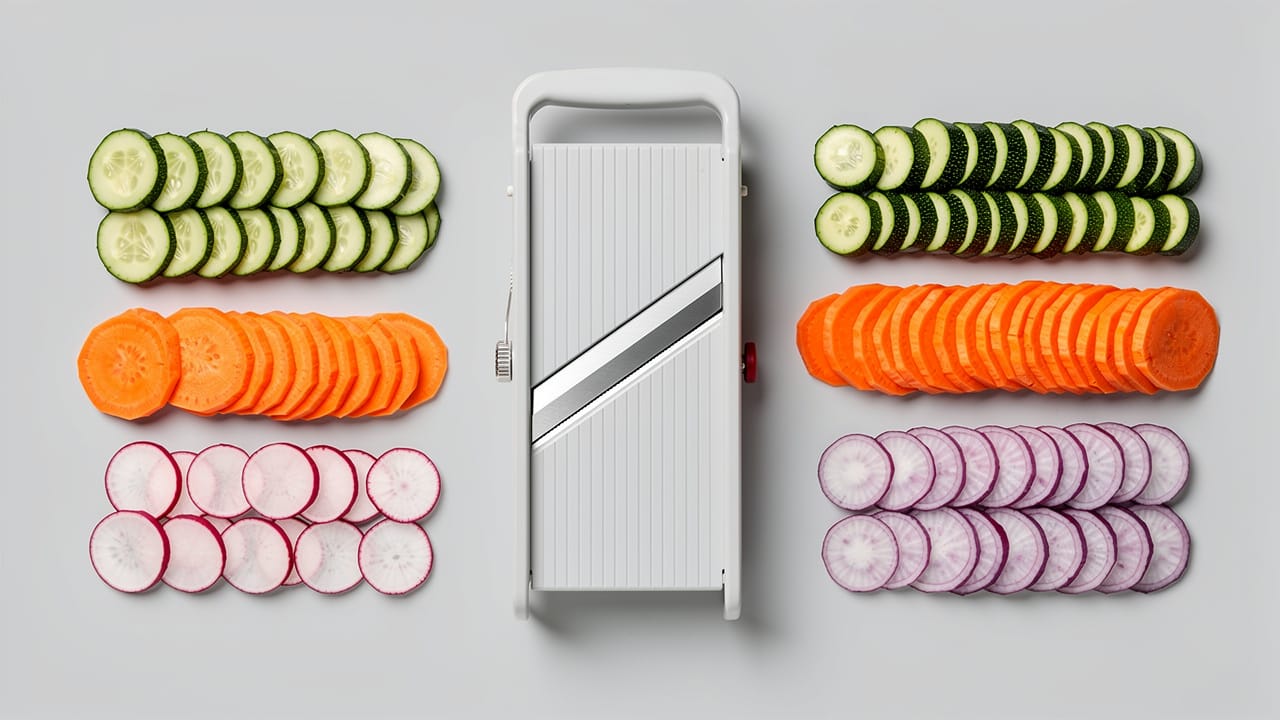
A mandoline is a slicing tool with a fixed blade and an adjustable platform that produces uniform slices, juliennes and waffle cuts down to about 1 mm. Use it with the hand guard, a cut-resistant glove and one smooth stroke per slice.
A mandoline is a slicing tool with a blade mounted between two parallel surfaces, one of them adjustable, so that every piece of food you push across it comes out the same thickness. Wikipedia describes the mechanism exactly that way, and adds that extra blades set perpendicular to the main one turn each slice into julienne strips, while other attachments make waffle and crinkle cuts. It is the tool behind paper-thin chips, perfectly layered gratins and the vegetable garnishes you see in restaurants.
Uniform thickness is not only about looks. When every slice is the same, everything cooks at the same rate, whether you're blanching vegetables, frying chips or layering a gratin. A knife in skilled hands can get close; a mandoline gets there in seconds, with far less skill and effort, which is precisely why it is also one of the most dangerous tools in the kitchen.
How do you use a mandoline?
Consistent pressure matters more than speed. Pausing halfway through a stroke leaves a step in the slice, and pushing hard makes thin slices tear. For soft foods like eggplant, use a thicker setting; for very firm ones like sweet potato, slow the stroke down. Wet vegetables slip on the blade, so dry them first.
After slicing
For potatoes headed for chips or a gratin, rinse the slices in cold water to remove surface starch; they stick less and crisp better. For salads and raw presentations, season the slices right away with salt and acid (lemon, vinegar) to draw out water and add flavor.
What are the types of mandoline slicers?
There are also compact handheld models with a fixed or limited setting for occasional use, and adjustable-dial mandolines that let you turn to a new thickness without swapping blades.
The Japanese-style mandoline is the most popular choice for home cooks: affordable, light and very sharp, with replaceable blades that keep it cutting for years. French mandolines are more robust and offer more cut types, but most home cooks don't need the extra features.
What are the common mandoline cuts?
| Cut | Thickness | How | Best uses |
|---|---|---|---|
| Straight slice | 1-3 mm | Standard blade, food flat against the platform | Chips, gratins, scalloped potatoes, pickles, carpaccio |
| Paper-thin | 0.5-1 mm | Thinnest setting, steady pressure | Radish garnish, fennel salad, fruit tarts |
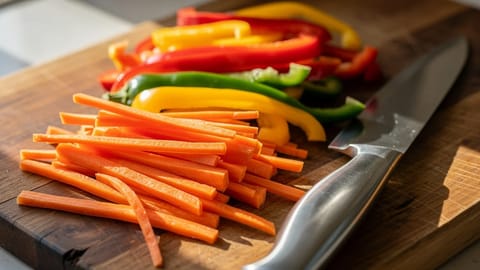
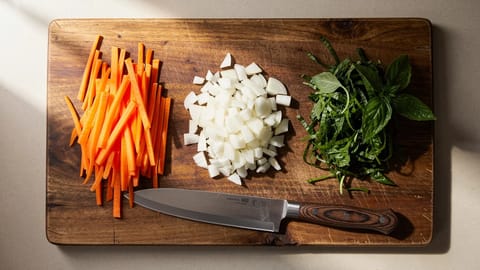
| Julienne | 2-3 mm matchsticks | Julienne blade or comb | Salads, stir-fries, garnishes, slaw |
| Waffle (gaufrette) | 2-3 mm | Waffle blade, rotate the food 90° between slices | Decorative chips, lattice potatoes, sauces that cling |
| Batons | 6-8 mm | Thick setting plus julienne blade | Fries, crudités, vegetable sticks |
The waffle cut deserves a note. You rotate the vegetable a quarter turn between each pass over the rippled blade, which creates a lattice that fries into an open, crunchy chip. It takes practice, but the results are worth it. For the knife-cut names these mimic, see the knife cuts guide.
What foods slice best on a mandoline?
Vegetables
- Potatoes: chips, gratins, scalloped potatoes, hasselback prep. The classic use.
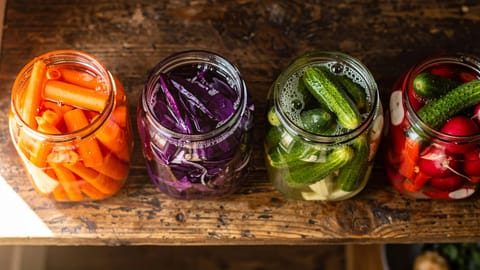
- Cucumbers: quick pickles, salads, sandwich slices. Even rounds in seconds.
- Onions: thin rings for frying, paper-thin slices for raw salads and onion soup.
- Fennel: shaved paper-thin for raw salads, which is hard to do with a knife.
- Cabbage: fine shreds for slaw, sauerkraut and kimchi, faster and more even than a knife.
- Radishes: translucent rounds for garnishes and salads.
- Zucchini and eggplant: even slices for layered dishes like ratatouille.
- Beets: thin slices to roast into chips or serve raw as carpaccio. Wear gloves; the juice stains everything.
- Carrots: julienne for slaws and stir-fries, or thin rounds for quick-cooking soups.
Fruits
- Apples and pears: paper-thin slices for tarts, salads and dehydrated fruit chips.
- Citrus: thin rounds for drinks, desserts or candying.
- Strawberries: even slices for decorating cakes and tarts.
What to avoid
Don't use a mandoline on very hard foods (raw butternut squash, turnips), very soft ones (ripe tomatoes, avocado) or anything too small to hold safely. If the food won't sit flat and steady, cut a flat base with a knife first.
What are the essential mandoline safety rules?
The blade is exposed, extremely sharp and positioned exactly where your fingers naturally go. Professional kitchens treat mandolines with the same respect as commercial slicers, and manufacturer manuals such as the Hamilton Beach / Weston guide recommend Kevlar or cut-resistant gloves whenever you handle the blades.
Most mandoline injuries happen at the end, when the food is too small to hold and you try for one more slice. Stop before that point and put the nub in your stock bag. A cut-resistant glove is the best small safety purchase in the kitchen, and many professional kitchens require one.
How do you care for a mandoline?
- Hand-wash the body straight after use, holding it by the edges. Manufacturers differ on the dishwasher: the Hamilton Beach manual allows the blades and hand guard on the top rack, while many makers say hand-wash everything. Check yours.
- Dry immediately; steel blades rust if left wet.
- Store with the blade guard on, for the blade's sake and yours.
- Sharpen or replace blades: Japanese mandolines usually have replaceable blades, French ones can be honed on a fine stone. A dull mandoline is dangerous and frustrating.
- Keep it reachable: like a kitchen scale, a mandoline buried in a drawer gets used less. Store it where you can grab it.
Mandoline in Fond
Fond hasn't launched yet. This is how it will work at launch. Join the waitlist for early access.
When a recipe in Fond calls for thin, even slices, cook mode shows that step with the target thickness next to your timers, so you can set the blade before you start and keep your mise en place moving. For weekly meal prep, a mandoline turns a pile of vegetables into slaw and gratin layers in minutes.