 Bastien
Mother Sauces
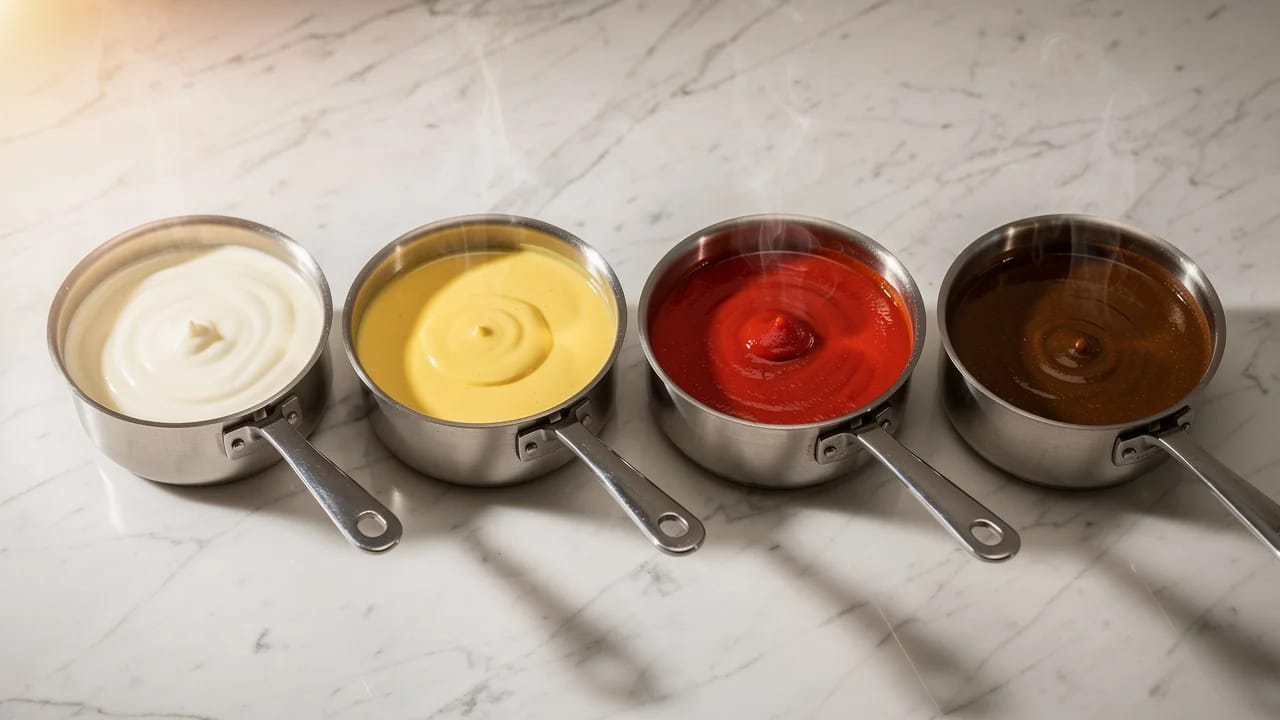
The five foundational sauces of French cooking — bechamel, veloute, espagnole, hollandaise, and tomato — from which hundreds of daughter sauces derive.
The five mother sauces are the foundation of French cooking and the backbone of most Western sauce-making. Classified by Auguste Escoffier in the early 20th century, these five sauces, bechamel, veloute, espagnole, hollandaise, and tomato, form the base for hundreds of "daughter" sauces that branch off from them.
Understanding the mother sauces matters because once you can make these five, you can make almost any sauce in the French repertoire. Add mustard to bechamel and you have Mornay. Add tarragon to hollandaise and you have bearnaise. The system is designed to build from simple foundations to complex flavors.
Three of the five mother sauces start with a roux (butter and flour cooked together). One is an emulsion. One is tomato-based. That's the entire framework.
1. Bechamel sauce (white sauce)
Bechamel is milk thickened with a white roux. It's the simplest mother sauce and probably the one you've made most often without knowing its name.
Base: Whole milk
Thickener: White roux (equal parts butter and flour, cooked 1-2 minutes without browning)
Flavor: Mild, creamy, neutral
Make the roux first: melt 2 tablespoons butter, whisk in 2 tablespoons flour, and cook for about a minute until it smells nutty but stays pale. Then slowly whisk in 2 cups of milk. Keep whisking over medium heat until the sauce thickens enough to coat the back of a spoon, about 5-7 minutes. Season with salt, white pepper, and a pinch of nutmeg.
Daughter sauces: Mornay (add Gruyere), cream sauce (add heavy cream), mustard sauce (add Dijon), soubise (add pureed onions)
Common uses: Lasagna, mac and cheese, gratins, croque monsieur, moussaka
2. Veloute sauce (blond sauce)
Veloute means "velvety" in French, and that's exactly what this sauce is. It's the same technique as bechamel, but with stock instead of milk.
Base: White stock (chicken, veal, or fish)
Thickener: Blond roux (cooked slightly longer than white roux, about 3-4 minutes, until golden)
Flavor: Light, savory, adapts to the stock used
The technique is identical to bechamel: make the roux, whisk in stock, simmer until thickened. Chicken veloute tastes different from fish veloute, which gives you versatility without learning a new technique.
Daughter sauces: Allemande (add egg yolk and cream), supreme (add cream and reduce), Bercy (add shallots and white wine), Normandy (add mushrooms and cream)
Common uses: Chicken pot pie filling, fish dishes, cream soups, vol-au-vents
3. Espagnole (brown sauce)
Espagnole is the richest and most complex of the 5 mother sauces in French cooking. It starts with a dark roux, adds mirepoix (diced onion, carrot, and celery), tomato paste, and brown stock, then simmers for hours.
Base: Brown stock (beef or veal bones roasted until dark)
Thickener: Dark roux (cooked 8-10 minutes until deep brown and nutty)
Flavor: Deep, complex, savory
This isn't a weeknight sauce. Making proper espagnole takes 3-4 hours of simmering and reducing. The dark roux provides less thickening power than a white or blond roux (the longer you cook flour in fat, the less it thickens), so the extended simmering does double duty: concentrating flavor and reducing the sauce to the right consistency.
Daughter sauces: Demi-glace (espagnole reduced by half with more stock), bordelaise (add red wine and shallots), chasseur (add mushrooms, tomatoes, white wine), Robert (add onions and mustard)
Common uses: Steak sauces, braised meats, rich stews. Demi-glace is the foundation of most fine-dining meat sauces.
4. Hollandaise sauce (emulsion sauce)
Hollandaise is the odd one out among the 5 mother sauces. No roux, no stock. It's an emulsion of egg yolks, clarified butter, and lemon juice, held together by the lecithin in the yolks.
Base: Clarified butter
Thickener: Egg yolks (emulsification, not starch)
Flavor: Rich, buttery, tangy
Whisk egg yolks with a splash of lemon juice over gentle heat (a double boiler works best, or a bain-marie). Once the yolks thicken slightly and turn pale, slowly drizzle in warm clarified butter while whisking constantly. The sauce should be thick enough to hold its shape on a spoon.
The risk with hollandaise sauce is heat. Too much and the eggs scramble. Too little and the emulsion won't form. Keep the temperature around 140-150°F (60-65°C) and you're in the safe zone.
Daughter sauces: Bearnaise (add tarragon, shallots, and vinegar reduction), choron (bearnaise with tomato paste), maltaise (add blood orange juice), mousseline (fold in whipped cream)
Common uses: Eggs Benedict, steamed asparagus, poached fish, vegetables
5. Sauce tomate (tomato sauce)
Escoffier's tomato sauce isn't the jar of marinara in your pantry. The classical version starts with salt pork or bacon, adds mirepoix, a small amount of roux, crushed tomatoes, and stock, then simmers for 1-2 hours.
Base: Tomatoes (fresh or canned)
Thickener: Light roux plus natural reduction
Flavor: Bright, acidic, savory
Modern versions often skip the roux and pork, relying on long simmering to thicken the sauce naturally. Serious Eats' classic tomato sauce follows this simpler approach. Either approach works. The key is cooking the tomatoes long enough to concentrate their flavor and mellow the acidity.
Daughter sauces: Creole (add peppers, onion, celery), Portuguese (add garlic and tomato concasse), Provencale (add garlic, olives, herbs), marinara (simplified Italian variation)
Common uses: Pasta, pizza, braised meats, shakshuka, ratatouille
The 5 mother sauces at a glance
| Sauce | Base | Thickener | Difficulty | Time |
|---|---|---|---|---|
| Bechamel | Milk | White roux | Easy | 15 min |
| Veloute | White stock | Blond roux | Easy | 20 min |
| Espagnole | Brown stock | Dark roux | Intermediate | 3-4 hrs |
| Hollandaise | Butter | Egg yolks | Intermediate | 15 min |
| Sauce tomate | Tomatoes | Roux/reduction | Easy | 1-2 hrs |
Start with bechamel. It's the fastest, the most forgiving, and you probably already have the ingredients. From there, try veloute with chicken stock, same technique, different liquid. Once those feel natural, hollandaise is worth the effort for a weekend brunch.
Espagnole is a project. Save it for a weekend when you want to fill the kitchen with the smell of roasting bones and simmering stock. The demi-glace that comes from it is worth the hours.
These five mother sauces have been the organizing framework for French cooking for over a century. Escoffier's Le Guide Culinaire codified them in 1903, and they remain the standard in culinary schools worldwide. Learn them and you have a foundation for building any sauce that follows. Browse more French cooking terms in the Fond glossary.
Cook smarter
Join the waitlist for Fond. Recipes, meal plans, and a little AI sous-chef that learns how you cook.
Related terms
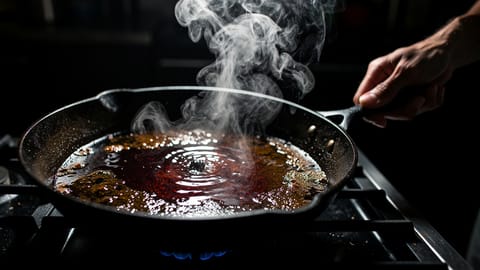
Deglazing
Adding liquid to a hot pan to dissolve the caramelized bits stuck to the bottom, creating a flavorful base for sauces.
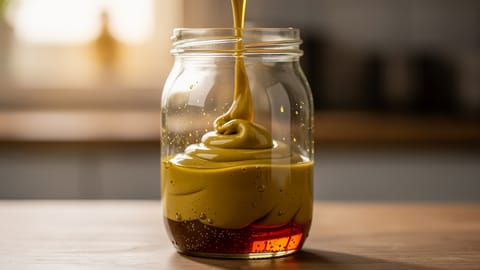
Emulsification
Combining two liquids that normally don't mix (like oil and water) into a stable, uniform mixture.
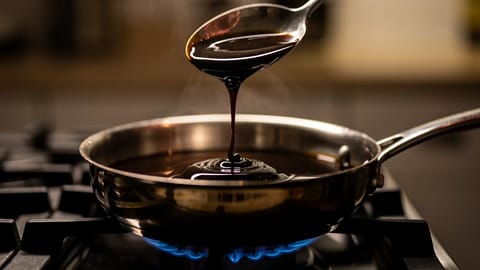
Reduction
Simmering a liquid uncovered to evaporate water, concentrating its flavor and thickening its consistency into a sauce.
Stock vs. Broth
Stock is made from bones and connective tissue for body and richness; broth is made from meat for direct flavor. Both have different culinary uses.