 Bastien
Parboiling
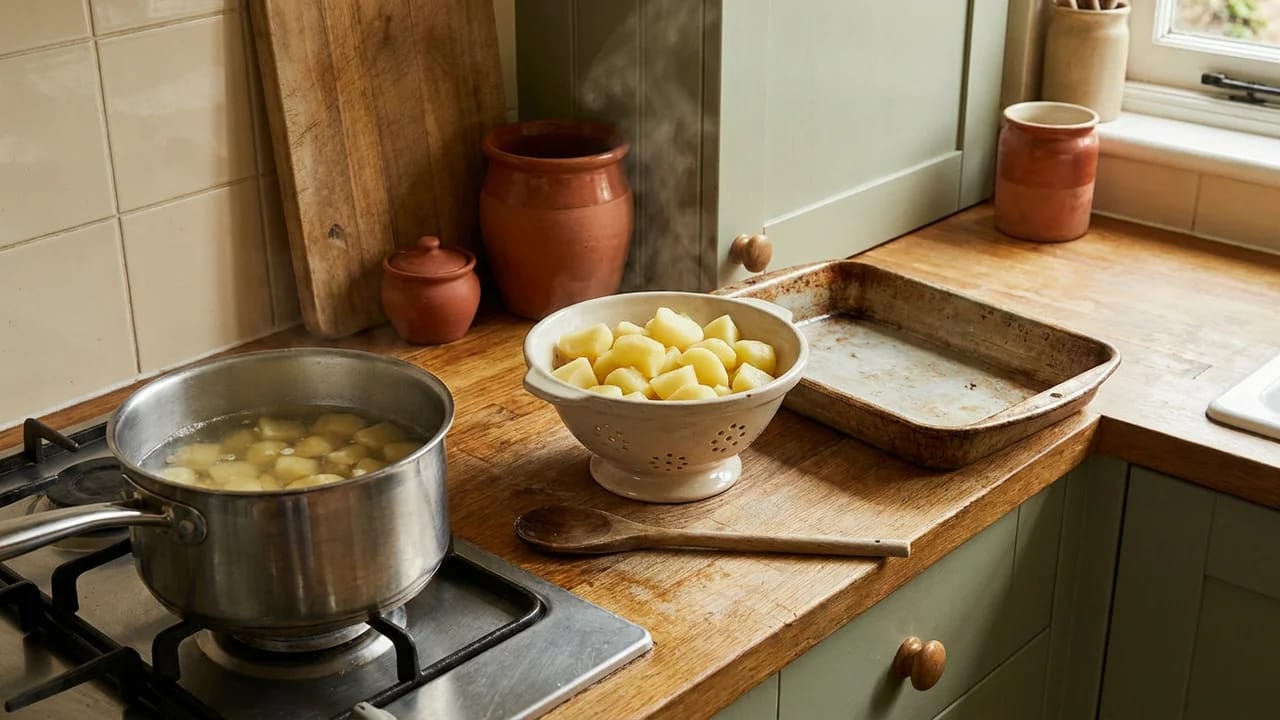
Parboiling is boiling food only until partially cooked, then finishing it another way: 8-10 minutes for potato chunks headed to a hot oven, 15 minutes for small whole potatoes, 10-15 for sausages bound for the grill.
Parboiling is boiling food only until it is partially cooked, then finishing it with another method: the oven, the grill, the fryer, or a pan. It splits cooking into two stages so each one does what it is best at. Water cooks the inside evenly, then dry heat handles the browning.
The word looks like "part-boiling" and that is how everyone uses it now, though Wikipedia notes it comes from the Old French parbouillir, "to boil thoroughly", and picked up its modern meaning through a mistaken association with "part". Either way, parboiling is the technique hiding inside most great roast potatoes, and the reason restaurant fries take two trips through the oil. Once you see the pattern (soft interior secured first, crust built second), you start noticing it everywhere.
How do you parboil, step by step?
The drying step is the one people skip. Wet food entering hot fat spatters, and wet food on a grill steams; sixty seconds in the colander with a shake buys crispness later. For roast potatoes, that shake also roughs up the surface into a starchy slurry that turns to glass in the oven.
How long do you parboil potatoes?
Potatoes are the most common thing anyone parboils, and the time depends on the cut more than the variety. Whole potatoes take far longer than chunks because heat has to travel to the center.
| Potatoes | Parboil time from the boil | Then |
|---|---|---|
| Chunks, 3-4 cm (1.5 in) | 8-10 min | Roast at 200°C / 400°F, 40-45 min |
| Halves or thick wedges | 10-12 min | Roast, grill or smash-roast |
| Small whole | About 15 min | Halve and grill |
| Large whole | 25-30 min | Grill or slice and pan-fry |
| Diced, 1 cm, for home fries | 5-6 min | Pan-fry in a hot skillet |
| Fries, first stage | 5-8 min | Fry once or twice |
The whole-potato figures come from Potatoes USA, which gives 15 minutes for small potatoes up to 25-30 minutes for large whole ones before grilling, cooked until fork-tender without falling apart. The chunk times are a practical starting point; the knife test decides. Start potatoes in cold salted water so the outside does not overcook before the center catches up, and count from the moment the water boils.
For roast potatoes, drain, let them steam dry for a minute, then shake the pan so the edges rough up. Sweet potatoes cook faster than white potatoes, so check chunks at 5-6 minutes.
What is the difference between parboiling and blanching?
They are neighbors on the same boiling spectrum, but they answer different problems. Blanching is a brief plunge (usually under 3 minutes) followed by an ice-water shock; its job is to set color, halt enzymes before freezing, or loosen skins, and the food stays close to raw. Parboiling runs longer, cooks the food a genuine fraction of the way through, and skips the ice bath because a second cooking method takes over immediately.
A test that never fails: ask what happens next. Ice bath and a freezer bag? That was blanching and shocking. A roasting tray, grill, or fryer? That was parboiling. The water and the pot are identical; the intent is not.
When should you parboil?
Whenever the outside would finish before the inside. Dense foods are the classic cases:
| Food | Parboil time | Then |
|---|---|---|
| Potato chunks | 8-10 min | Roast at 200°C / 400°F, 40-45 min |
| Whole small potatoes | About 15 min | Halve and grill or smash-roast |
| Carrots, parsnips | 4-6 min | Roast or glaze in a pan |
| Winter squash chunks | 5-7 min | Grill or roast |
| Fresh sausages | 10-15 min at a bare simmer | Brown fast on the grill |
| Chicken pieces for the grill | 10-15 min at a simmer | Finish over direct heat |
| Fries (first stage) | 5-8 min | Fry once or twice |
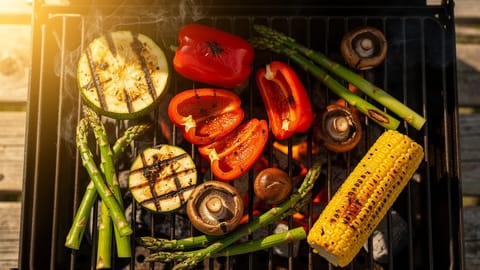
On the grill this is the difference between charred-outside-raw-inside and evenly done: dense vegetables get a head start in water precisely so the flames only have browning left to do. Keep the water at a gentle bubble rather than a rolling boil for delicate items; a simmer is easier to control and less likely to batter food apart. Parboiled sausages and chicken still need to reach a safe internal temperature in the second stage, so treat the water bath as a head start, not as the cook.
What is parboiled rice (and why is it different)?
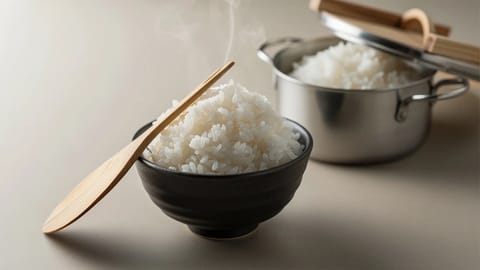
The name collision confuses everyone. Parboiled rice, sold as "converted" rice, is not rice you half-boiled at home; it is an industrial process where whole paddy rice is soaked, steamed and dried before milling. The IRRI Rice Knowledge Bank describes what the steam does: it moves micronutrients from the bran, which milling would otherwise strip away, into the endosperm, and it gelatinizes the starch so the kernels turn harder and glassier. The milled grain ends up more nutritious than regular white rice and cooks into firm, separate grains that shrug off a few minutes of overcooking.
It is the standard rice across much of South Asia and West Africa, and the usual choice for rice salads and steam tables. Cooking time varies by brand, so follow the packet rather than your jasmine-rice instinct; the ratios in our rice guide note the difference. The consistent change is texture: springy, distinct grains instead of soft, clinging ones.
What are the most common parboiling mistakes?
Overshooting is the big one: parboiled food keeps cooking in its own heat after draining, the same carryover cooking that finishes a roast, so "fork-tender" in the pot means mush on the grill. Pull at knife-with-resistance and let carryover close the gap. Under-salting the water is the quiet one; a partial cook is your only chance to season the interior of a potato. And crowding the pot staggers the cooking, which defeats the entire purpose of the even head start.
A safe habit: set a timer for two minutes less than the recipe says, test, and only then decide. In Fond's cook mode, parboil steps carry their own timers, so the two-stage dance does not depend on remembering when the first pot went on.