 Bastien
What is sous vide? Meaning and how it works
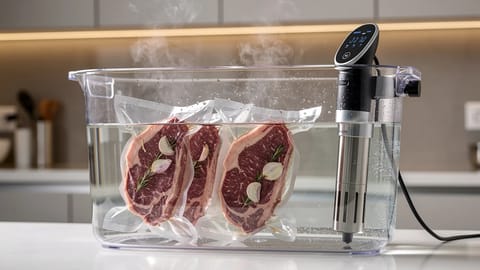
Sous vide is a cooking method where food is sealed in a bag and cooked in a water bath held at a precise temperature, typically 50-85 °C, for 30 minutes to several days. Because the water never exceeds the target, the food cooks evenly from edge to center.
Sous vide (pronounced "soo-VEED") is a cooking method where food is sealed in a bag and cooked in a water bath held at a precise, constant temperature, typically 50-85 °C (122-185 °F), for anywhere from 30 minutes to several days. The name is French for "under vacuum," after the vacuum-sealed pouches the technique was built on. The result is hard to get any other way: doneness that is even from edge to center, with no gray band of overcooked meat near the surface.
For time and temperature charts by protein and a first cook step by step, see sous vide for beginners.
The method has been used in professional kitchens since the 1970s. It reached home cooks once affordable immersion circulators arrived around 2009-2010, and today a circulator, a pot, and a bag are all you need.
How do you pronounce sous vide?
Two syllables: soo-VEED. The "s" at the end of "sous" is silent, and the "d" in "vide" is pronounced. "Soo-VYD" and "soo-VEE" are the common mistakes.
How does sous vide cooking work?
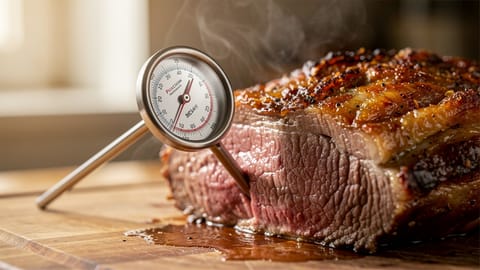
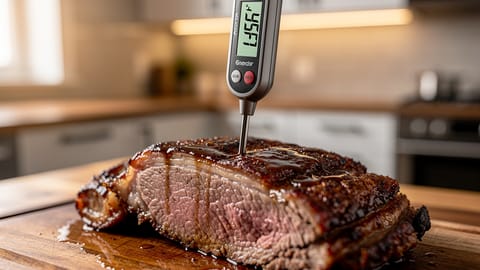
Because the water never rises above your target, the food can't overcook past that point. A steak in a 54 °C (129 °F) bath ends up at 54 °C from edge to edge, not just in the center. An instant-read thermometer after the sear confirms you haven't pushed the interior past the target.
Where did sous vide come from?
Low-temperature cooking was first described by Benjamin Thompson, Count Rumford, in 1799, and cooking food under vacuum was developed by American and French engineers in the mid-1960s as an industrial preservation method. The technique entered restaurant kitchens in 1974, when French chef Georges Pralus adopted it at the Troisgros restaurant in Roanne. He found that foie gras cooked this way kept its shape and lost far less fat than with conventional methods (Wikipedia).
In parallel, food scientist Bruno Goussault studied how temperature affects different foods and later trained chefs in the method through his research center, CREA. Through the 1980s and 1990s, sous vide stayed mostly professional because the equipment was expensive. Home-oriented machines cheaper than laboratory circulators went on sale in late 2009, and consumer immersion circulators followed over the next few years.
What are sous vide times and temperatures by food?
These are practical starting points. Douglas Baldwin's guide lists pasteurization times by thickness for anyone cooking poultry, pork, or anything for immune-compromised eaters.
The wide time windows are one of sous vide's best features. A steak at 54 °C is about as good at 1 hour as at 3 hours in the bath, which makes dinner timing forgiving.
How does sous vide compare to other cooking methods?
Confit is another low-temperature French technique, but it cooks food submerged in fat rather than in a water bath. Poaching also uses water below the boil, but without a sealed bag and with far less temperature control.
What are the advantages of sous vide?
Precision. You pick the exact internal temperature. A medium-rare steak is medium-rare throughout, not just in the center with a gray ring around it.
Consistency. Once you find a time and temperature you like, you can reproduce it every time.
Hands-off cooking. Set it and walk away. Most sous vide cooks have a wide time window, so timing doesn't need to be exact.
Hard to overcook. The water never exceeds the target, so the food reaches equilibrium and holds there. A chicken breast in a 65 °C bath can't climb to 75 °C.
Less moisture loss. The sealed bag stops flavor and moisture from evaporating during cooking (Baldwin). Meat still releases some liquid the longer it cooks, but nothing is lost to the air.
What are the limitations of sous vide?
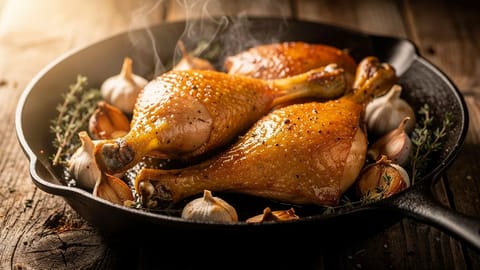
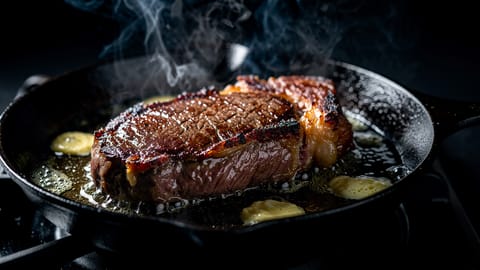
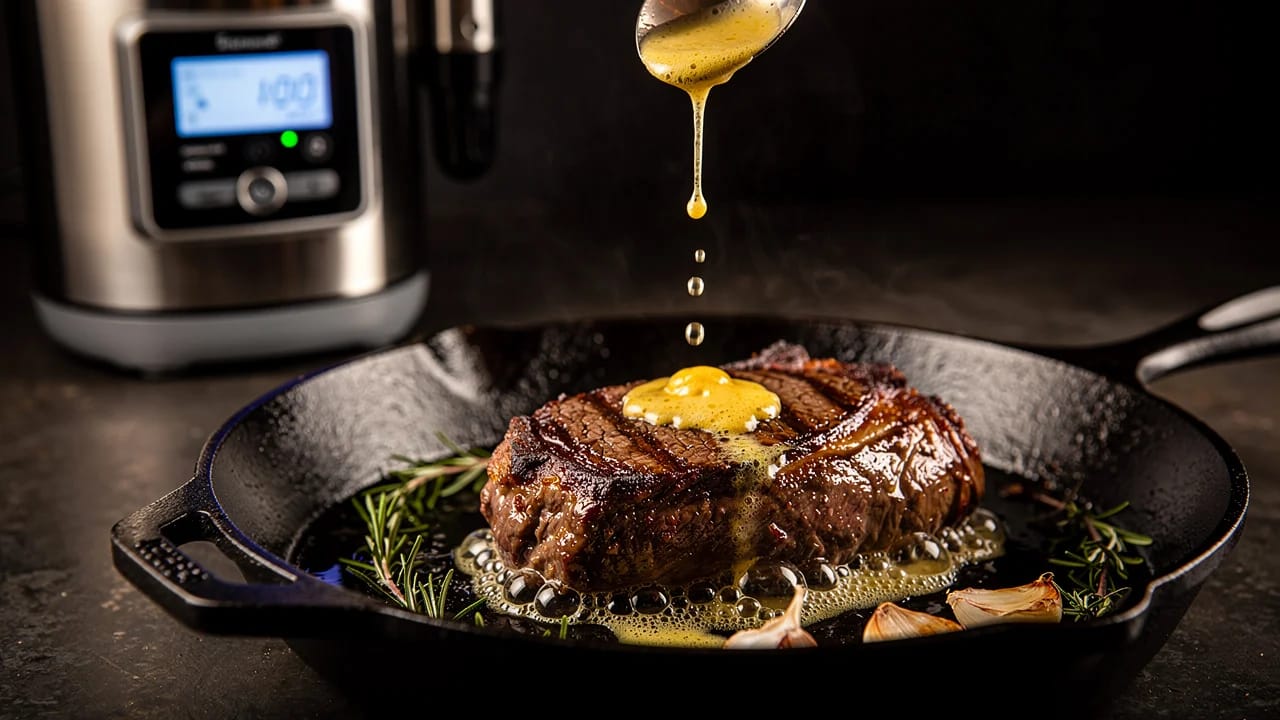
No browning. A water bath can't produce the Maillard reaction. You need a finishing step (a very hot cast iron pan, a grill, or a kitchen torch) for color and crust.
Longer cook times. Water at 54 °C heats food far more slowly than a 230 °C oven. A steak takes 1-4 hours sous vide versus 10-15 minutes on a grill.
Equipment required. You need an immersion circulator and bags at minimum. Vacuum sealers help but aren't required. Heavy-duty freezer bags work for cooks below about 90 °C (Baldwin); for higher temperatures, silicone bags or proper vacuum-seal bags hold up better.
Texture preferences. Some people find sous vide proteins, especially chicken and pork, unfamiliar. The even doneness can read as "soft" compared to the firmer texture from higher-heat methods. This is personal taste, not a flaw.
Is sous vide safe for food?
Cooking at low temperatures for a long time raises a fair question. The short answer is yes, as long as you follow a few rules.
Pasteurization depends on both temperature and time. A chicken breast held at 60 °C for long enough is as safe as one cooked to 74 °C instantly. Douglas Baldwin's pasteurization tables are the standard home reference. According to his guide, most food pathogens stop multiplying above about 52 °C, which is why sous vide recipes usually cook at 54.4 °C (130 °F) or higher, and the US Food Code allows food to sit between 5 °C and 54.4 °C for less than 4 hours. That window is the sous vide version of the food danger zone.
Vacuum sealing also prevents freezer burn when storing food long term, a nice side benefit of owning a sealer.
How do you get started with sous vide?
Start with steak. It shows the biggest difference from conventional cooking and is forgiving on time.
Dry the surface before searing. Pat the protein thoroughly with paper towels after removing it from the bag. Surface moisture is the enemy of a good crust.
Watch carryover cooking. The finishing sear adds heat. Keep it short (45-60 seconds per side) so the interior doesn't climb past your target, then let the meat rest briefly before slicing.
Save the bag juices. The liquid in the bag is concentrated, flavorful stock. Reduce it in a pan for a quick sauce.
Sous vide in Fond
Fond hasn't launched yet. This is how it will work at launch. Join the waitlist for early access.
Long cooks are easy to lose track of. In Fond, a sous vide recipe's steps carry their own timers, so you start the bath timer from the step itself and get a notification when it's time to pull the bag and sear. Cook Mode also keeps the screen awake while you work.
For a full walkthrough with a temperature chart by protein, see our sous vide beginner's guide.