Beginner Pizza Dough
Your first homemade pizza dough, from scratch. A simple same-day recipe with 4 ingredients, plus everything you need to know about mixing, kneading, and shaping before you move on to fancier stuff.
TL;DR: Pizza dough is four ingredients: flour, water, salt, yeast. Mix, knead 8-10 minutes, let it rise 1-2 hours, bake. The same-day recipe below gets you from bare counter to finished pizza in under 3 hours.
Why make pizza dough from scratch?
Store-bought dough and pre-made crusts work, but they're not in the same league as fresh dough. Here's what 15 minutes of mixing gets you:
- Better flavor — fresh dough has a wheaty, yeasty smell that packaged stuff just doesn't
- Better texture — you decide how thin, thick, crispy, or chewy the crust turns out
- Full control — dial in hydration, salt, and fermentation however you like
- It's cheap — flour, water, salt, and yeast cost pennies per pizza
- It's easier than you think — if you can stir a bowl, you can make pizza dough
The biggest mistake beginners make is overthinking it. Pizza dough is forgiving. Even a rough first attempt usually beats store-bought. Relax, follow the steps, and have fun with it.
The four pizza dough ingredients
Pizza dough is four ingredients. Knowing what each one does helps when things go wrong (and when you want to start experimenting).
Flour
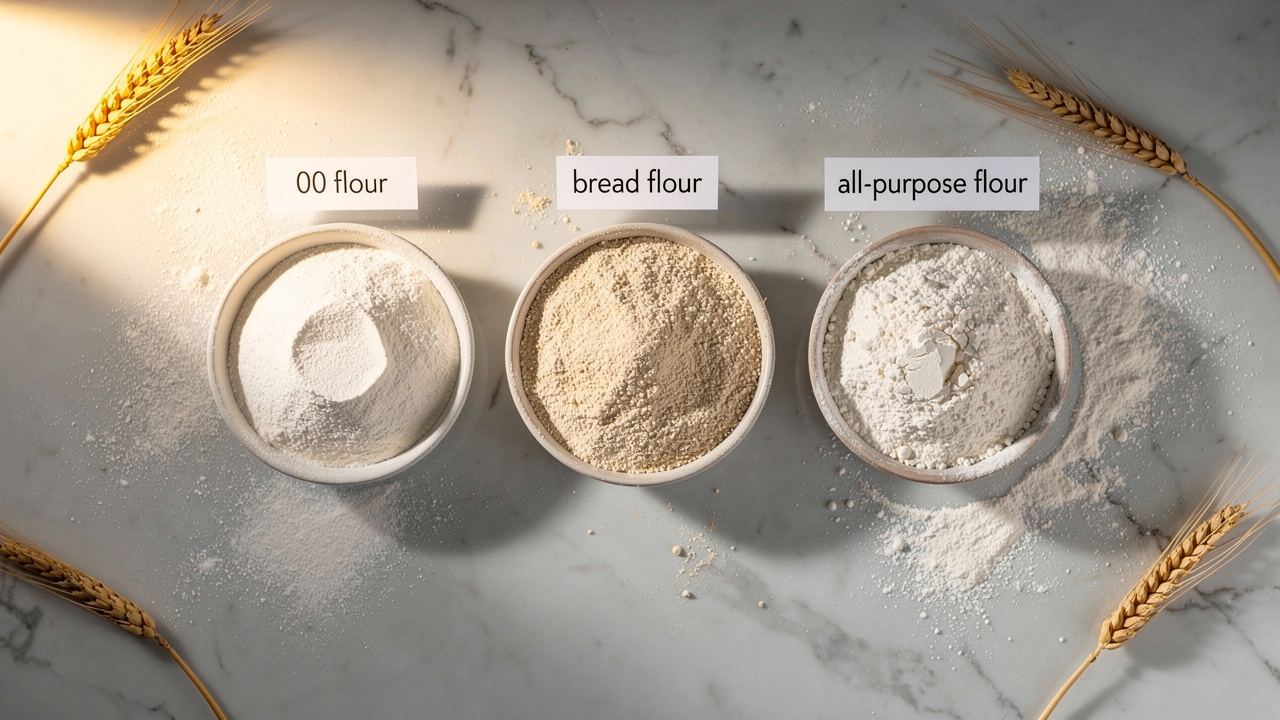
Bread flour is the best starting point. Its 12-13% protein creates enough gluten for a chewy crust with good structure. All-purpose flour (10-11% protein) works too — you'll get a slightly softer, more tender result.
Skip cake flour (too soft) and whole wheat flour (too dense) until you've got a few batches under your belt. After that, check out different flour types.
Water
Room temperature, 70-75°F / 21-24°C. Cold water slows yeast down; hot water kills it. Tap water is fine unless it's heavily chlorinated — in that case, let it sit 30 minutes or use filtered.
The ratio of water to flour is called hydration. This recipe uses 63% (315g water to 500g flour), which is easy to handle but wet enough for good gluten development. More on that in our hydration guide.
Salt
Salt adds flavor, tightens the gluten network, and keeps yeast in check. Use 2.5-3% of flour weight — about 13-15g for 500g flour. Table salt, sea salt, kosher salt, whatever you have. Dissolve coarse salt in the water first.
Warning: Don't let undissolved salt touch your yeast directly. Salt kills yeast cells on contact. Mix it into the flour first, or dissolve it in the water.
Yeast
Instant dry yeast (also labeled rapid-rise or bread machine yeast) is the easiest to work with. No activation step needed — just toss it in with the flour.
| Yeast type | Amount (per 500g flour) | Activation needed? |
|---|---|---|
| Instant dry yeast | 5-7g (1.5-2 tsp) | No — mix into flour |
| Active dry yeast | 5-7g (1.5-2 tsp) | Yes — dissolve in warm water 5 min |
| Fresh compressed yeast | 10-15g | No — crumble into flour |
For same-day dough, use the higher end (7g). For overnight dough, drop to 1-2g since the dough has hours to rise.
Same-day pizza dough recipe
Makes 4 medium pizzas (about 250g dough balls each). Ready in 2-3 hours.
Adjusting the recipe
Want fewer or more pizzas?
Our pizza dough calculator scales the recipe to any number of pizzas and adjusts all ingredients automatically.
Want a crispier crust?
- Add 1-2 tablespoons (10-15g) of olive oil to the dough
- Roll or press the dough thinner
- Bake on the lowest oven rack for more bottom heat
Want a softer, chewier crust?
- Bump hydration to 65-68% (325-340g water per 500g flour)
- Don't roll the dough — stretch gently by hand
- Bake on the middle rack
Want more flavor?
- Cut the yeast to 3-4g and let the dough rise longer (3-4 hours, or overnight in the fridge)
- Add a splash of olive oil (10-15g)
- Swap 5-10% of the bread flour for whole wheat — adds a nuttier taste
Kneading vs. no-knead: which to start with?
If kneading sounds intimidating, skip it. No-knead pizza dough uses time instead of muscle — mix the ingredients, wait 12-18 hours, done.
| Method | Hands-on time | Total time | Difficulty | Best for |
|---|---|---|---|---|
| Same-day (this recipe) | 15 min | 2-3 hours | Easy | Weeknight pizza, learning basics |
| No-knead | 5 min | 12-18 hours | Easiest | Planning ahead, minimal effort |
| Overnight fridge | 15 min | 12-24 hours | Easy | Better flavor, flexible schedule |
| Cold fermentation | 15 min | 24-72 hours | Moderate | Best flavor, advanced crust |
I'd still start with the same-day recipe. It teaches mixing, kneading, and shaping in a single session. Once that feels comfortable, try overnight or no-knead for better flavor with less work.
Pizza dough without yeast
No yeast in the pantry? You can still make pizza tonight.
Baking powder flatbread-style
Swap the yeast for 2 teaspoons (8g) baking powder. No rising time — mix, knead briefly, shape, bake. The crust comes out more like a flatbread: crispy and cracker-like, not chewy or airy. Gets the job done in a pinch.
Self-rising flour method
Combine 300g self-rising flour with 170g Greek yogurt. Mix, knead 2-3 minutes, bake. The yogurt adds moisture and a slight tang. You get a soft, biscuit-like crust — not the same as yeast dough, but surprisingly good.
Tip: Both yeast-free methods are great for pizza night with kids since there's zero waiting. For the best results though, yeast dough is worth the patience.
Common beginner pizza dough mistakes (and fixes)
1. Dough is too sticky
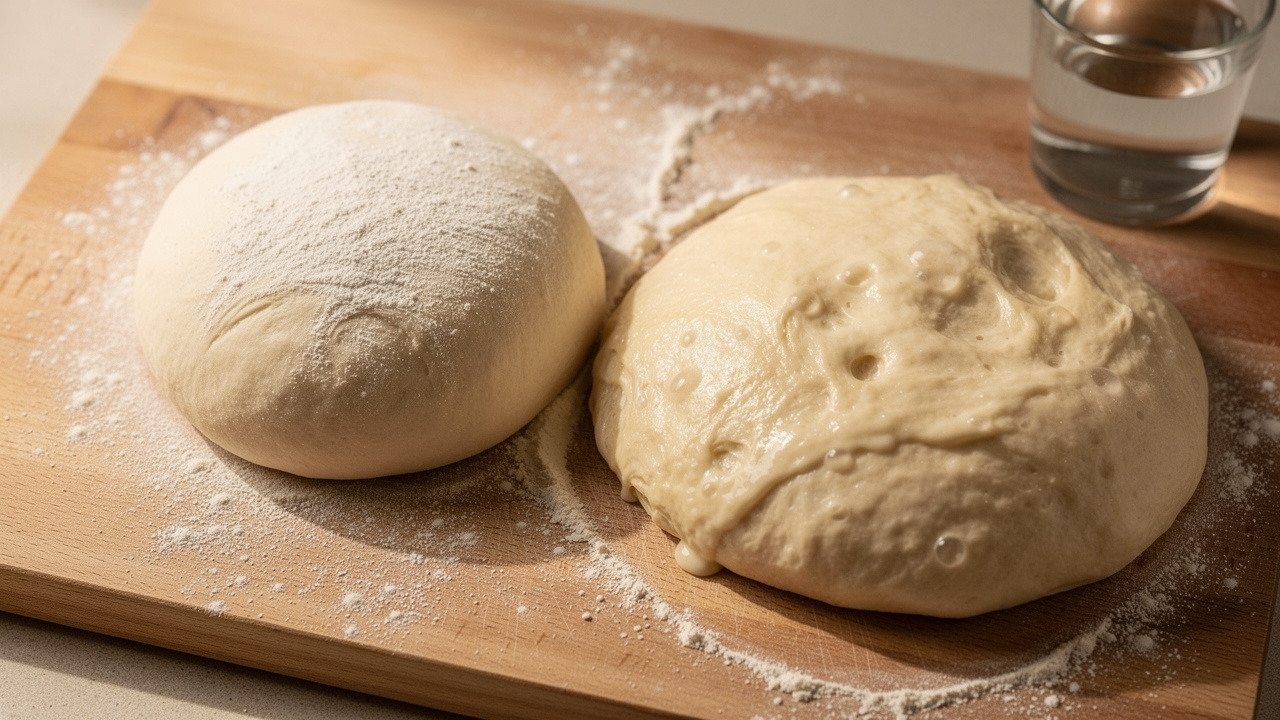
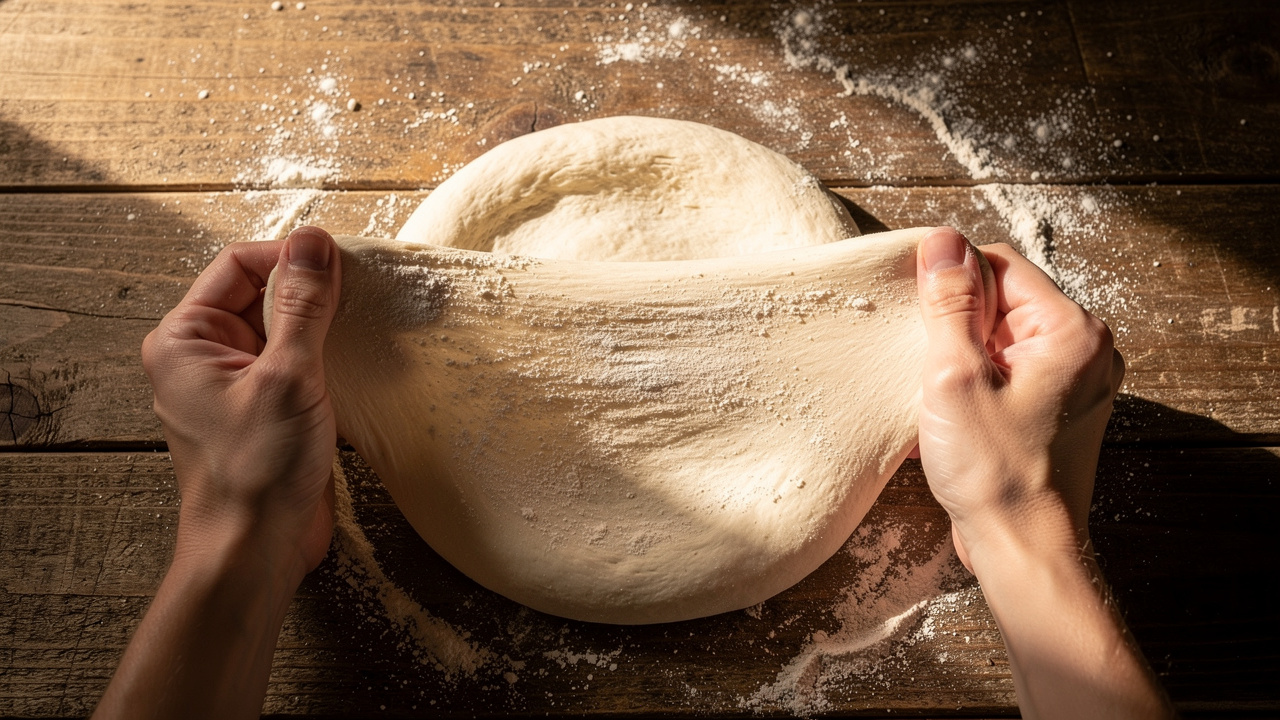
The #1 beginner complaint, and almost always the dough is actually fine. At 63%+ hydration, dough is supposed to feel tacky. Knead the full 8-10 minutes before deciding it's too wet. If it's genuinely unmanageable, add flour 1 teaspoon at a time.
2. Dough is too tough or tight
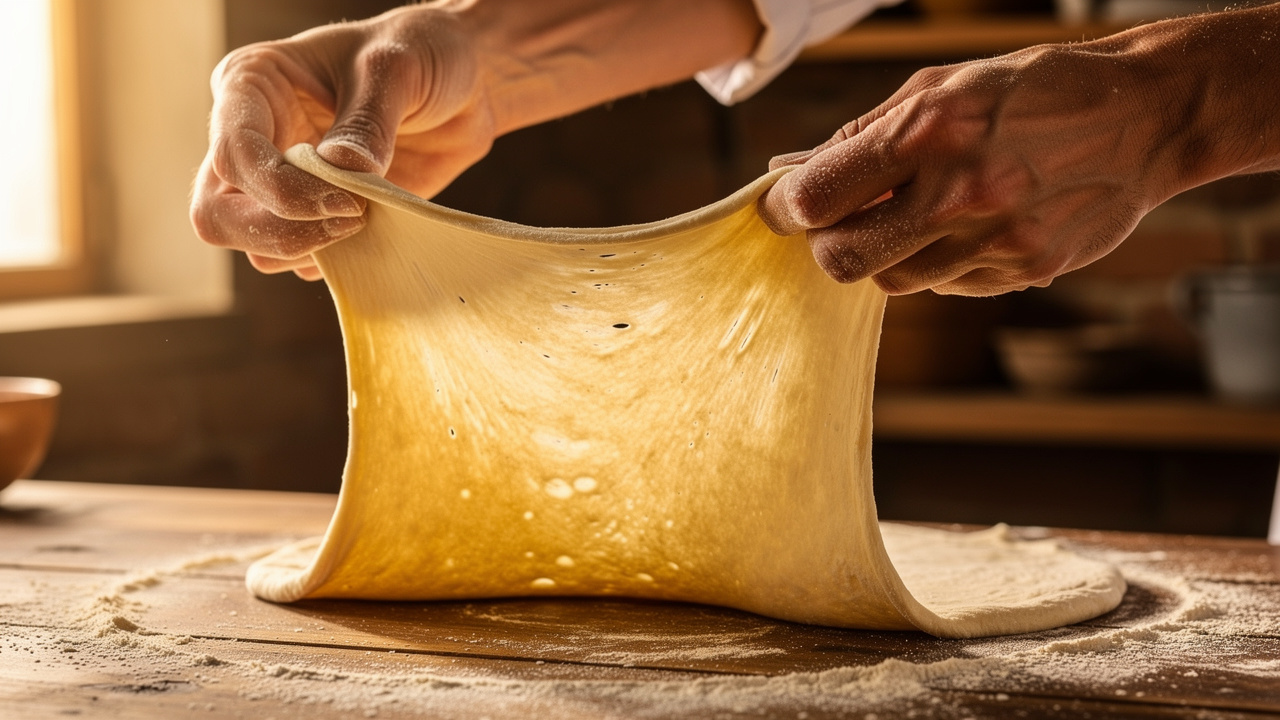
Probably over-kneaded, too much flour, or the gluten just needs to relax. Walk away for 15-20 minutes. Gluten loosens up with rest, and the dough will stretch much more easily after.
3. Dough doesn't rise
Your yeast might be dead. Test it: sprinkle some into warm (110°F / 43°C) water with a pinch of sugar. It should foam within 5-10 minutes. If nothing happens, buy new yeast. Also check your kitchen temperature — below 65°F / 18°C, yeast barely moves.
4. Dough tears when stretching
Either it hasn't rested long enough or the gluten is underdeveloped. Set it back down, cover it, wait 10-15 minutes. And make sure you're pushing outward from the center, not pulling from the edges.
5. Crust is pale and soft
The oven wasn't hot enough, or the baking surface didn't preheat long enough. Crank it to maximum. Preheat your stone/steel/sheet at least 30 minutes. Moving the pizza to the top rack for the last 2-3 minutes helps brown the top.
6. Crust burned on bottom, raw on top
The baking surface is too hot relative to the air temperature. Move the stone/steel to a higher rack, or cut preheat time slightly. Baking on parchment paper can also help insulate the bottom.
More fixes in our pizza dough troubleshooting guide.
Can you freeze pizza dough?
Yes. It freezes well and is one of the best ways to always have pizza ready on short notice.
How to freeze
- Make the dough through Step 4 (dividing into balls)
- Coat each ball lightly with olive oil
- Wrap tightly in plastic wrap, then put in a freezer bag
- Press out all the air and seal
- Keeps for up to 3 months
How to thaw
Move a frozen ball to the fridge the night before (8-12 hours). Then let it warm to room temperature for 1-2 hours before shaping. Don't microwave or hot-water thaw — the results are uneven.
What to expect
Thawed dough is about 90% as good as fresh. Slightly less oven spring, marginally denser crumb, but the difference is subtle. For weeknight pizza, that trade-off is easy to make.
Pizza dough equipment you actually need
You don't need a pizza oven or any specialized gear. Here's what matters:
Essential
- Large mixing bowl — the dough needs room to mix and rise
- Kitchen scale — measuring by weight is far more accurate than cups (a $15 scale is the single best investment for consistent results)
- Baking surface — pizza steel (best), pizza stone (great), or an inverted baking sheet (works fine)
Nice to have
- Bench scraper — handy for dividing dough and scraping the counter clean
- Instant-read thermometer — useful for checking water temp
- Pizza peel — or just use parchment paper on a cutting board
Not needed (yet)
- Pizza oven — your home oven at max temp makes great pizza
- Stand mixer — 8-10 minutes of hand kneading works and teaches you more about the dough
- Proofing box — your oven with just the light on does the same thing
Full details in our pizza equipment guide.
How long to let pizza dough rise?
It depends on how much yeast you use and the temperature:
| Yeast amount | Room temp | Rise time | Flavor |
|---|---|---|---|
| 7g instant (this recipe) | 72°F / 22°C | 1-2 hours | Mild, classic |
| 5g instant | 72°F / 22°C | 2-3 hours | Better |
| 3g instant | 72°F / 22°C | 4-6 hours | Good |
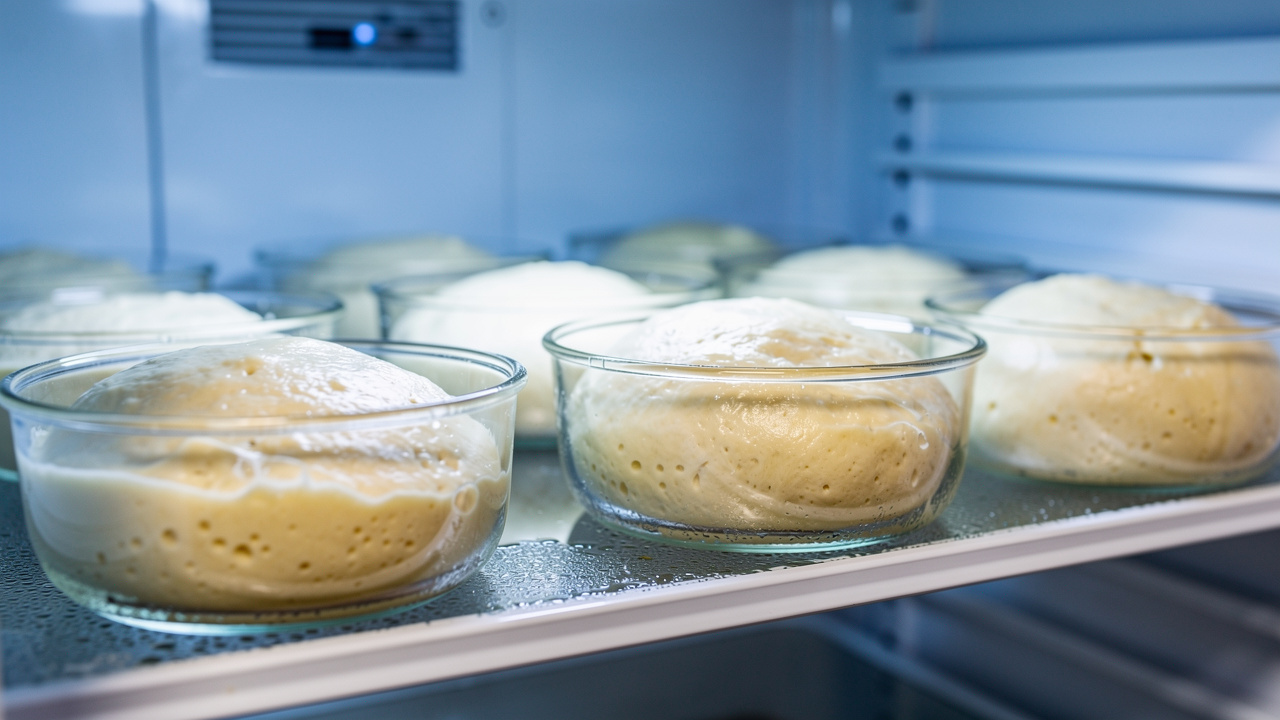
| 1-2g instant | Fridge (38°F / 3°C) | 12-24 hours | Excellent |
| 0.5g instant | Fridge (38°F / 3°C) | 24-72 hours | Complex, deep |
The pattern: less yeast + more time = more flavor. This recipe uses more yeast for speed, but after a few batches, try cutting the yeast and extending the rise. The flavor difference is real.
More on fermentation timing in our fermentation guide.
Your first pizza night: a step-by-step plan
A relaxed schedule for your first homemade pizza:
| Time | What to do |
|---|---|
| 3 hours before eating | Mix and knead dough (15 min) |
| 2.5 hours before | Cover dough and let rise |
| 1 hour before | Divide into balls, start proofing |
| 45 min before | Preheat oven to max with stone/steel |
| 30 min before | Prep toppings (sauce, cheese, veggies) |
| 15 min before | Shape first pizza and top it |
| Go time | Bake 7-12 minutes per pizza |
Tip: Make double and freeze half. You'll thank yourself later.
Next steps
Once you're comfortable with the basics:
- Try overnight dough — overnight pizza dough takes no extra work but tastes noticeably better
- Push the hydration up — go to 65-68% and see how much lighter and airier the crust gets
- Try different styles — Neapolitan, NY-style, or Detroit when you want a new challenge
- Use the calculator — our pizza dough calculator handles scaling and hydration math for you
- Dig into the science — flour, fermentation, and hydration knowledge will sharpen your instincts
Most of all — keep making pizza. Every batch teaches you something. Your tenth pie will be miles ahead of your first, and your first is already going to beat delivery.
Frequently Asked Questions
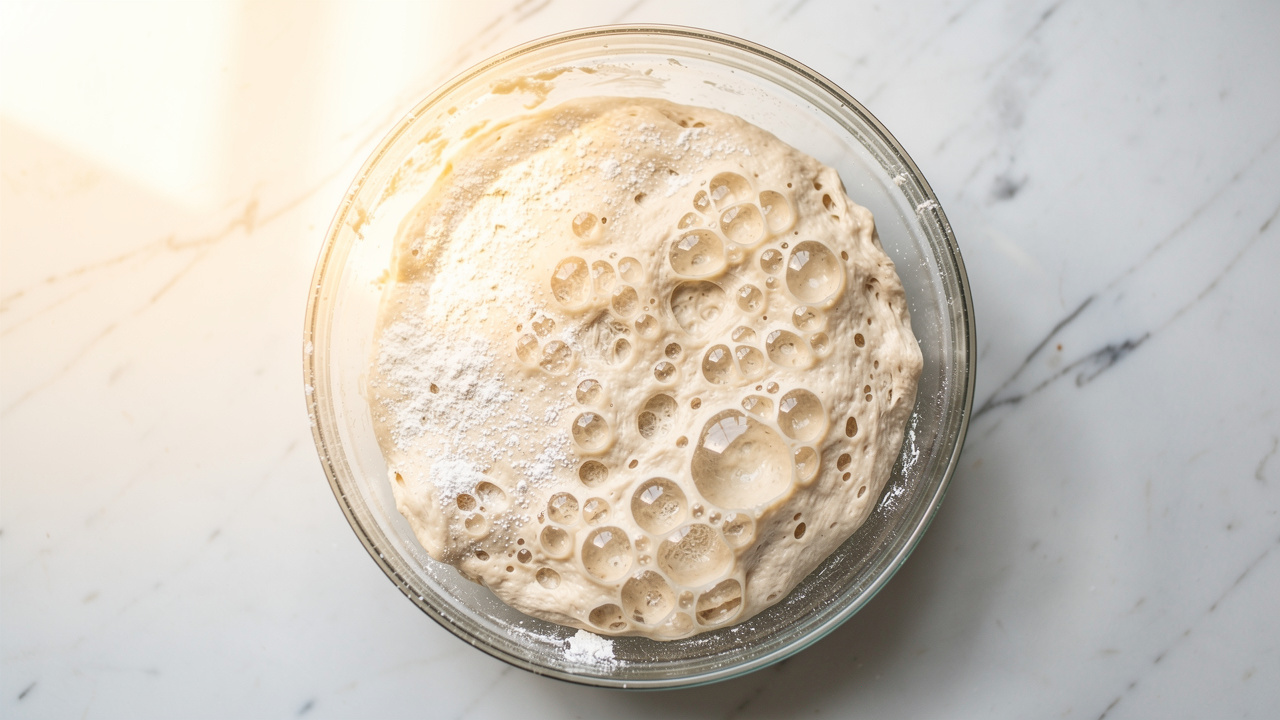
For same-day dough with 7g instant yeast, 1-2 hours at room temperature until doubled. With less yeast (3-5g), allow 3-6 hours. For overnight fridge dough with 1-2g yeast, 12-24 hours. The dough is ready when it's visibly puffy, has doubled in size, and springs back slowly when poked with a floured finger.
Yes, pizza dough freezes well for up to 3 months. After dividing into balls, coat lightly with olive oil, wrap tightly in plastic wrap, then place in a freezer bag with all air squeezed out. To use, thaw overnight in the fridge (8-12 hours), then let it come to room temperature for 1-2 hours before shaping. The quality is about 90% of fresh dough.
Properly hydrated pizza dough (63%+) is supposed to feel slightly tacky — that's normal. Knead for the full 8-10 minutes before judging; the stickiness usually resolves as gluten develops. If it's truly unworkable after kneading, add flour 1 teaspoon at a time. Common causes of overly sticky dough: too much water, not enough kneading time, or very humid conditions.
Yes, two options: (1) Replace yeast with 2 teaspoons baking powder for a flatbread-style crust — no rising needed, just mix, shape, and bake immediately. (2) Combine 300g self-rising flour with 170g Greek yogurt for a soft, biscuit-like crust. Both work in a pinch but produce different textures than yeast dough. For the best pizza experience, yeast dough is worth the wait.
For beginners, bread flour (12-13% protein) is the best all-around choice — it creates a chewy, structured crust that's easy to work with. All-purpose flour works too but gives a softer crust. As you advance, try Italian Type 00 flour for Neapolitan-style pizza (silky texture, moderate protein) or high-gluten flour (14%+) for NY-style. See our flour guide for side-by-side comparisons.
Use 7g instant yeast per 500g flour for a 2-3 hour same-day dough. Mix, knead 8-10 minutes, let rise 1-2 hours at room temperature, divide into balls, proof 30-60 minutes, then shape and bake. Total time: about 2.5-3 hours. For faster results, use warm water (80°F/27°C) and place the dough in a warm spot — you can cut the rise to 45-60 minutes.