 Bastien
Dredging
Dredging in cooking is the technique of coating food in a dry ingredient like flour, breadcrumbs, or cornstarch before frying or pan-cooking, used to create a crisp crust and help the protein brown evenly.
Dredging in cooking is the technique of coating food (usually a protein) in a dry ingredient like flour, cornstarch, or seasoned breadcrumbs before frying or pan-cooking, used to create a crisp outer crust, help the surface brown evenly through the Maillard reaction, and add insurance against sticking to the pan. The technique is small but consequential. Skip dredging on a piece of fish or a thin chicken cutlet and you get pale, anemic, and often torn protein. Do it right and you get an audibly crisp crust and a clean release from the pan.
The classic demonstration is trout amandine or sole meuniere: fillets patted dry, dragged through flour, excess shaken off. Floured fish hits the butter with a sharp hiss instead of a wet hush, browns in about 90 seconds, and releases cleanly. That small flour step separates a pale, torn fillet from a finished dish.
What is dredging in cooking?
Dredging is one of the oldest cooking techniques. It started as a way to use up flour that would otherwise go to waste, and it stuck around because the coating does real work. It absorbs the wet surface of the protein, which lets the food hit the hot fat and brown immediately instead of steaming. It creates a microscopic layer of starch that forms a thin shell when heated, giving you that crisp exterior. And in the case of fish or thin cutlets, it lifts the protein slightly off the pan, preventing tearing when you flip.
The word "dredging" can refer to fishing, mining, or river maintenance in non-cooking contexts. In cooking, it means specifically dragging food through a dry coating. The flour absorbs water, then transforms in heat into a thin crust through starch gelatinization and Maillard browning.
Note: Dredging is not the same as breading, even though people use the words interchangeably. Breading is a three-stage process: flour, egg, breadcrumb. Dredging is just the first stage of breading used by itself. The crusts and flavors are very different.
How is dredging different from breading?
Both create coatings, but they produce different textures and serve different recipes. Knowing which technique to reach for is half the battle.
The choice is mostly about what kind of crust you want. A panko-breaded chicken cutlet has a substantial, audibly-crunchy shell. A dredged-only chicken cutlet has a thin, lacy crisp that lets you taste more of the meat itself. Both are good. They're not interchangeable.
How to dredge: the standard technique
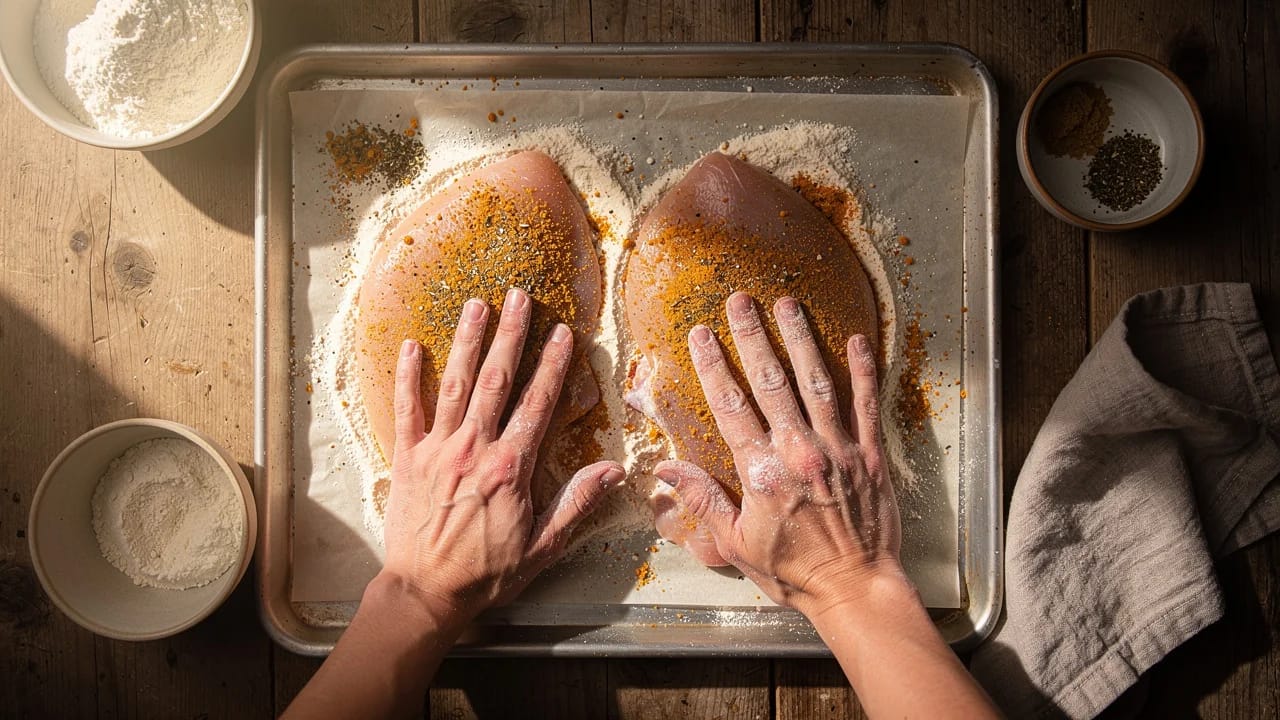
Doing this well takes 30 seconds but rewards attention to a few small details.
The visual cue is uniform coverage with no bare spots and no clumps. If the flour is clinging in damp patches, the protein wasn't dry enough. If it's falling off, you didn't press it on firmly enough or the rest time was too short.
What to use in the dredge
The mixture is where you customize the technique. The base is almost always a flour or starch.
- All-purpose flour: The default. Creates a thin, even crust. Works on almost any protein.
- Wondra flour: Pre-cooked instant flour. Gives an especially fine, even coating. Restaurants use it for fish.
- Cornstarch: Crisper than flour, used in Chinese stir-fries (velveting) and dredging fish for an audibly crackly crust.
- Rice flour: Gluten-free. Produces a very crisp, light coating. Used in tempura and many Asian fried preparations.
- Seasoned flour blends: Add 1 tsp salt, 0.5 tsp pepper, plus optional paprika (smoky), garlic powder, dried thyme or oregano, cayenne. Match the seasoning to the dish.
- Cornmeal or polenta: Adds nutty flavor and rough crust. Common with fish in Southern American cooking.
Tip: For extra crispness, dredge in flour, dip back in milk or buttermilk briefly, then dredge again. The double coating creates a thicker, craggier crust that crisps up dramatically. This is the basis of Southern-style fried chicken.
What is dredging used for?
Dredging shows up in more recipes than you'd think. Once you start noticing it, you see it everywhere.
- Pan-seared fish: Trout amandine, sole meunière, dover sole, and most pan-cooked white fish are dredged in flour or Wondra before hitting butter or oil. The thin coating absorbs surface moisture and the fish browns in 60-90 seconds without sticking.
- Schnitzel and chicken cutlets: Pounded thin and dredged (or breaded) before pan-frying. Without the flour, the cutlets steam and stay pale.
- Fried chicken: Most styles start with a dredge of seasoned flour, sometimes after a buttermilk brine. The flour creates the craggy crust.
- Pan-fried pork chops: Lightly dredging chops in flour before searing gives a thin, crisp crust and helps the pan sauce thicken when you deglaze.
- Browning meat for stews and braises: Beef cubes for braising or stew meat get a light flour dredge before browning. The flour thickens the braising liquid as the meat slowly dissolves into the sauce.
- Chicken thighs for pan-roasting: A dusting of flour on skin-side-up chicken thighs gives a much darker, crispier skin than skin alone.
- Tempura and light Asian frying: Use rice flour or a flour-cornstarch blend dredged onto thin slices of vegetables or shrimp before dipping in batter.
Why dredge chicken in flour?
Chicken is the protein people most often ask about, and the flour earns its place three times over. On cutlets, it wicks off surface moisture so the meat browns instead of steaming. On fried chicken, seasoned flour is what becomes the craggy crust, especially after a buttermilk dip. On skin-on thighs, a light dusting dries the skin and gives a noticeably darker, crispier result than skin alone. Shake off the excess in every case: a thick layer of flour tastes raw and flakes off.
Dredging in stews and braises
This is a subtle use of the technique. When you dredge cubed beef in flour before browning for a braise, three things happen.
- Better browning surface: The flour gives a wider, drier surface for Maillard browning to develop. Bare beef cubes brown patchily.
- Built-in thickener: As the floured meat simmers for hours in stock and wine, the flour gradually dissolves into the liquid and thickens the sauce naturally. No need for a separate slurry or roux.
- Richer flavor: The browned flour particles contribute their own toasted depth to the finished sauce.
This is why classic boeuf bourguignon, coq au vin, and Hungarian goulash all start with a flour dredge. Skipping it leaves a thinner, less-flavored sauce.
Dredging mistakes to avoid
Common dredging problems
Three common causes. The protein was too wet (pat it bone-dry before dredging), you didn't press the flour in firmly enough, or you didn't let the dredged pieces rest for 30 seconds to 2 minutes before cooking. The flour needs that rest time to hydrate slightly and stick.
You dredged the protein too far ahead of cooking. Flour on damp protein absorbs water and turns into wet paste. Dredge right before cooking, not 15 minutes ahead.
The flour wasn't deep enough in the tray, or you didn't press the protein into it firmly. Use 1cm of flour in a wide tray and press gently on both sides.
The pan was too hot or the protein was too thick. For thick cutlets and chops, sear quickly to set the crust, then finish in a 175°C / 350°F oven. For thin pieces, the dredge and the protein cook in the same 60-90 seconds.
The cook time was too short, or the flour layer was too thick. Shake off excess flour after dredging. The coating should be thin and even, not clumpy.
How dredging fits with other technique foundations
Dredging is one of those small technical habits, alongside mise en place, seasoning meat in advance, and carryover cooking, that quietly separates competent home cooking from sloppy execution. None of them are dramatic on their own. All of them compound. A piece of fish that has been seasoned 30 minutes ahead, patted dry, dredged in seasoned flour, rested briefly, and dropped into a screaming-hot pan cooks differently from the same fish thrown in raw. The crust, the color, the release from the pan, and the time to brown all improve. Once you build the habit, you stop noticing you're doing it.
Note: Dredging works on almost any cuisine where pan-cooked protein is the goal. The seasonings change (cornstarch and ginger for stir-fries, rice flour and salt for tempura, seasoned flour and paprika for Southern fried chicken), but the underlying technique is the same: dry surface, dry coating, hot fat, fast brown. Once you have the move, you can adapt it across the kitchen.