
Cook smarter

Join the waitlist for Fond. Recipes, meal plans, and a little AI sous-chef that learns how you cook.

Fond
Bastien Bastien

Fond

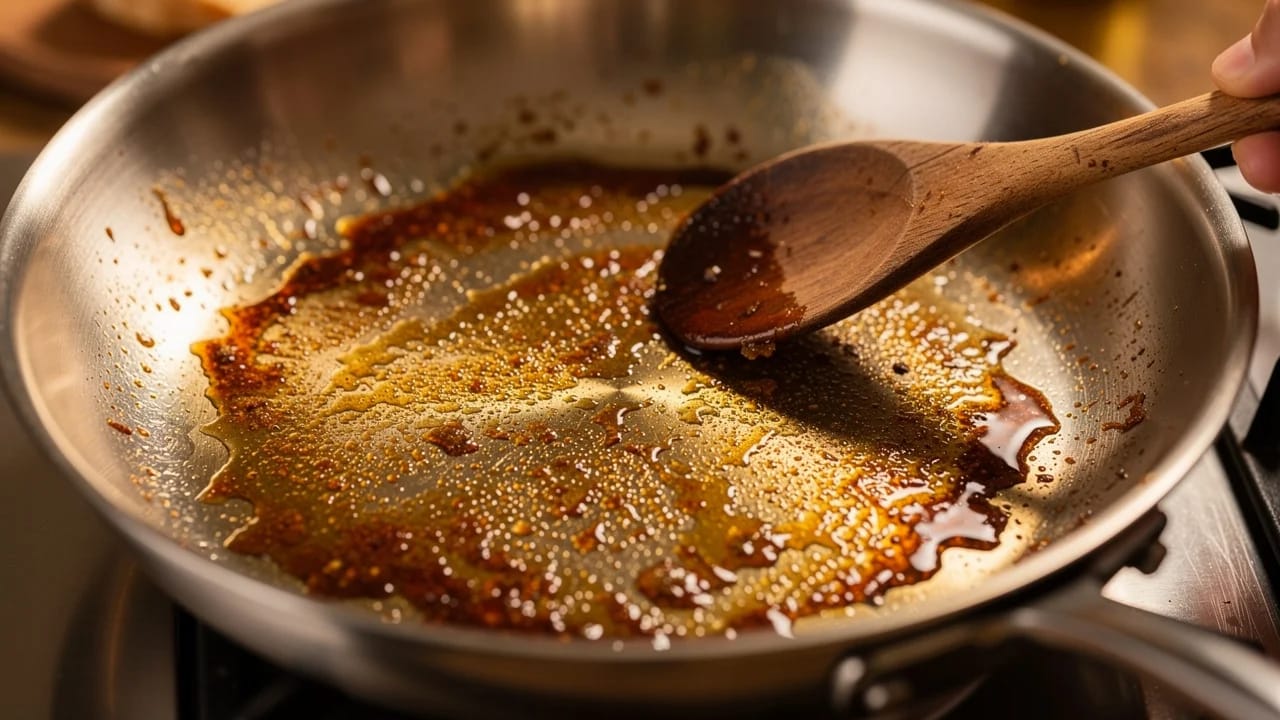
Fond is the caramelized browned bits that stick to the bottom of a pan after searing meat or vegetables β€” a product of the Maillard reaction, the French word means "foundation" and fond is the foundation of pan sauces and gravies.

Fond is the French culinary term for the caramelized browned bits that stick to the bottom of a pan after searing meat, poultry, or vegetables. The word means "base" or "foundation" in French, and that is exactly what fond is: the foundation of great pan sauces, gravies, and braises.

If you have ever scraped the bottom of a hot skillet with a wooden spoon after browning a steak and thought "this smells incredible," you have already met fond. Those dark golden-brown patches are not burnt food. They are hundreds of concentrated flavor compounds waiting to become a sauce. I remember the first time I actually paid attention to them: I was about to wash the pan when the smell stopped me. That was the night I made my first real pan sauce, and it changed how I cook weeknight dinners.

How does fond form?

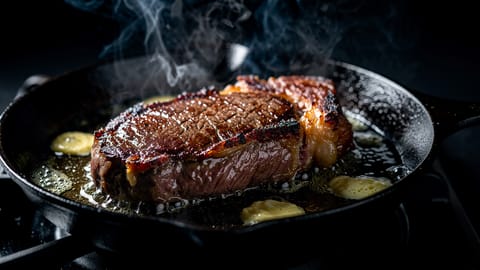
Fond is a product of the Maillard reaction, the chemical process where proteins and sugars break down and recombine under high heat. This produces new flavor compounds and that characteristic deep brown color. As food makes contact with the hot pan surface, moisture evaporates, and a thin layer of these reaction products bonds to the metal.

Building Good Fond
Do
Pat meat dry with paper towels before it hits the pan
Preheat the pan until a water drop sizzles and evaporates on contact
Use stainless steel, cast iron, or carbon steel cookware
Let food sit undisturbed for full surface contact
Don't
Use a nonstick pan (the coating prevents fond from forming)
Move the food around constantly
Crowd the pan (too much food causes steaming, not searing)
Start with a cold pan

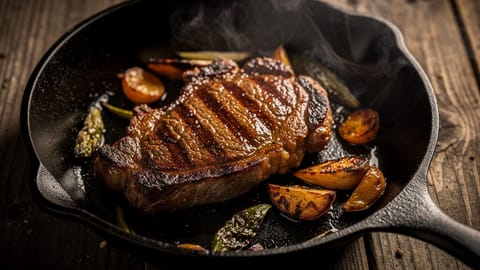
When you lift the protein and see dark brown patches on the pan bottom, you have fond.

Why does "fond" have two meanings in French?

Here is where it gets interesting. In French cuisine, "fond" does not only refer to the browned bits in a pan. It is also the word for stock, the slow-simmered liquid that forms the backbone of classical French cooking. The pronunciation is the same either way: "fohn," with a soft nasal ending (not "fahnd").

  • Fond de veau β€” veal stock
  • Fond de volaille β€” chicken stock
  • Fond brun β€” brown stock (made from roasted bones)
  • Fond blanc β€” white stock (made from unroasted bones)

The two meanings are connected. When you deglaze the pan fond (browned bits) with a liquid fond (stock), you are combining two layers of deep, concentrated flavor. This is the principle behind every great French sauce. The word was chosen for both because each one serves as a foundation: one for the pan, one for the pot.

How do you use fond?

Building fond is only half the job. You need to capture it.

1
Sear your protein at high heat in a stainless steel or cast iron pan until a rich brown fond has developed on the pan bottom. Remove the protein to a plate.
2
Pour off excess fat. Leave about 1 to 2 tablespoons in the pan, enough to coat the bottom.
3
Add minced shallots, garlic, or herbs. SautΓ© for 30 seconds to a minute, stirring them through the fond.
4
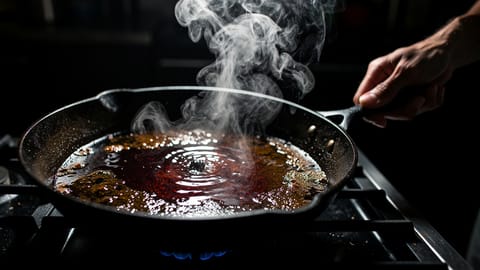
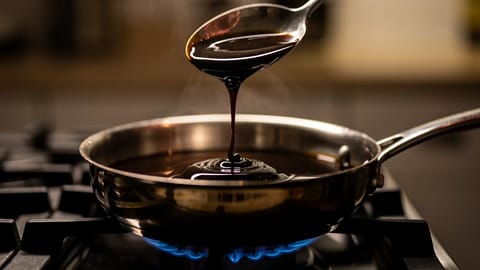
Deglaze with wine, stock, or another liquid. The moment the liquid hits the hot pan, it will sizzle and steam. That is the fond dissolving.
5
Scrape the bottom with a wooden spoon or flat spatula to loosen every bit of fond from the pan surface. Do not leave any behind.
6
Reduce the liquid until it thickens to sauce consistency, usually by half or more. The sauce should coat the back of a spoon.
7
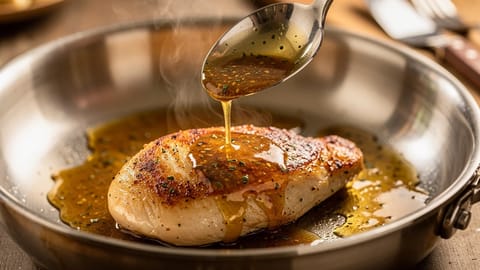
Swirl in a tablespoon of cold butter off heat for a glossy, silky texture. Season with salt, pepper, and a squeeze of lemon or splash of vinegar to brighten.

Total time from searing to finished sauce: about 5 to 8 minutes. After making a few dozen of these, I can say honestly that no jarred sauce comes close. The depth of flavor you get from those browned bits is something money can not buy.

What are the best pans for building fond?

Not all cookware is created equal when it comes to fond.

Good for FondNot for Fond
Stainless steel Excellent: light surface lets you see fond color Nonstick: coating prevents food from sticking, which prevents fond entirely
Cast iron Very good: heat retention builds strong fond Ceramic nonstick: same problem as regular nonstick
Carbon steel Very good: lighter than cast iron, great for high heat Glass or enamel: poor heat conductivity for searing

If you are serious about pan sauces, a good stainless steel skillet is worth the investment. I reach for my tri-ply stainless more than any other pan in the kitchen for exactly this reason.

What are the most common fond problems?

Common Fond Problems

Your heat was too high, or the food cooked too long. Black fond is burnt and will make a bitter sauce. Wipe out the pan with a paper towel and start over. There is no saving burnt fond.

The pan is not hot enough, the food surface is too wet (pat it dry), or you are using a nonstick pan. Crowding the pan can also prevent fond, because too much food lowers the temperature and causes steaming instead of searing.

Normal for lighter proteins like chicken breast or fish. You will still get flavor. Use a more concentrated deglazing liquid like wine rather than water. Fattier or thicker cuts of beef and pork produce the heaviest fond.

This happens with high-sided pans and is a bonus. When you deglaze, scrape the sides too. Some cooks add a splash of extra liquid and swirl the pan to capture every bit.

How is fond used in braised dishes?

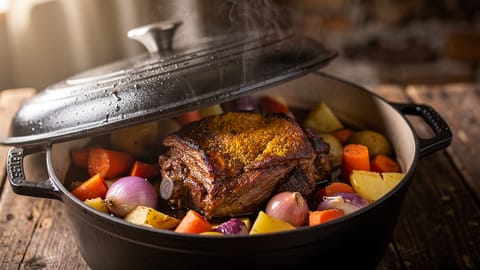
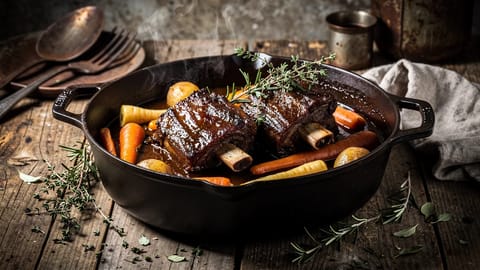
Fond is not only for quick pan sauces. It is the first layer of flavor in braised dishes too. When you brown a chuck roast or short ribs before braising, the fond that develops on the pan bottom enriches the entire braising liquid over hours of slow cooking. This is why recipes always tell you to brown the meat first. Skipping that step means skipping the fond, and the finished dish will taste flat.

After browning, deglaze the pot with wine or stock, scrape up all the fond, then return the meat and add your braising liquid. Every spoonful of the finished sauce carries the depth of that initial sear.

Why we named our app Fond

We named our app Fond because great cooking starts with a strong foundation, whether that is the browned bits in your pan or a well-organized recipe collection. A recipe app should work the way fond works in cooking: it sits underneath everything, quietly making the whole meal better. Your recipes, your meal plans, your shopping lists are the foundation that turns weeknight cooking from stressful to satisfying. That felt like a name worth keeping.

Sources

  1. On Food and Cooking: The Science and Lore of the Kitchen – Harold McGee
  2. The Maillard Reaction: Chemistry, Biochemistry and Implications – Harry Nursten

Cook smarter

Join the waitlist for Fond. Recipes, meal plans, and a little AI sous-chef that learns how you cook.

Frequently asked questions

Fond concentrates hundreds of flavor compounds produced by the Maillard reaction. When proteins and sugars caramelize against the hot pan, they create new molecules with deep, savory, slightly sweet flavors that do not exist in the raw ingredients. Dissolving those compounds into a sauce spreads that concentrated flavor across every bite.

Wine (red or white), stock, broth, beer, cider, vinegar, citrus juice, or even plain water all work. The liquid just needs to be hot enough to dissolve the fond. Wine and stock produce the most flavorful results. Avoid cream as your first deglazing liquid because it does not dissolve fond as effectively as thinner liquids.

Yes. Mushrooms, onions, and tomatoes produce some of the best vegetable fond because they are rich in sugars and amino acids. Cut them into flat pieces so they make full contact with the pan surface. Vegetable fond tends to be thinner than meat fond, so deglaze with a concentrated liquid like stock rather than water.

Color is your guide. Good fond ranges from golden to dark brown. Burnt fond is black, and it smells acrid rather than savory. If you see black spots, wipe the pan clean with a paper towel and start over. There is no way to rescue burnt fond without making the sauce bitter.

Not really. Grills have grates instead of a flat surface, so the browned bits fall through or stick to the grate where they are hard to collect. If you want fond and grill flavor, sear the meat in a cast iron pan on the grill grate, then deglaze the pan as usual.