 Bastien
Leavening Agents
Substances that produce gas in dough or batter, causing it to rise — including yeast, baking soda, baking powder, and mechanical methods like whipping.
A leavening agent is any substance or technique that introduces gas into a dough or batter, making it rise and develop a lighter texture. Without leavening, bread would be a dense brick and cake would be a flat, gummy disc. Every baked good depends on at least one type of leavening — and many use two or three working together.
Leavening agents fall into three broad categories: biological (yeast and bacteria), chemical (baking soda, baking powder), and mechanical (whipped eggs, creaming, lamination). Each works differently, suits different applications, and comes with its own set of pitfalls. Understanding them means understanding why your bread rises, why your muffins dome, and why your soufflé collapses.
Biological leaveners
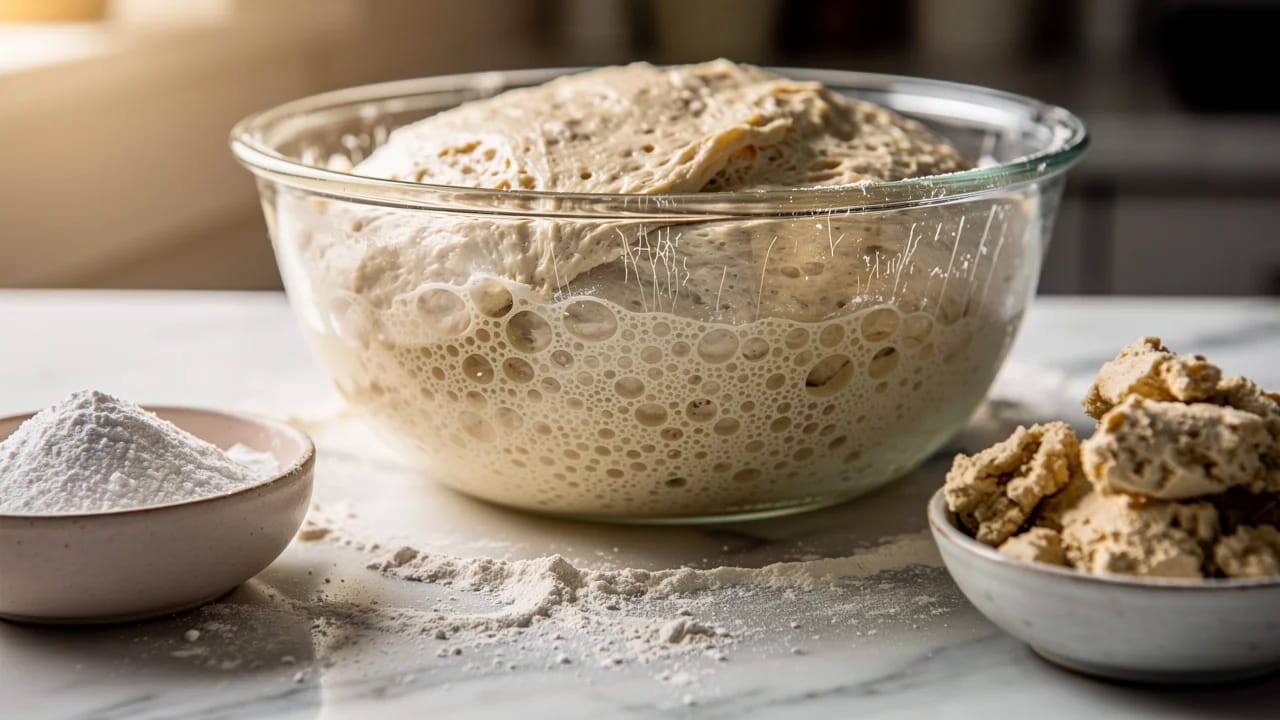
Biological leavening relies on living microorganisms — specifically yeast — that consume sugars and produce carbon dioxide and alcohol through fermentation. It's the oldest form of leavening and still the foundation of virtually all bread baking.
Commercial yeast
Commercial yeast comes in three forms, all the same species (Saccharomyces cerevisiae) but processed differently:
- Active dry yeast — dried granules that need to be dissolved in warm water (105-110°F / 40-43°C) before use. Takes a few minutes to activate. Forgiving for beginners because you can confirm it's alive before adding it to your dough
- Instant yeast (also called rapid-rise or bread machine yeast) — finer granules that can be mixed directly into dry ingredients. Ferments slightly faster than active dry. The most convenient option for everyday baking
- Fresh yeast (compressed or cake yeast) — a moist block with a short shelf life (about two weeks refrigerated). Preferred by professional bakers for its reliable activity and slightly milder flavor. Use roughly twice the weight of instant yeast
All three types do the same job. The yeast eats sugar, produces CO₂, and that gas gets trapped in the gluten network, inflating the dough. Temperature matters enormously — yeast is sluggish below 50°F (10°C) and dies above 140°F (60°C). The sweet spot for most bread doughs is 75-78°F (24-26°C).
For more on how different yeast types behave in practice, see yeast types.
Sourdough starter
A sourdough starter is a culture of wild yeast and lactic acid bacteria maintained through regular feedings of flour and water. It works on the same principle as commercial yeast — CO₂ production through fermentation — but much more slowly, typically requiring 4-12 hours for bulk fermentation compared to 1-2 hours with commercial yeast.
The tradeoff is flavor. The extended fermentation and the acids produced by the bacteria give sourdough its characteristic tang and complexity. A mature starter also improves shelf life and creates a more digestible bread. If you're getting started, our sourdough starter guide walks through the process from day one.
Chemical leaveners
Chemical leaveners produce CO₂ through an acid-base reaction rather than biological fermentation. They work fast — often in minutes — which makes them essential for quick breads, muffins, cookies, pancakes, and cakes where you don't want to wait hours for dough to rise.
Baking soda (sodium bicarbonate)
Baking soda is pure sodium bicarbonate. It needs an acid to react:
NaHCO₃ + acid → CO₂ + water + salt
The reaction starts immediately on contact with moisture and acid, which means you need to get the batter into the oven quickly. Common acids paired with baking soda include buttermilk, yogurt, lemon juice, vinegar, brown sugar (which contains molasses), honey, cocoa powder (natural, not Dutch-processed), and cream of tartar.
Baking soda also raises pH, which promotes browning through the Maillard reaction. That's why recipes for deeply browned cookies often call for baking soda rather than baking powder.
The golden rule: 1/4 teaspoon of baking soda per cup of flour is a standard starting point. Too much and you'll get a metallic, soapy taste — the telltale sign of unreacted sodium bicarbonate.
Baking powder
Baking powder is baking soda pre-mixed with a dry acid (usually cream of tartar or sodium aluminum sulfate) and a starch buffer to absorb moisture and prevent premature reaction.
- Single-acting baking powder — reacts once, when it gets wet. Rarely sold anymore
- Double-acting baking powder — reacts twice: first when mixed with liquid (from the acid cream of tartar) and again when heated in the oven (from sodium aluminum sulfate). This is what you'll find in every grocery store and what most recipes assume
Because baking powder contains its own acid, it works in recipes without acidic ingredients. Use it when the batter is neutral or mildly acidic. A typical ratio is 1 to 1.5 teaspoons per cup of flour.
Many recipes use both baking soda and baking powder. The soda neutralizes the acid in the recipe (buttermilk, yogurt, etc.) while the powder provides additional lift. Getting the balance right is part of what makes baking a precise craft — see baker's percentage for how professional bakers think about ratios.
Cream of tartar
Cream of tartar (potassium bitartrate) is a dry acid that's a byproduct of winemaking. On its own it's not a leavener, but combined with baking soda it becomes one — in fact, that combination is essentially homemade single-acting baking powder. It also stabilizes whipped egg whites, which connects it to mechanical leavening.
Mechanical leavening
Mechanical leavening doesn't involve any chemical reaction or living organism. Instead, you physically incorporate air or steam into the dough or batter through technique.
Whipped eggs
Whipping egg whites traps air in a protein foam. When heated, the air expands and the proteins set, creating structure. This is the primary leavening in soufflés, angel food cake, meringues, and sponge cakes. Whole eggs can also be whipped to incorporate air — génoise cake relies entirely on whipped whole eggs for its lift.
The key is not deflating the foam when you fold it into the batter. Gentle folding technique preserves the air bubbles. Over-mix and you lose the rise.
Creaming butter and sugar
Beating softened butter with sugar at high speed forces air into the fat. Those tiny air pockets expand in the oven's heat, contributing to lift. This is why creaming is the first step in so many cookie and cake recipes — the "cream the butter and sugar until light and fluffy" instruction is building your leavening structure.
Lamination and folding
In puff pastry, croissants, and Danish dough, thin layers of butter are folded between layers of dough. In the oven, the water in the butter turns to steam, puffing apart the layers. This creates the flaky, layered structure — hundreds of distinct sheets of pastry separated by air. No yeast, no baking powder — just steam doing the work.
Yeasted laminated doughs (croissants, brioche feuilletée) use both biological and mechanical leavening, which is why they're so spectacularly light.
Quick reference table
| Agent | How it works | Best for | Watch out for |
|---|---|---|---|
| Active dry yeast | Fermentation (CO₂ from sugar) | Bread, rolls, pizza dough | Proof in warm water first; kills above 140°F |
| Instant yeast | Fermentation (CO₂ from sugar) | Same as active dry, more convenient | Don't dissolve in hot liquid |
| Fresh yeast | Fermentation (CO₂ from sugar) | Professional bread baking | Short shelf life (2 weeks) |
| Sourdough starter | Wild yeast fermentation | Artisan bread, long-fermented doughs | Needs regular feeding; slow rise |
| Baking soda | Acid-base reaction → CO₂ | Recipes with acid (buttermilk, yogurt) | Too much = metallic taste |
| Baking powder | Built-in acid-base reaction → CO₂ | Cakes, muffins, quick breads | Loses potency over time; test before using |
| Cream of tartar + soda | Acid-base reaction → CO₂ | DIY baking powder; stabilizing egg whites | Reacts immediately — work fast |
| Whipped eggs | Trapped air expands when heated | Soufflés, sponge cakes, meringues | Gentle folding or the air escapes |
| Creaming | Air pockets in fat expand when heated | Cookies, butter cakes | Butter must be soft, not melted |
| Steam (lamination) | Water → steam between dough layers | Puff pastry, croissants | Butter must stay cold during folding |
Common mistakes
Too much baking soda. If your banana bread has a metallic aftertaste or your cookies taste vaguely soapy, there's unreacted baking soda in the batter. Either reduce the amount or increase the acid. A quarter teaspoon goes a long way.
Expired baking powder. Baking powder loses potency over time, especially in humid environments. If your cakes are coming out flat, test your baking powder: drop a teaspoon into hot water. If it bubbles vigorously, it's fine. If it fizzles weakly, replace it. Most cans are good for about 6-12 months after opening.
Killing your yeast. Water above 140°F (60°C) kills yeast instantly. If you're activating active dry yeast, use water between 105-110°F (40-43°C) — warm to the touch but not hot. When in doubt, err cooler.
Over-mixing after adding leavener. Once baking soda hits the liquid, the reaction starts. Once you fold whipped eggs into batter, the clock is ticking on those air bubbles. Mix until just combined and get it into the oven.
Confusing baking soda and baking powder. They are not interchangeable. Subbing baking soda for baking powder (or vice versa) without adjusting for the acid difference will give you either a flat result or a bitter, metallic one.
Leavening agents in Fond
When you're working with recipes in Fond, the recipe instructions call out which leavening agents are involved and how they interact. For bread recipes, Fond tracks proofing and bulk fermentation times so you can plan your bake around your schedule — whether that's a quick same-day loaf with commercial yeast or a two-day cold-fermented sourdough.
For a deeper look at bread baking fundamentals, see our guide on bread baking for beginners.
Cook smarter
Join the waitlist for Fond. Recipes, meal plans, and a little AI sous-chef that learns how you cook.
Related terms
Baker's Percentage
A method of expressing bread recipe ingredients as percentages relative to the total flour weight, making recipes infinitely scalable.
Bulk Fermentation
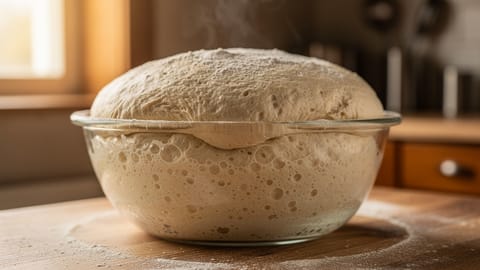
The primary rise of bread dough after mixing, where yeast or starter ferments the dough as a single mass before shaping.
Fermentation
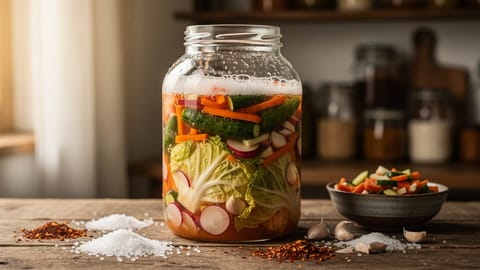
A metabolic process where microorganisms convert sugars into acids, gases, or alcohol — the basis of bread, yogurt, kimchi, and beer.
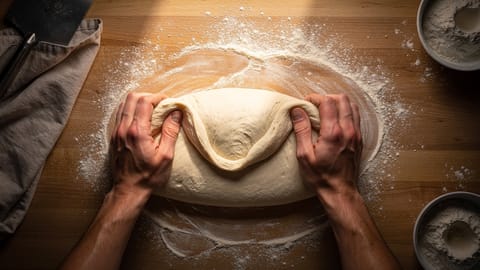
Folding
A gentle mixing technique that preserves air in delicate batters by cutting through and turning the mixture rather than stirring.
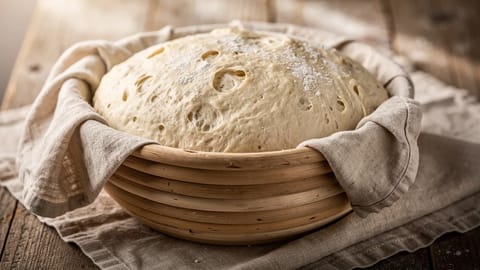
Proofing
The final rise of bread dough after shaping, where the shaped loaf expands with gas before baking.
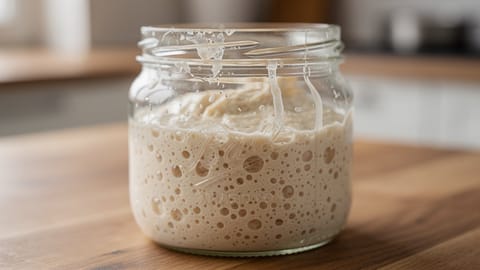
Sourdough Starter
A live culture of wild yeast and bacteria maintained with regular feedings of flour and water, used to leaven bread.
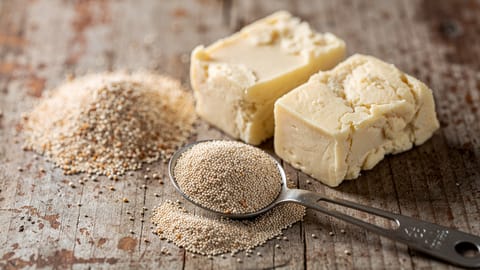
Yeast Types
The three main bread yeasts — active dry, instant, and fresh — differ in how they're processed and used, but can be converted between each other.
Bread baking for beginners: your first loaf, start to finish
A complete walkthrough for baking your first loaf of bread at home. Covers the four core ingredients, kneading by hand or mixer, proofing, shaping, and baking, with temperatures, times, and troubleshooting for every step.
Types of flour for baking: a practical guide to 11 common flours
A breakdown of the most common types of flour used in baking, organized by protein content. Covers all-purpose, bread, cake, pastry, whole wheat, spelt, 00, semolina, rye, self-rising, and gluten-free flours — with substitution ratios and a quick-reference chart for matching flour to recipe.