 Bastien
What is mise en place and why it matters
Mise en place is the practice of preparing and organizing every ingredient and tool before you start cooking. It's the single habit that separates chaotic, stressful cooking from calm, confident meals, and it works just as well in a home kitchen as it does in a professional one.
Mise en place is the French culinary term for "everything in its place." Read the recipe. Prep every ingredient. Lay out your tools. Then, and only then, turn on the burner. Professional kitchens live and die by this principle, and home kitchens that adopt it cook faster, waste less, and turn out better food. This has nothing to do with being fussy. It's about cutting out the chaos that leads to burnt garlic, forgotten ingredients, and dinners that somehow take 90 minutes instead of 40.
Simple idea, big impact. Here's what mise en place actually looks like in practice, why it works so well, how to do it at home without overcomplicating things, and the mistakes that trip people up.
What mise en place means in cooking
The phrase mise en place translates literally to "putting in place," pronounced roughly "MEEZ ahn plahs." In a professional kitchen, it's everything a cook does before service starts: washing, peeling, cutting, measuring, portioning, and arranging every component so that cooking becomes pure assembly.
The concept traces back to Auguste Escoffier, the French chef who formalized the brigade system in the late 1800s. Working at The Savoy and the Ritz in London and Paris, Escoffier turned chaotic Victorian kitchens into disciplined operations. His 1903 book Le Guide Culinaire codified mise en place as a non-negotiable first step — and every culinary school on earth still teaches it that way.
Picture a line cook at the saute station. Six quart containers of prepped vegetables. Three squeeze bottles of sauces. A stack of portioned proteins. A mise tray with minced garlic, sliced shallots, fresh herbs — all within arm's reach. A ticket fires. Nobody stops to dice an onion. Everything is already there.
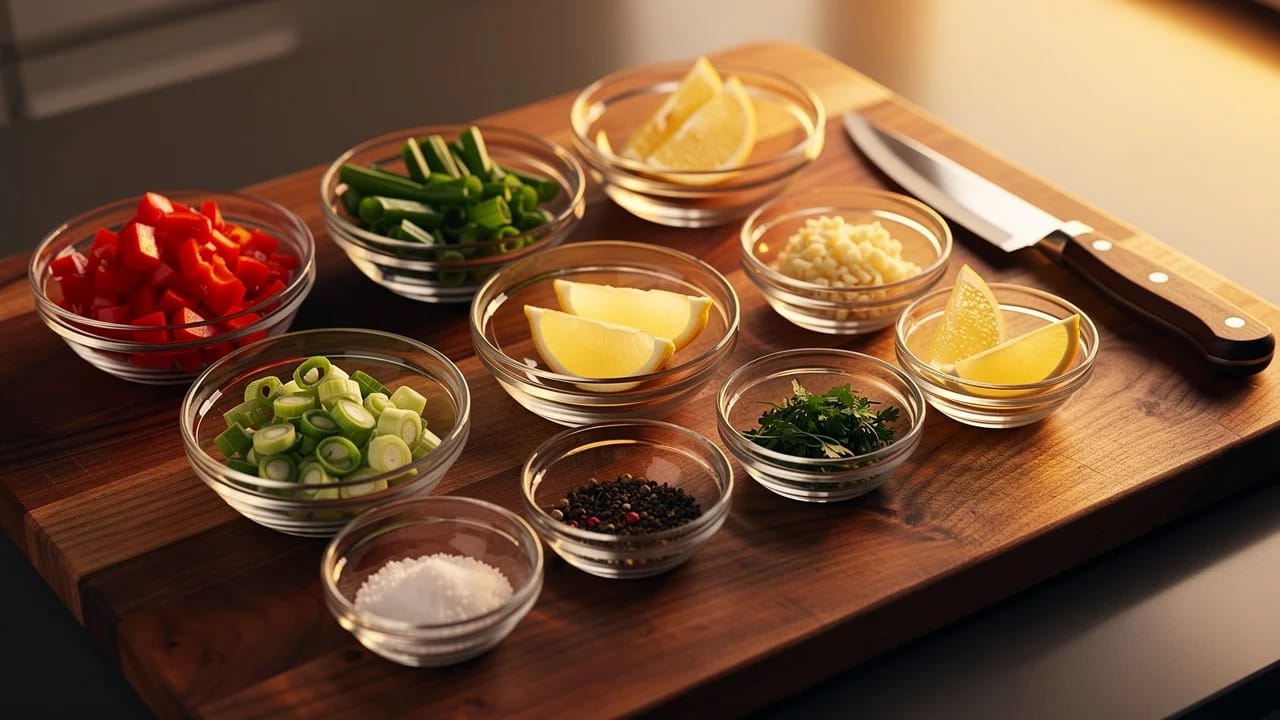
At home, the scale shrinks but the principle stays the same. Before you start cooking, every ingredient is measured, prepped, and set out. Every tool is within reach. And the recipe? Read. All of it, not just step one.
Why mise en place matters
The benefits run deeper than tidiness. Mise en place reshapes how cooking actually feels.
You spot problems before they derail you
Reading the full recipe and prepping everything upfront means you find the missing ingredient, the dull knife, or the "chill for 2 hours" step before you're standing over a smoking pan with no way to course-correct. Most cooking disasters trace back to one thing: discovering too late that something essential is missing.
The clock works in your favor
This seems backward. Extra prep time should slow you down. But once ingredients are ready, you move through the recipe without a single pause. No scrambling to mince garlic while onions burn. No rummaging through drawers for the kitchen scale while butter browns past the point of no return. I've timed myself making the same stir-fry with and without mise en place, and the prepped version was 12 minutes faster, every time. Total cook time drops because every second at the stove counts.
Heat-sensitive techniques actually work
Stir-fries, pan sauces, and searing all hinge on timing measured in seconds. Scramble for a missing ingredient mid-cook, and you lose control of your heat. A good sear means protein hitting a screaming-hot pan the instant it's ready, not after a 30-second detour to find the salt. The Maillard reaction that builds deep browning and complex flavor happens in a narrow temperature window. Mise en place keeps you in it.
Fewer mistakes, less waste
Measuring everything before you cook means you catch errors while they're still fixable. Accidentally doubled the salt? You notice in the prep bowl, not after it hits the pot. Pre-portioning also means you use exactly what the recipe calls for, no half-chopped onion abandoned on the cutting board because time ran out. Over a week of cooking, the ingredient savings alone are noticeable, and it's one of the simplest ways to reduce food waste in your kitchen.
How to do mise en place at home
No professional setup required. A few small bowls, some clear counter space, and a bit of intention go a long way.
Tip: You don't need matching prep bowls. Small bowls, ramekins, even a muffin tin all work. A plate holds measured spices just as well as a specialty container.
Mise en place checklist for home cooks
Not every recipe needs all 14. A quick pasta might just mean reading the recipe, prepping three ingredients, and grabbing a pot and a pan. The habit is the point, not the formality.
Mise en place for baking
Baking demands even more discipline than stovetop cooking. Chemical reactions start the moment wet meets dry, and there's no pausing a rising batter to hunt for baking powder.
The biggest baking-specific rule: bring ingredients to the right temperature before starting. Cold butter won't cream properly. Cold eggs break emulsions. Room-temperature butter and eggs incorporate air far better, which means lighter cakes and flakier pastries. Pull dairy and eggs 30–60 minutes before you begin.
Measure flour by weight, not volume. A cup of flour can vary by 30% depending on how you scoop it. A kitchen scale eliminates the guesswork. Sift dry ingredients together in advance so leavening agents distribute evenly. And line your pans, grease your molds, and set your oven rack before you mix the batter, not after, while it deflates on the counter.
After dozens of baking sessions, the pattern is always the same: the batches where I skipped mise en place are the ones with dense spots, sunken centers, or scrambled timing. The ones where everything was measured and ready came out consistently.
A concrete example: stir-fry mise en place
Stir-frying is where mise en place earns its reputation. The cooking window is 3–4 minutes over maximum heat. Once the wok is smoking, there's zero time to prep anything.
Here's what the setup looks like for a basic chicken and vegetable stir-fry:
Total prep: about 15 minutes. Total cooking: under 4 minutes. The entire dish comes together because everything was ready before the flame went on.
How professional kitchens use mise en place
In restaurant kitchens, mise en place is survival. A line cook fields dozens of tickets per hour, each with different modifications and timing demands. Without complete prep, service collapses.
Morning prep shifts exist for one reason: mise en place. Cooks arrive hours before service to break down proteins, build stocks, make sauces, portion ingredients, and set up their stations. The "cooking" that happens during service? Mostly assembly and finishing, applying heat to components that were prepped hours ago.
Station layout is rigid. Every cook keeps their ingredients in the same position, every shift. Muscle memory kicks in. A saute cook grabs the salt without looking because it's always in the same spot. That consistency is what makes a packed kitchen look effortless from the dining room.
Restocking mid-service (called "refiring your mise") never stops. When the minced shallots run low, a cook preps more right away instead of waiting to run out. The rule: never let your mise fall below what you need for the next few tickets.
Home cooks don't need that intensity. But the underlying ideas transfer perfectly. Consistent placement cuts cognitive load. Prepping before cooking separates planning from execution. And restocking? At home, that means checking your pantry and shopping list before cooking day, not in the middle of it.
Common mise en place mistakes
Why these mistakes matter
Skipping the recipe read-through is the single most damaging habit. You dive in, get halfway through, and realize the meat was supposed to marinate for an hour, or the dough needs to rest before rolling. Two minutes of reading saves 20 minutes of scrambling.
Over-prepping perishable ingredients wastes the very food you're trying to use efficiently. Herbs oxidize once cut. Diced onions dry out. Minced garlic loses its punch. Prep the day you cook, ideally right before. If you want to prep for the whole week, that's meal prep, a related but different workflow.
Letting cleanup slide undoes everything. The prep phase is only half the equation. Wipe the counter between steps. Return tools to their spot. Move dirty bowls to the sink. Once your station falls apart, you've lost the advantage.
Build the mise en place habit
- Mise en place means preparing every ingredient and tool before you start cooking
- The 5 steps: read the recipe, gather ingredients, prep and measure, set out tools, organize your station
- It saves time overall because prep work eliminates pauses, scrambling, and mistakes during cooking
- Baking demands it even more than stovetop cooking, since temperature and timing are unforgiving
- You don't need special equipment. Any small bowls, plates, or ramekins work
- Start with one recipe. After a few meals, it becomes automatic.
Mise en place is the most portable skill in cooking. It works for a 15-minute weeknight stir-fry, a batch cooking session, and a six-course dinner party alike. Start simple: read the whole recipe, pull your ingredients, prep before the burner goes on. After a few meals, you won't think about it. You'll just do it.
Once you have your rhythm, save your go-to recipes, with timing notes and prep details, in Fond. Every recipe in one place, measurements you can scale up or down, and a built-in shopping list to handle the planning side of mise en place for you.
Sources
Cook smarter
Join the waitlist for Fond. Recipes, meal plans, and a little AI sous-chef that learns how you cook.
Related articles
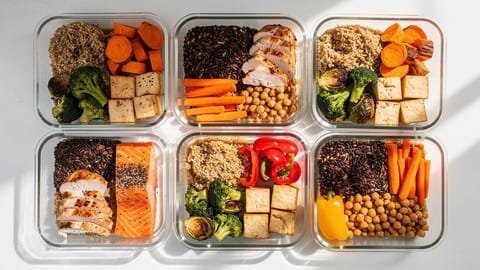
Batch cooking for beginners: how to cook once and eat all week
Batch cooking means dedicating a few hours to cooking large quantities of food that you portion and store for the week ahead. It's not the same as meal prep — instead of assembling complete meals, you cook versatile building blocks (grains, proteins, sauces, roasted vegetables) that mix and match into different dishes every night. This guide covers everything you need to start: planning, cooking, storing, and scaling.
How to cook rice perfectly every time
Rice is the most consumed grain on the planet, yet it trips up even confident home cooks. Too sticky, too mushy, burned on the bottom. The failures are predictable, and so are the fixes. Learning how to cook rice well comes down to the right water ratio, proper heat control, and leaving it alone while it cooks.
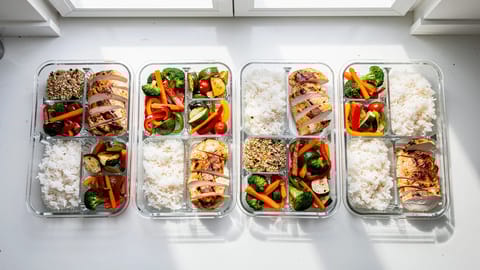
How to meal prep: a practical guide for beginners
Meal prep means dedicating about 2 hours on a Sunday to planning, cooking, and portioning complete meals for the week ahead. Unlike batch cooking, which produces versatile components you mix and match, meal prep gives you finished meals ready to grab and eat. This guide covers everything from equipment and shopping lists to a minute-by-minute prep day timeline and safe storage practices.
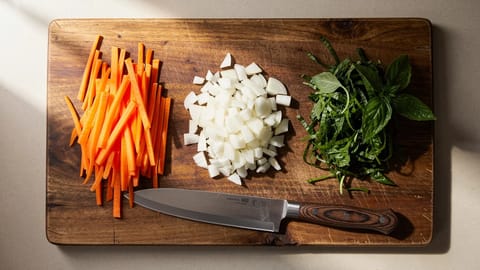
Types of knife cuts: the complete guide for home cooks
Professional chefs learn 12+ standard knife cuts in culinary school. Home cooks usually learn zero. That gap shows up on the plate — in uneven cooking, mushy textures, and dishes that never quite look like the recipe photo.
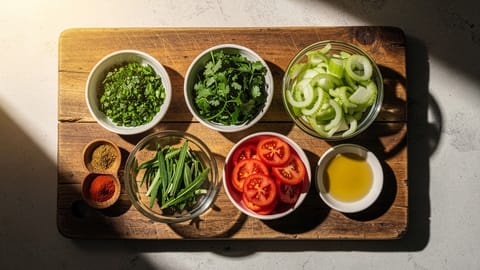
Mise en Place
The practice of preparing and organizing all ingredients before cooking — everything in its place.
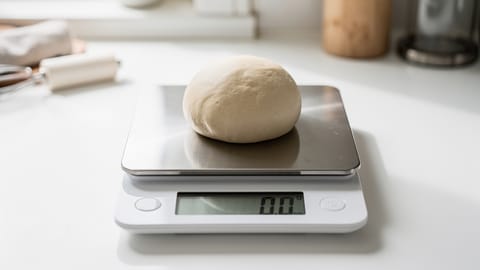
Kitchen Scale
A digital scale for measuring ingredients by weight — far more accurate than cups and spoons, especially in baking.
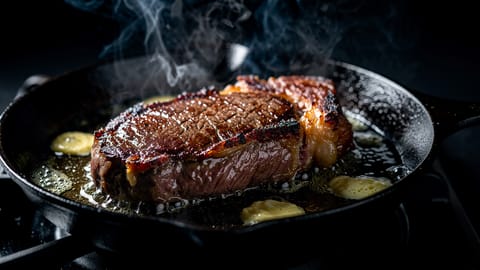
Searing
High-heat browning technique that creates a flavorful Maillard crust on meat, fish, or vegetables.
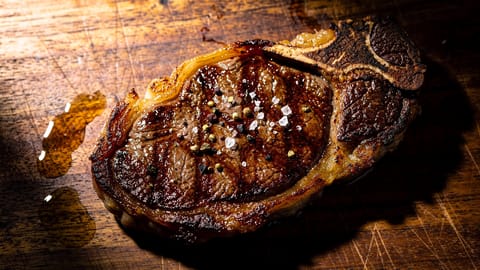
Maillard Reaction
The chemical reaction between amino acids and sugars that occurs when food is heated, creating the brown color and complex flavors of seared meat, toasted bread, and roasted coffee.
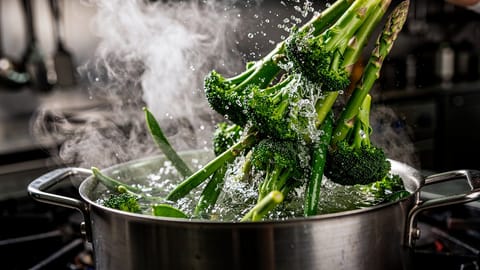
Blanching
Briefly boiling food then plunging it into ice water to stop cooking — used to preserve color, texture, and nutrients.
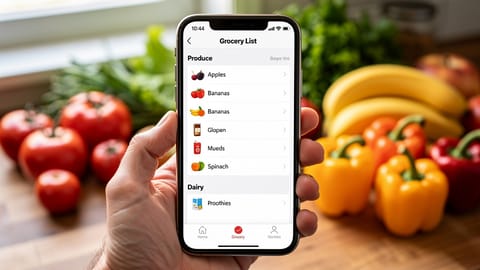
Smart Shopping List
An automatically generated grocery list that combines ingredients from multiple recipes, merges duplicates, and organizes by store aisle.