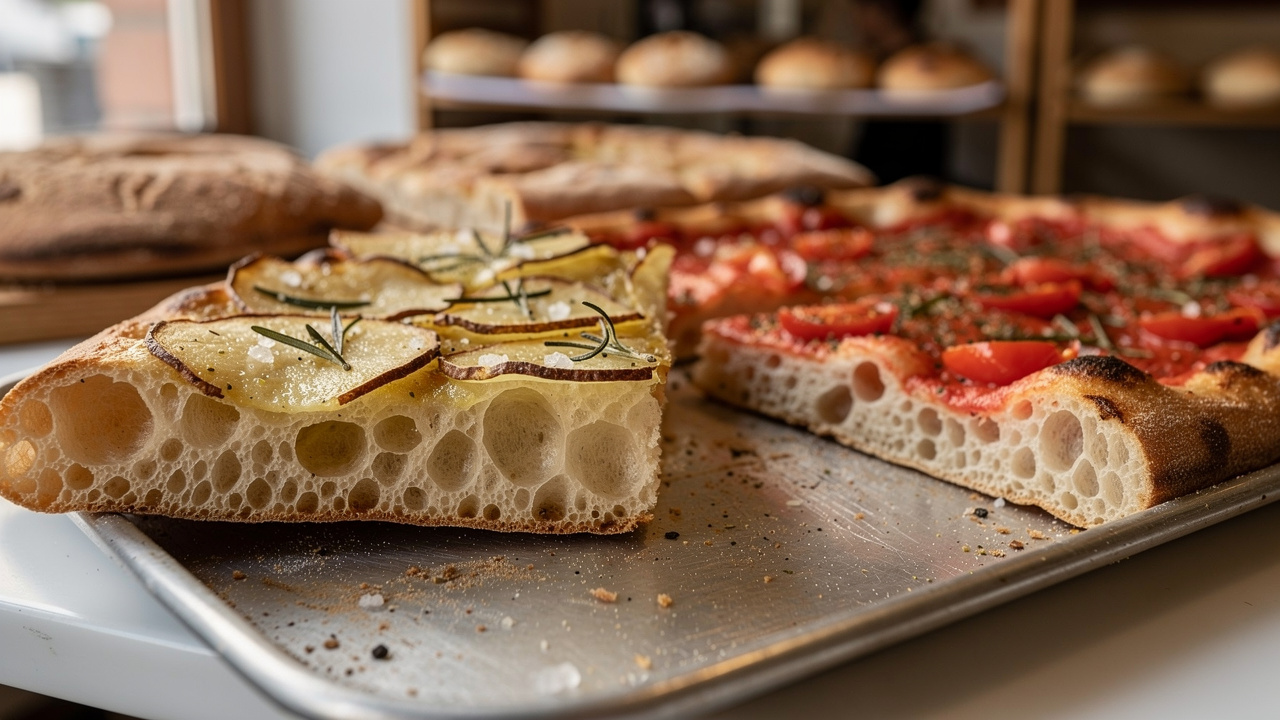
Poolish vs Biga: Complete Guide to Pizza Pre-Ferments
Two Italian pre-ferments, very different results. Poolish (liquid, 100% hydration) makes airy, extensible dough. Biga (stiff, 50-60%) makes chewy, structured crumb. Which one you pick depends on your pizza style.
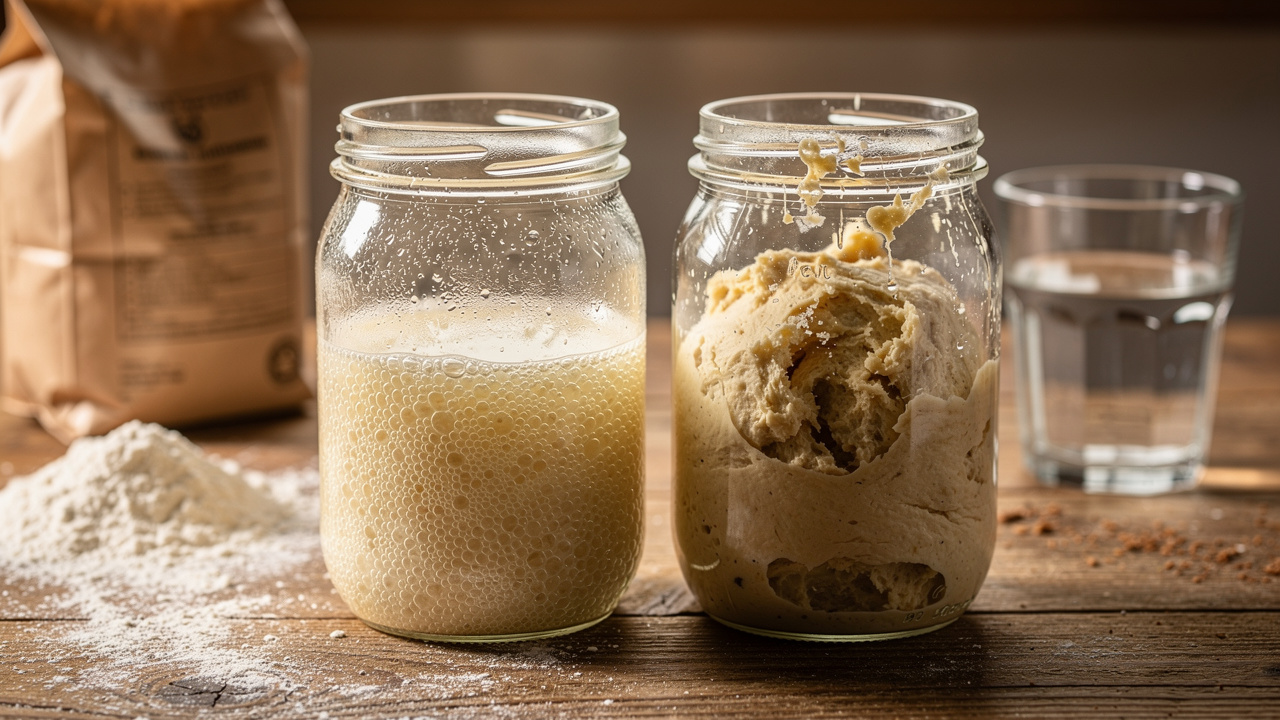
TL;DR: Poolish vs biga comes down to what you want from your crust. Poolish (100% hydration, liquid) gives you light, airy, extensible dough ideal for Roman al taglio and high-hydration styles. Biga (50-60% hydration, stiff) delivers chewy, structured crumb perfect for Neapolitan and NY-style pizza. Choose based on the texture and flavor profile you want -- or try the hybrid tiga at 70% hydration for a middle ground.
What are pre-ferments?
Pre-ferments (also called preferments or starters) are portions of flour, water, and yeast that ferment separately before being mixed into the final dough. The mechanism is straightforward: giving enzymes and yeast more time to break down starches and develop flavor before that final mix improves complexity, gluten structure, gas retention, digestibility, and shelf life compared to straight dough. The two most common in pizza making are poolish (French origin) and biga (Italian origin).
Poolish explained
Poolish is a wet, fluid pre-ferment with equal parts flour and water by weight (100% hydration). It originated in Poland, was refined in France, and is characterized by its loose, batter-like consistency.
Characteristics of Poolish:
- Hydration: 100% (equal flour and water)
- Consistency: Liquid, pourable batter
- Fermentation time: 8-16 hours typically
- Yeast content: Very small (0.01-0.1% of flour weight) — see yeast types for guidance
- Flavor profile: Sweet, slightly tangy, complex
- Texture contribution: Light, airy, open crumb
Poolish makes dough significantly easier to stretch without tearing. The high-hydration ferment creates a light, airy crumb with irregular holes, and the flavor is sweet and complex — fermented notes that stay subtle enough not to compete with your toppings.
Being liquid, poolish incorporates into your final dough with minimal mixing, which matters for high-hydration styles where overworking damages gluten structure.
Poolish Fermentation Stages:
- 0-4 hours: Minimal activity, yeast beginning to wake up
- 4-8 hours: Active fermentation, bubbles forming, rising
- 8-12 hours: Peak development, dome shape, abundant bubbles
- 12-16 hours: Still usable, beginning to flatten, more complex flavor
- 16+ hours: Over-fermented, collapsed, excessively acidic
Visual Cues for Ready Poolish:
- Surface covered with bubbles of varying sizes
- Dome-shaped or just beginning to flatten in the center
- Pleasant, slightly sweet, fermented aroma
- Increased volume (roughly doubled)
- Liquid consistency maintained
Best Pizza Styles for Poolish:
- Roman pizza al taglio (high hydration, light texture)
- Neapolitan-style variations
- Focaccia and flatbreads
- Any pizza where easy stretching matters
- High-hydration artisan styles
Biga explained
Biga is a stiff, dough-like pre-ferment with low hydration, typically 50-60% water to flour ratio. This traditional Italian preferment is firmer and drier than poolish, resembling a stiff bread dough.
Characteristics of Biga:
- Hydration: 50-60% (significantly less water than flour)
- Consistency: Stiff, shaggy dough
- Fermentation time: 12-24 hours typically
- Yeast content: Small (0.1-0.5% of flour weight)
- Flavor profile: Nutty, wheaty, mild acidity
- Texture contribution: Chewy, structured crumb
Biga produces a stronger, more structured crumb than poolish, giving a chewier texture. The lower hydration drives acetic acid production (vinegar-like) rather than the lactic acid (yogurt-like) you get from wetter ferments — which is what gives biga its deep, nutty, wheaty flavor that holds up under bold toppings.
The stiff consistency needs more vigorous mixing to fully incorporate into the final dough. That extra mixing develops gluten, which feeds directly into the characteristic chew.
Biga Fermentation Stages:
- 0-6 hours: Slow start, minimal visible changes
- 6-12 hours: Internal fermentation, slightly increased volume
- 12-18 hours: Peak ripeness, tripled in volume, internal honeycomb structure
- 18-24 hours: Still excellent, maximum flavor development
- 24-48 hours: Extended fermentation possible in cold conditions
Visual Cues for Ready Biga:
- Tripled in volume with domed surface
- Interior shows honeycomb structure when torn
- Pleasant, nutty, bread-like aroma
- Surface appears slightly dry but not cracked
- Springs back slowly when pressed
Best Pizza Styles for Biga:
- Traditional Neapolitan pizza
- New York-style pizza (authentic chew)
- Thick crust and pan pizzas
- Pizzas with robust, flavorful toppings
- Any style prioritizing chewy texture
Poolish vs biga: side-by-side comparison
| Characteristic | Poolish | Biga |
|---|---|---|
| Hydration | 100% (1:1 flour:water) | 50-60% (2:1 flour:water) |
| Consistency | Liquid batter | Stiff dough |
| Fermentation Time | 8-16 hours | 12-24 hours |
| Typical Yeast | 0.01-0.1% | 0.1-0.5% |
| Primary Acid | Lactic (mild, yogurt-like) | Acetic (sharper, vinegar-like) |
| Flavor Profile | Sweet, complex, subtle | Nutty, wheaty, pronounced |
| Texture Result | Light, airy, open crumb | Chewy, structured, tighter crumb |
| Extensibility | Very high (easy to stretch) | Moderate (some resistance) |
| Mixing Ease | Very easy, liquid incorporates quickly | Requires thorough mixing |
| Storage | Use within 24 hours | Can store 48+ hours refrigerated |
| Origin | French (via Poland) | Italian |
| Best For | Light, airy, high-hydration pizzas | Chewy, structured, traditional pizzas |
When to use poolish vs biga
Choose Poolish When:
- Making high-hydration doughs (70%+ hydration)
- Seeking light, airy texture with large holes
- Prioritizing ease of stretching and handling
- Working with delicate toppings that need subtle flavors
- Making Roman al taglio or similar styles
- Time-constrained (shorter fermentation possible)
- Prefer sweeter, more subtle fermented flavors
Choose Biga When:
- Making traditional Neapolitan or NY-style pizza
- Seeking chewy, structured texture
- Using bold, flavorful toppings that benefit from wheaty undertones
- Wanting pronounced bread-like flavors
- Making thicker crust or pan pizzas
- Need longer storage flexibility
- Prefer nutty, complex fermented flavors
Can You Combine Both?
Yes! Some advanced recipes use both poolish and biga to achieve balanced characteristics. A small portion of each (15-20% poolish, 15-20% biga) can provide complexity, extensibility, and structure simultaneously.
The Tiga: A Hybrid Approach
There is a third option that does not get nearly enough attention: the tiga. A tiga is essentially a modified biga run at 70% hydration -- wetter than a traditional biga (50-60%) but thicker than a poolish (100%). It bridges the gap between the two, giving you some of the chew and wheaty depth of a biga alongside the extensibility and lighter crumb of a poolish. Some champion pizza makers swear by this hybrid approach because it lets you dial in exactly the balance you want without maintaining two separate starters. If poolish and biga are opposite ends of a spectrum, tiga sits right in the sweet spot.
A Note on the Indirect Method
Using a pre-ferment (the "indirect method") benefits nearly every pizza style -- Neapolitan, New York, Roman, Sicilian, and most artisan variations. The notable exceptions are Chicago deep-dish, Detroit-style, St. Louis-style, and Grandma-style pizza. Those styles rely on a simpler, more bread-like dough character where the toppings and cheese do the heavy lifting flavor-wise. A pre-ferment would actually work against the straightforward, bready texture those styles depend on.
How to make poolish
Basic Poolish Formula (for 500g final dough):
- 100g bread flour (20% of total flour)
- 100g water at room temperature
- 0.1g instant yeast (tiny pinch, or 0.3g fresh yeast)
Precise Starter Recipe:
For those who prefer exact measurements: 0.12g yeast, 47g cold water, 47g flour (100% hydration). Yes, those tiny yeast amounts are intentional — a kitchen scale with 0.1g precision is essential here. You want slow, controlled development that builds complex flavor over hours, not a fast rise that tastes bland.
Method:
- Combine flour, water, and yeast in a clean container
- Stir until no dry flour remains (30-60 seconds)
- Cover loosely to allow gas to escape
- Ferment at room temperature (70-75°F / 21-24°C) for 18 hours, then refrigerate for 30 minutes before incorporating into the final dough
- Use when it has doubled in volume and shows large bubbles throughout
Critical: Always use COLD water for your poolish -- not room temperature, not warm. This is the opposite of what most beginners assume. Cold water slows the fermentation down, which is exactly what you want. Slower fermentation means more time for enzymes to break down starches and develop those complex, nuanced flavors that make people ask what your secret is.
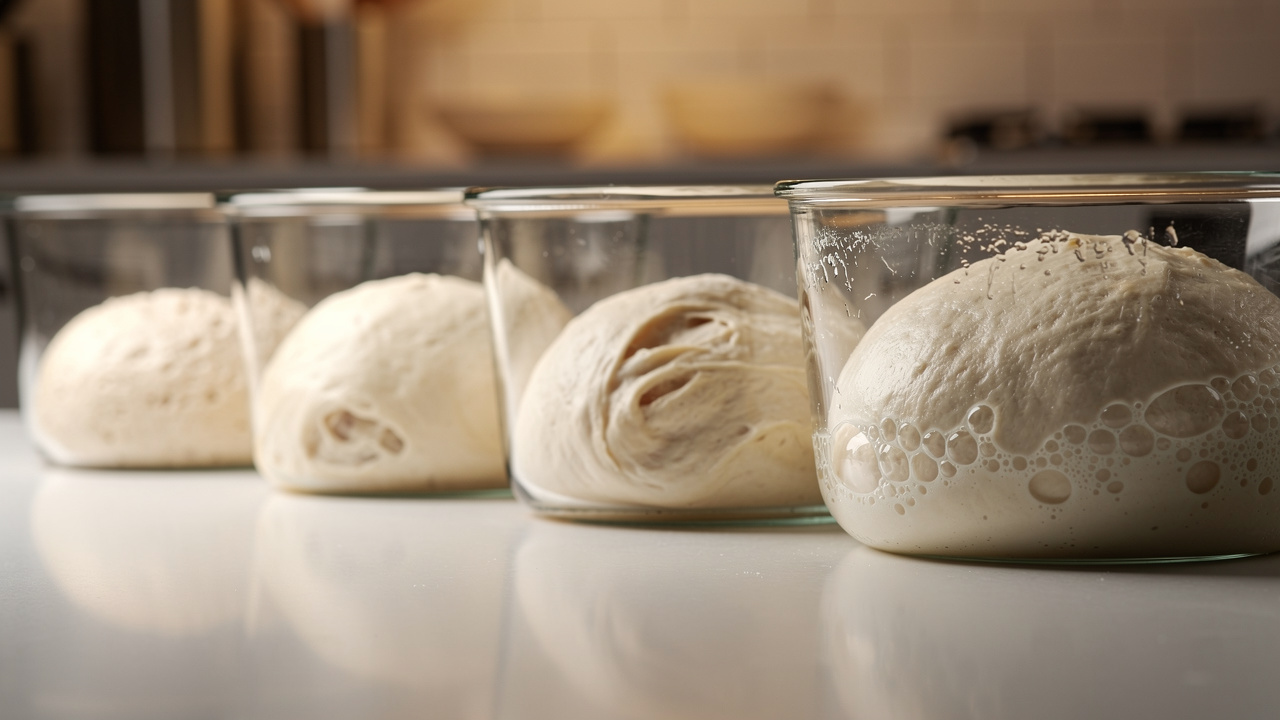
Pro tip: Use a clear glass bowl to monitor fermentation -- you can see the bubble structure developing from the side, which is far more informative than just looking at the top. Wet your hands with ice water when handling sticky starter to keep things manageable.
Storage Tips:
- You have a maximum of 8 hours after the starter peaks (doubles in volume). After that window, it starts to collapse and lose its structural strength
- Can refrigerate for an additional 24 hours if needed
- Bring to cool room temperature (not warm) before adding to your final dough
- Should still show bubbles and pleasant aroma
- If it smells strongly alcoholic or vinegary, it's over-fermented
Troubleshooting Poolish:
- Not rising: Room too cold, yeast inactive, or insufficient time
- Separated liquid on top: Slightly over-fermented but still usable
- Strong alcohol smell: Over-fermented, reduce time or yeast next batch
- Too thick: Add 5-10g more water, ratios should be equal
- No bubbles: Yeast dead, water too hot, or flour treated
How to make biga
Basic Biga Formula (for 500g final dough):
- 100g bread flour (20% of total flour)
- 50-60g water (cool temperature, 60-65°F / 15-18°C)
- 0.2g instant yeast (small pinch, or 0.6g fresh yeast)
Precise Starter Recipe (Traditional Biga):
For exact measurements: 0.14g yeast, 39g cold water, 55g flour (roughly 70% hydration). Note: this is technically closer to a tiga -- a modified biga at 70% hydration that many competition-level pizza makers prefer. It is wetter than a classic biga but thicker than a poolish, giving you a middle ground between the two. If you want a truly stiff traditional biga, reduce the water to 28-33g (50-60% hydration) and keep the same flour and yeast.
Method:
- Combine flour and yeast in a bowl
- Add COLD water gradually -- cold water is essential here, just as with poolish. It slows the fermentation and drives the development of deeper, more complex flavors
- Knead briefly until cohesive (2-3 minutes), will be stiff
- Shape into a ball, place in lightly oiled container
- Cover tightly to prevent drying
- Ferment at room temperature for 18 hours, then refrigerate for 30 minutes before incorporating into the final dough. The starter is ready when it has doubled and shows large bubbles throughout
- Use when tripled in size with honeycomb interior
Pro tip: A clear glass bowl works wonders here too -- you can see exactly when the internal bubble structure has fully developed without having to tear into the biga. Wet your hands with ice water when handling.
Storage Tips:
- You have a maximum of 8 hours after the starter peaks (doubles). After that, it starts to collapse and lose strength -- and a collapsed starter will give you a flat, disappointing dough
- Bring to cool room temperature (not warm) before adding to your final dough
- Can refrigerate after 12 hours for slower development
- Keeps refrigerated for 48-72 hours at peak quality
- Should smell nutty and bread-like, not sour
- Interior should show honeycomb structure when torn
Troubleshooting Biga:
- Too dry: Add 5-10g more water next time
- Not rising: Room too cold, use slightly warmer water
- Cracks on surface: Cover more tightly to prevent moisture loss
- Sour smell: Over-fermented or too warm, reduce time or temperature
- Dense interior: Under-fermented, allow more time
Incorporating pre-ferments into pizza dough
General Guidelines:
- Pre-ferments typically comprise 15-30% of total flour weight using baker's percentages
- 20-25% is most common for balanced results
- Higher percentages (30-40%) create more pronounced effects
- Account for flour and water in pre-ferment when calculating final dough — our pizza dough calculator handles this math for you
Tip: The most common mistake when using pre-ferments is forgetting to subtract the pre-ferment's flour and water from the final dough totals. Always calculate your hydration based on the combined weight of all flour and all water across both the pre-ferment and the final mix.
Example Recipe Using Poolish:
Final Dough (2 pizzas):
- 400g bread flour (plus 100g in poolish = 500g total)
- 215g water (plus 100g in poolish = 315g total, 63% hydration)
- 15g salt (3% of total flour)
- 1g instant yeast (0.2% of total flour)
- 200g ripe poolish (all of it)
Method:
- Mix flour, water, and poolish until combined
- Rest 20 minutes (autolyse)
- Add salt and yeast, mix until incorporated
- Develop dough via stretch-and-fold over 2 hours
- Cold ferment 24-48 hours or use same day
Example Recipe Using Biga:
Final Dough (2 pizzas):
- 400g bread flour (plus 100g in biga = 500g total)
- 255g water (plus 50g in biga = 305g total, 61% hydration)
- 15g salt (3% of total flour)
- 1g instant yeast (0.2% of total flour)
- 150g ripe biga (all of it)
Method:
- Tear biga into small pieces in mixing bowl
- Add water, allow biga to hydrate 10 minutes
- Add flour, mix until shaggy
- Rest 20 minutes (autolyse)
- Add salt and yeast, knead until smooth (5-8 minutes)
- Bulk ferment 2-3 hours, then divide and shape
- Cold ferment 24-48 hours or proof and use
Advanced pre-ferment techniques
For a deeper dive into how fermentation works in pizza dough, including bulk fermentation and timing strategies, see our dedicated guide.
Adjusting Fermentation Time:
- Warmer temperature (75-80°F): Reduce time by 25-30%
- Cooler temperature (65-70°F): Extend time by 25-30%
- Refrigeration: Extends usable window significantly
- More yeast: Faster fermentation but less flavor complexity
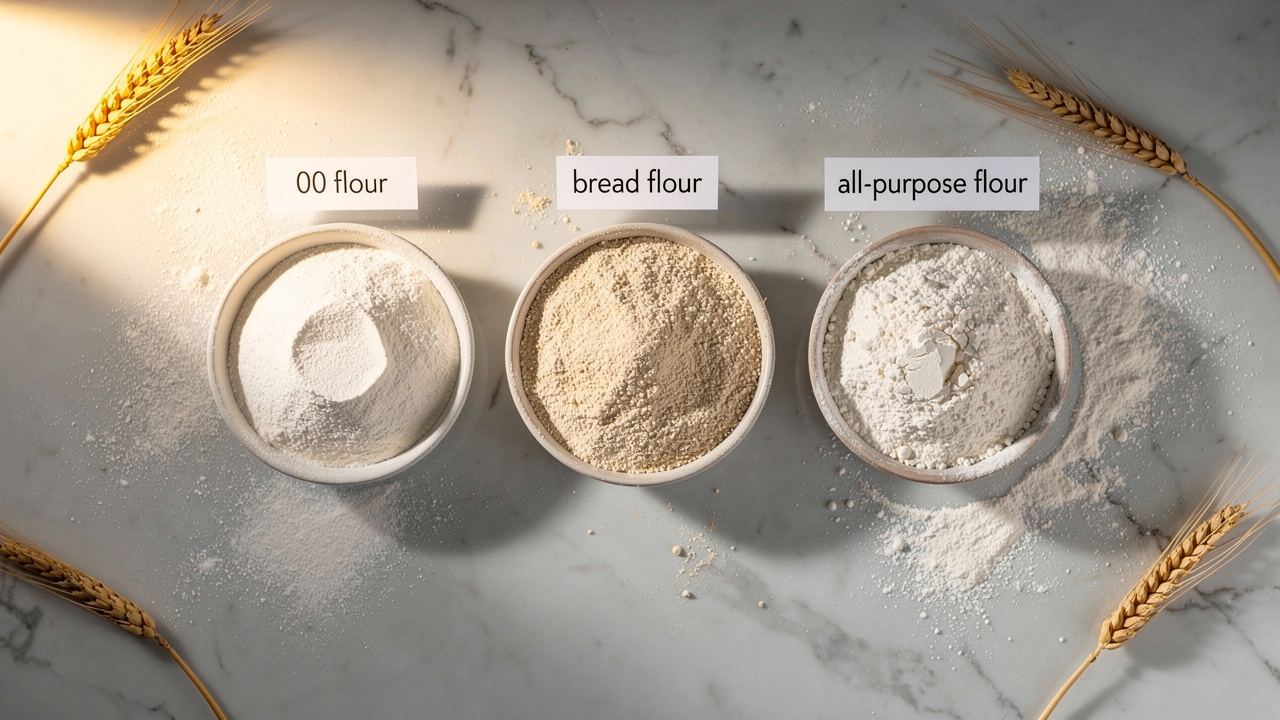
Flour Selection for Pre-Ferments:
- Bread flour: Standard choice, good balance
- High-protein flour: Stronger structure, especially for biga
- Whole wheat (10-20%): Adds nutty flavor and enzymes
- 00 flour: Authentic for Italian biga, silky texture
Tip: For your first few pre-ferments, stick with standard bread flour -- it's the most forgiving and gives consistent results. Experiment with 00 or whole wheat blends once you can reliably judge when your starter is ripe.
Scaling Pre-Ferments:
Multiply or divide all ingredients proportionally. A larger pre-ferment (500g+) ferments slightly faster due to thermal mass and increased yeast population.
Maintaining Consistency:
Keep detailed notes on room temperature, timing, and results. Pre-ferment behavior varies with seasons, climate, and flour brands. Experienced bakers learn to adjust by sight and smell rather than strict timing.
Our recommendation: pick one and stick with it for at least five bakes before trying the other. Poolish is easier to start with (less mixing, more forgiving timing). Once your poolish game is solid, try a biga for your next NY-style or Neapolitan batch and compare the chew. Keep notes on room temperature and timing -- those two variables matter more than anything else.
Choosing between poolish and biga
The poolish vs biga decision is really a question of what you want on the plate. Light and airy with easy stretching? Poolish. Chewy and structured with wheaty depth? Biga. Not sure? Start with poolish — it's more forgiving and the results are immediately satisfying.
Here's what to remember:
- Poolish (100% hydration): light crumb, sweet flavor, easy handling — best for Roman al taglio, focaccia, and high-hydration styles
- Biga (50-60% hydration): chewy crumb, nutty flavor, structured texture — best for Neapolitan, NY-style, and pan pizzas
- Tiga (70% hydration): the hybrid that bridges both — worth trying if you want balance
- Always account for pre-ferment flour and water in your total dough hydration
- Use cold water and slow fermentation for the most complex flavors
Ready to try a pre-ferment in your next pizza dough? Use our pizza dough calculator to get exact measurements for any style, or explore our complete pizza dough guides for style-specific techniques.
Frequently Asked Questions
Poolish is a liquid pre-ferment (100% hydration — equal flour and water by weight) that produces a light, airy, extensible dough with sweet, complex flavors. Biga is a stiff pre-ferment (50–60% hydration) that creates a chewy, structured crumb with nutty, wheaty depth. Choose poolish for light styles like Roman al taglio and high-hydration pizzas; choose biga for Neapolitan, NY-style, and pizzas where chew is the priority.
Neither is universally better — it depends on the style. Poolish gives you extensibility and airiness, ideal for Roman al taglio and any high-hydration pizza where easy stretching matters. Biga gives you chew and structured crumb, ideal for Neapolitan and NY-style pizza. If you're unsure, poolish is more forgiving and easier to start with. For a middle ground, try a tiga (70% hydration) which bridges both.
Poolish ferments 8–16 hours at room temperature; it's ready when it has doubled, shows large surface bubbles, and has a slightly domed top. Biga ferments 12–24 hours; it's ready when it has tripled in volume and shows a honeycomb interior when torn. Both benefit from a 30-minute refrigerator rest before incorporating into the final dough. Never use over-fermented pre-ferments — collapsed or strongly alcoholic-smelling starters should be discarded.
Pre-ferments typically comprise 15–30% of total flour weight, with 20–25% being most common. Higher percentages (30–40%) create more pronounced flavor and texture effects. Always account for the flour and water in the pre-ferment when calculating total dough hydration — this is the most common calculation mistake.
A tiga is a hybrid pre-ferment at 70% hydration — wetter than traditional biga (50–60%) but thicker than poolish (100%). It bridges the gap between the two, giving you some of biga's chew and wheaty depth alongside some of poolish's extensibility and lighter crumb. Use it when you want a balance between the two styles, or as a first step if you're not sure which pre-ferment suits your recipe.