 Bastien
Cornstarch substitutes: what to use instead, and how much
The easiest cornstarch substitute is all-purpose flour: use 2 tablespoons of flour for every tablespoon of cornstarch and expect a cloudier sauce. Arrowroot and potato starch swap in at about the same amount and tapioca at 1 to 2 tablespoons, but each has limits, mostly with dairy and long cooking.
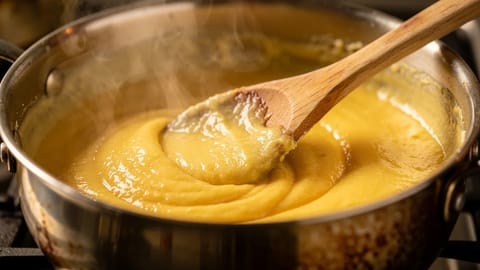
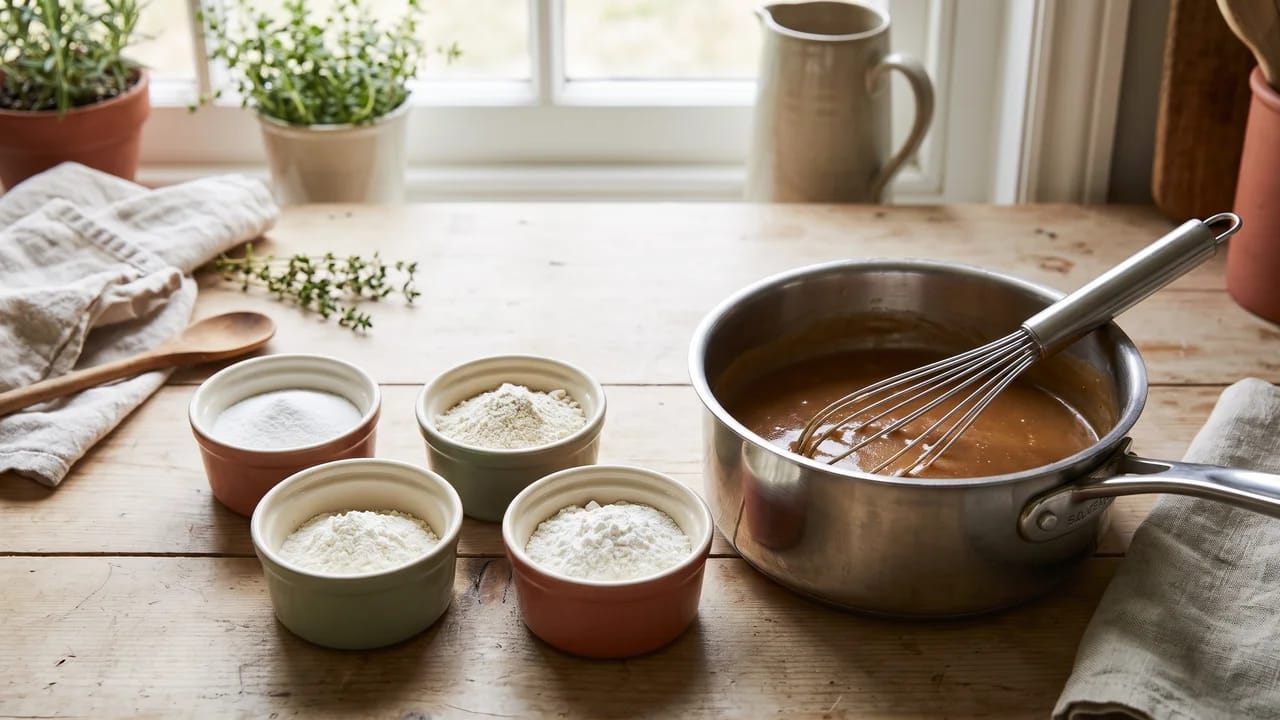
Out of cornstarch with a sauce already on the stove? Use all-purpose flour, and use twice as much: 2 tablespoons of flour for every tablespoon of cornstarch, according to America's Test Kitchen. The sauce comes out a little cloudier, and the flour needs fat or cold liquid around it before it hits the pot, but for gravy and soup it does the job.
If you want the gloss cornstarch gives, reach for another pure starch. Argo, which makes cornstarch, says the common root starches have the same thickening power as cornstarch and swaps them in equal amounts. Each has a weak spot, so the right choice depends on what the cornstarch was doing in your recipe: thickening a sauce, setting a filling, crisping a coating or softening a cake.
Cornstarch substitute chart for thickening
Every amount below replaces 1 tablespoon of cornstarch used as a thickener. Treat them as starting points, and if the sauce stays thin, add a little more slurry rather than dry powder.
| Substitute | Instead of 1 tbsp cornstarch | Strong point | Watch out for |
|---|---|---|---|
| All-purpose flour | 2 tbsp | Gravy and cream sauces | Cloudier; clumps if added straight to hot liquid; pasty in puddings |
| Arrowroot | 1 tbsp | Clear and glossy; copes with acid and freezing | Slimy with dairy; breaks down with long or high heat |
| Tapioca starch | 1 to 2 tbsp | Glossy; keeps its texture frozen | Loses power with prolonged cooking |
| Potato starch | 1 tbsp | Silky soups and gravies | Doesn't hold up to long cooking; add it late |
| Sweet (glutinous) rice flour | About 2 tbsp | Holds up to high heat | Treat it like wheat flour |
| Xanthan gum | A small pinch | Flavorless; freezes well | Slimy if you overdo it; needs a blender |
| Egg yolks | Custards only, per recipe | Thickens without any starch | Curdles if overheated |
| Reduction | Nothing added | Concentrates flavor | Takes time and concentrates salt |
Argo puts all the root starches at 1 tablespoon, and most other figures come from ATK's substitute tests. Published ratios disagree, so read them as ranges. Arrowroot runs from 2 teaspoons to ATK's 1 1/2 tablespoons, and ATK allows up to 1 1/2 tablespoons of potato starch in soups and gravies. Tapioca starch is 1 tablespoon for ATK and Argo but 2 in the ratio Iowa State University Extension passes on from Bob's Red Mill, so start low and add more slurry if needed. Bob's Red Mill says sweet rice flour replaces wheat flour one for one when thickening, so start it where flour starts. Despite the name, glutinous rice flour is naturally gluten-free. ATK warns that xanthan gum is far stronger than cornstarch, so begin with barely a pinch and blend it in so it doesn't clump. It's for thickening liquids only.
Can I use flour instead of cornstarch?
Yes. Flour isn't a pure starch, so it thickens less, which is why the amount doubles. It also changes the look: Argo notes that cornstarch gives a brighter, more translucent result than flour, so a flour-thickened sauce is more opaque.
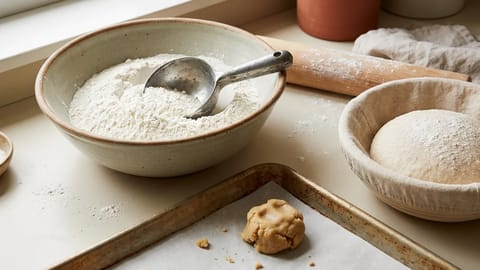
The bigger risk is lumps. ATK warns against adding flour straight to hot liquid and suggests working it into a little fat first. That's a beurre manié: knead the flour with an equal amount of soft butter, then whisk small pieces into the simmering liquid, where the butter melts and lets the flour disperse. A cold slurry of flour and water also works. For a gravy built from scratch, cook the flour in the fat first, as a roux.
Either way, let the sauce simmer for a few minutes after it thickens so it stops tasting of raw flour. Use plain all-purpose flour, not self-rising, which carries baking powder and salt.
Can I use cornstarch instead of flour?
For thickening, yes, at half the amount. Argo's example: if a recipe calls for 1/4 cup of flour, use 2 tablespoons of cornstarch, stirred into cold liquid first. For coating food before frying, cornstarch works on its own, and ATK describes it as the ingredient for an extra-crispy coating. The dredging guide covers the technique.
Baking is where the swap stops. Cornstarch can replace a small share of the flour, as in a homemade cake flour blend, but it has none of the protein that forms gluten, and gluten holds most cakes and breads together. Don't replace all the flour with it.
How to thicken with any starch without lumps or thinning
The cornstarch rules below come from Argo's troubleshooting advice, and the timing for the root starches from ATK.
The boil matters more than people expect. Argo says the granules only reach full capacity after a minute at a full boil, and a lemon meringue filling that weeps water was usually slightly undercooked.
How each cornstarch substitute behaves
Arrowroot
Arrowroot makes a translucent paste that gels like cornstarch, and in ATK's tests it gave a clearer lemon meringue pie filling. It holds up where cornstarch struggles: Bob's Red Mill says it works well with acidic ingredients such as lemon curd, and Penn State Extension lists it, with tapioca, among starches that give satisfactory results when frozen and thawed.
Its weakness is dairy. ATK's tasters found it slimy in butterscotch pudding, and Bob's Red Mill warns it can make milk-based cream sauces curdle. Arrowroot also thickens at a lower temperature than cornstarch and breaks down when overheated, so it goes in at the end.
Tapioca starch
Tapioca starch, also sold as tapioca flour, comes from cassava. ATK swaps it one for one, other guides use up to twice as much, and ATK likes it in sweet fillings and sauces. Like cornstarch, it loses power if it cooks for a long time, but ATK notes that it retrogrades (stiffens as it cools and stands) more slowly, so the sauce stays supple. Bob's Red Mill adds that it gives a glossy shine and keeps its texture when frozen. Quick-cooking tapioca, the granules sold for pies, is a different product.
Potato starch
Start with the same amount as cornstarch; ATK uses 1 to 1 1/2 tablespoons per tablespoon in soups and gravies. Potato starch thickens at a lower temperature and gives a silky texture, but it doesn't hold up to long cooking, so add it late and take the pot off the heat as soon as it thickens. Potato flour is a different product, and Bob's Red Mill says the two aren't interchangeable.
Cornstarch substitutes by use
For sauces and gravy
For gravy or a cream sauce, flour is the better tool anyway. Most mother sauces start from a roux, and flour handles milk where arrowroot doesn't. For a glossy stir-fry or fruit sauce, arrowroot or potato starch added in the last minutes gets closer to the cornstarch look, and a sweet-and-sour or citrus sauce is arrowroot's best case.
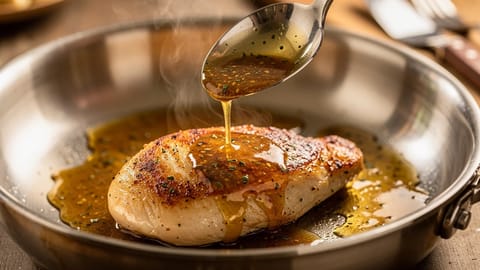
Sometimes you need no thickener at all. A pan sauce gets its body from reduction and a knob of cold butter.
For pie fillings
King Arthur Baking tested five thickeners, from plain flour to Instant ClearJel, in strawberry-rhubarb pies. All of them worked. Flour gave a cloudier filling, and tapioca a stickier one.
Don't apply the 2:1 sauce rule to a pie without checking a chart. King Arthur's pie thickener chart for a 9-inch blueberry pie lists 1/2 cup of flour, 6 tablespoons plus 2 teaspoons of cornstarch, 1/3 cup of Instant ClearJel or 1/4 cup of quick-cooking tapioca, and tapioca fillings need 15 to 30 minutes of rest before baking. With cornstarch, bake until the filling bubbles up through the crust. If the pie is going in the freezer, Argo's advice is to freeze a cornstarch pie before baking; tapioca and arrowroot handle the freezer better.
Note: Instant ClearJel, which won King Arthur's pie trial, is a modified cornstarch. It isn't an option if you're avoiding corn.
For puddings and custards
Of the swaps ATK covers, tapioca starch is the one it recommends for puddings. Arrowroot turned slimy in its butterscotch pudding, and potato starch doesn't hold up to the longer cooking. ATK also advises against flour, which makes puddings pasty.
Pastry cream is the exception for flour. It's made with flour or another starch, and ATK's pastry cream guide names flour or cornstarch. Use about twice as much flour as cornstarch and expect a more opaque cream. Either way, bring it almost to a boil: ATK explains that the heat destroys an enzyme in the yolks that would otherwise break down the starch and leave the cream runny.
Crème anglaise needs no starch at all. Egg yolks alone thicken it, with careful tempering, and unlike pastry cream it has to stay well below a boil or the yolks curdle.
For baking
In cakes and cookies, cornstarch usually softens the crumb. King Arthur's cake flour blend uses 105 g of all-purpose flour plus 14 g (2 tablespoons) of cornstarch, because the starch lowers the protein content and adds tenderness. It's the same swap as in Fond's guide to flour types.
Without cornstarch, Bob's Red Mill says arrowroot can stand in directly and potato starch replaces cornstarch in many baking recipes. In shortbread, ATK swaps in rice flour by equal volume and notes a faint chalkiness that fades as the cookies cool and sit. With no starch at all, use the flour alone and expect a slightly less tender crumb.
For frying and coatings
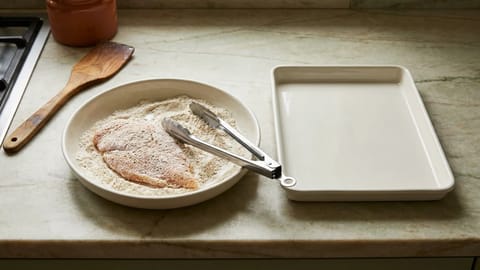
ATK swaps all-purpose flour into breading by equal volume, with a warning: a flour coating darkens and burns faster than a pure starch one, so watch the color and adjust the heat. Rice flour also swaps by equal volume, and arrowroot coated ATK's General Tso's chicken about as well as cornstarch.
For cheesecake
Cheesecake recipes are written both ways. King Arthur's NY cheesecake uses 3 tablespoons (24 g) of flour for four 8-ounce packages of cream cheese, while its Brooklyn-style cheesecake uses 1/4 cup (28 g) of cornstarch for the same amount. To swap, start from Argo's 2:1 rule: about 2 tablespoons of flour per tablespoon of cornstarch. Cracks have more to do with baking: King Arthur's NY recipe blames overcooked eggs and cools the cake slowly in the oven to prevent them.
Cornstarch vs corn flour vs cornmeal (and UK cornflour)
The names change by country, and that's behind a lot of failed swaps.
The US definitions come from ATK, and Wikipedia confirms that cornstarch is called cornflour in the UK. So a British recipe that asks for cornflour means cornstarch. American corn flour is ground whole corn, which ATK treats as a baking ingredient rather than a thickener, so don't reach for it to thicken a sauce. Wikipedia also notes that cornflour in Australia is commonly made from wheat.
Is cornstarch gluten-free?
Corn is naturally gluten-free, and wheat flour isn't. The Celiac Disease Foundation lists corn, arrowroot, potato, rice and tapioca among naturally gluten-free foods, which leaves flour as the one common substitute that's off the table for a gluten-free recipe.
Naturally gluten-free doesn't guarantee a gluten-free jar. The Foundation notes research suggesting that some naturally gluten-free grains pick up gluten through cross-contact during harvesting and processing, and advises buying versions tested to contain less than 20 parts per million. Read the label on each starch, and check twice in Australia. Anyone with celiac disease should follow their own medical advice.
Choose by what the cornstarch was doing
Find the job before you swap. In a sauce or gravy it's thickening, and flour at double the amount or a root starch at about the same amount will do it. In a pie or pudding it's setting, so match the substitute to the dairy and the cooking time. In a coating it's crisping, and rice flour or arrowroot are the closest swaps. In a cake it's tenderizing, and a small amount of another starch, or none, is fine. If what you need is more lift, cornstarch was never the answer: see the baking powder substitutes that do make a batter rise.
Sources
- 7 Cornstarch Substitutes You Might Already Have in Your Kitchen - America's Test Kitchen
- Frequently Asked Questions - Argo Corn Starch
- All About Starches - Bob's Red Mill
- Arrowroot, Cornstarch, Tapioca Powder and More: The Different Types of Starches - Bob's Red Mill
- Sweet White Rice Flour - Bob's Red Mill
- Tapioca - Iowa State University Extension AnswerLine
- Pie thickener guide - King Arthur Baking
- Baking trials: the best way to thicken fruit pie filling - King Arthur Baking
- How to make cake flour - King Arthur Baking
- Perfecting pastry cream - America's Test Kitchen
- All about cornmeal, grits, and polenta - America's Test Kitchen
- Modified Food Starches - Penn State Extension
- Gluten-Free Foods - Celiac Disease Foundation
- NY Cheesecake recipe - King Arthur Baking
- Brooklyn-Style Cheesecake recipe - King Arthur Baking
- Corn starch - Wikipedia
- Arrowroot - Wikipedia
- Beurre manié - Wikipedia
- Custard - Wikipedia
- Chia seed - Wikipedia