 Bastien
How long to boil eggs for soft, medium, and hard yolks
The difference between a runny, jammy, or fully set yolk comes down to minutes. Knowing how long to boil eggs removes the guesswork and gives you the exact result you want, every single time.
How long to boil eggs depends entirely on the yolk you're after, and the difference between runny, jammy, and fully set comes down to minutes, not guesswork. Most people overcook or undercook because they follow vague instructions like "boil for a while." That green ring around the yolk? Overcooked. A yolk that's still raw when you wanted it set? The timing was off.
I've cooked hundreds of eggs testing different methods, pot sizes, and timings. The chart and method below are what I keep coming back to because they work on any stove with any pot.
Below you'll find a precise timing chart for soft, medium, and hard boiled eggs, the technique that produces consistent results, tips for easy peeling, and storage guidelines.
The complete boiled eggs time chart
This chart assumes large eggs (about 50g each) straight from the refrigerator, lowered into already-boiling water. Starting with boiling water is the key to repeatable results because it eliminates the variable of how long your pot takes to heat up.
| Boiling time | Doneness | White | Yolk | Best for |
|---|---|---|---|---|
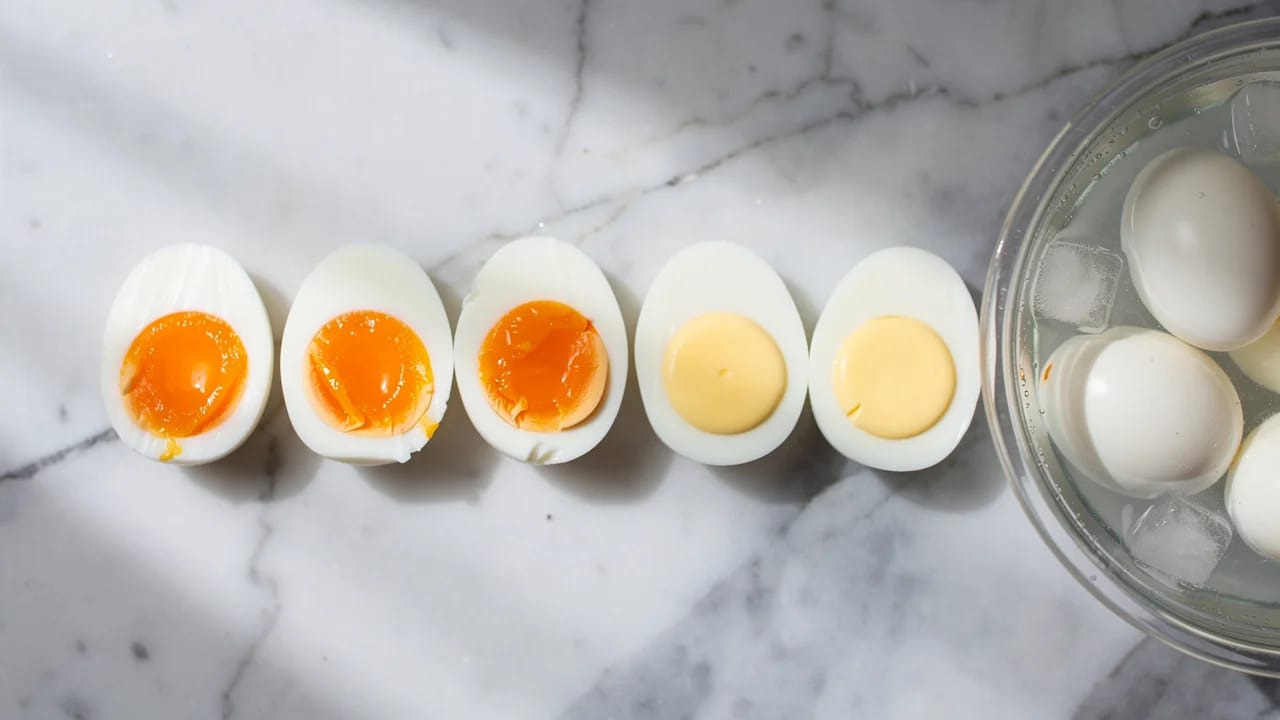
| 6 minutes | Soft boiled | Just set, tender | Fully runny | Ramen, toast soldiers, salads |
| 7 minutes | Soft-medium | Set | Mostly runny with jammy edges | Grain bowls, ramen |
| 8 minutes | Medium | Firm | Jammy center, set edges | Snacking, bento boxes |
| 9 minutes | Medium | Firm | Slightly jammy center | Meal prep, salads |
| 10 minutes | Medium-hard | Firm | Mostly set, slightly moist | Deviled eggs, sandwiches |
| 12 minutes | Hard boiled | Firm | Fully set, creamy | Egg salad, batch cooking |
| 13 minutes | Hard boiled | Firm | Fully set, drier | Chopped for toppings |
| 14+ minutes | Overcooked | Rubbery | Chalky with green ring | Not recommended |
A note on egg size: Medium eggs need about 1 minute less. Extra-large eggs need about 1 minute more. Check with a kitchen scale if you're unsure. A large egg weighs roughly 50g.
How to boil eggs: step-by-step method
Get your mise en place ready before you start. The method below is what professional cooks and food scientists at Serious Eats recommend for consistent results.
What you need
- Large eggs (straight from the fridge)
- A pot large enough that eggs sit in a single layer
- A slotted spoon or spider strainer
- A bowl of ice water (non-negotiable)
- A timer
The method
Soft boiled eggs (6-7 minutes)
Soft boiled eggs have a fully set white with a warm, runny yolk. This is the standard for ramen eggs, toast soldiers, and grain bowls.
At 6 minutes, the yolk is completely liquid. The white is set but still delicate, so handle carefully when peeling. 7 minutes thickens the outer edge of the yolk while the center stays fluid. I prefer 7 minutes for most uses because the yolk has more body without losing that satisfying flow when you cut in.
Serve immediately. The yolk continues to set as it cools, so eat within a few minutes of peeling for the full runny effect.
Tip: Slice in half with a sharp knife dipped in hot water for a clean cut that doesn't drag the yolk.
Medium boiled eggs (8-10 minutes)
The most versatile doneness. The yolk is jammy, somewhere between liquid and fully set, with a deep orange, custard-like center.
At 8 minutes, the yolk is distinctly jammy: set around the edges, still flowing when you cut into it. 9-10 minutes gives you a mostly set yolk with a slightly moist, darker center. These hold up better for meal prep and still taste richer than a fully hard boiled egg.
Medium eggs are the go-to for bento boxes, grain bowls, and marinated eggs (ajitsuke tamago). Firm enough to peel cleanly, with that appealing contrast between the set exterior and the softer core.
Hard boiled eggs (12-13 minutes)
Hard boiled eggs have a fully set yolk with no translucent center. The texture should be creamy, not chalky.
At 12 minutes, the yolk is set through but retains a slightly moist, golden quality. This is ideal for deviled eggs and egg salad where you want the yolk to mash smoothly. 13 minutes produces a drier, paler yolk that works for chopping into salads or slicing for sandwiches.
Do not go past 14 minutes. Beyond that, you get the green ring (iron sulfide, formed by a chemical reaction between the iron in the yolk and the hydrogen sulfide in the white). The texture turns rubbery and the flavor goes sulfurous.
The steaming method: an alternative worth trying
Steaming eggs instead of boiling them produces nearly identical results with one advantage: the eggs are less likely to crack because they aren't bouncing around in turbulent water. I started steaming after cracking one too many eggs during a big batch cooking session, and I haven't fully gone back.
How it works: Place a steamer basket or insert over about an inch of boiling water. Add eggs in a single layer, cover the pot, and start your timer. The technique is identical to blanching in reverse: steam first, ice bath after.
Steaming times (add about 1 minute to boiling times):
- Soft: 7-8 minutes
- Medium: 10-11 minutes
- Hard: 13-14 minutes
Peeling tends to be slightly easier with steamed eggs because the gentler heat creates a cleaner separation between the white and the shell membrane.
Easy-peel hard boiled eggs: 5 proven tips
Getting a clean peel without chunks of white stuck to the shell is half the battle. These methods are backed by testing from America's Test Kitchen and confirmed by plenty of kitchen experience.
1. Start with boiling water
Dropping eggs into already-boiling water causes the proteins in the white to seize quickly against the shell membrane, then contract away as they set. The gap this creates between white and membrane makes peeling dramatically easier.
2. Always use an ice bath
The rapid temperature change from boiling to ice water contracts the egg inside the shell, pulling the white away from the membrane. Skip the ice bath and you'll fight the shell every time.
3. Choose older eggs
Farm-fresh eggs are harder to peel. Eggs that are 7-10 days old peel much more cleanly because the albumen (egg white) has a higher pH, weakening its bond to the shell membrane. Fresh eggs cling; older eggs release.
If you buy eggs specifically for boiling, grab them a week ahead.
4. Add baking soda to the water
Half a teaspoon per quart of water raises the pH, mimicking the effect of older eggs. A reliable fix when you're working with fresh eggs.
5. Peel under running water
Roll the egg gently on the counter to crack the shell all over, then peel under a thin stream of cool water. The water gets under the membrane and lifts it away, so the shell comes off in larger pieces instead of tiny fragments.
Egg size and altitude adjustments
The timing chart above works for large eggs at sea level. If your situation differs, adjust.
Egg size: Medium eggs need about 1 minute less across the board. Extra-large eggs need about 1 minute more. Jumbo eggs can need up to 2 minutes extra for hard boiled.
Altitude: Water boils at a lower temperature at higher elevations (about 1°C less per 300 meters / 1,000 feet). Since the water is cooler, eggs take longer to cook. A rough guide:
| Altitude | Hard boiled time | Adjustment |
|---|---|---|
| Sea level | 12 minutes | Baseline |
| 3,000 ft (900m) | 14 minutes | +2 minutes |
| 5,000 ft (1,500m) | 17 minutes | +5 minutes |
| 7,000+ ft (2,100m+) | 20 minutes | +8 minutes |
If you cook at altitude regularly, run a test batch: boil one egg at 12 minutes, cut it open, and adjust from there. Your local conditions matter more than any chart.
How to tell when boiled eggs are done
You can't see inside an egg while it cooks. Your timer is the most reliable tool, but here are backup methods.
The spin test. Place a cooked egg on the counter and spin it. Hard boiled eggs spin quickly and smoothly. Soft or raw eggs wobble because the liquid inside shifts. This confirms doneness but not the exact level.
The temperature check. An instant-read thermometer inserted into the center of the yolk should read 158°F (70°C) for fully hard boiled, or 145-150°F (63-66°C) for a jammy medium. Most precise method, though it requires puncturing the egg.
Visual check. Sacrifice one egg from the batch. Cut it in half and inspect the yolk. If it's not where you want it, adjust by 30-60 seconds for the rest. After a couple of batches, you'll dial in your exact timing for your stove, your pot, and your preferred egg size.
How long do boiled eggs last in the fridge
According to the USDA, hard boiled eggs last up to 7 days in the refrigerator when stored properly.
Peeled eggs dry out faster. Store in an airtight container with a damp paper towel and use within 5 days.
Unpeeled eggs keep longer because the shell acts as a natural barrier. A covered container prevents them from absorbing fridge odors. Good for a full 7 days.
Soft and medium boiled eggs are more perishable. Eat within 2-3 days.
Do not freeze boiled eggs. The whites turn rubbery and watery when thawed. No way to fix it.
Signs an egg has gone bad: An off or sulfurous smell is the clearest indicator. Slimy whites or a grayish tint mean it's time to discard.
Common boiled egg mistakes
Cause: Overcooked. Iron in the yolk reacted with hydrogen sulfide in the white.
Fix: Reduce cooking time by 1-2 minutes and make sure you're using an ice bath to stop cooking immediately.
Cause: Thermal shock from cold egg hitting boiling water, or eggs bumping in a rolling boil.
Fix: Lower eggs gently with a slotted spoon. Reduce to a gentle boil after adding eggs. Adding a tablespoon of vinegar to the water helps coagulate whites faster if a crack happens.
Cause: Usually eggs that are too fresh (low albumen pH) or weren't cooled fast enough.
Fix: Use eggs at least a week old. Add 1/2 teaspoon baking soda per quart of water. Always ice-bath for at least 5 minutes. Peel under running water.
Cause: The yolk naturally floats to one side during cooking.
Fix: Gently stir the eggs during the first 2 minutes of cooking to keep the yolk centered. Mostly cosmetic, it matters most for deviled eggs.
- Boiling water start + precise timer + ice bath = perfect eggs every time
- Soft boiled: 6-7 min (runny yolk). Medium: 8-10 min (jammy). Hard: 12-13 min (set)
- For easy peeling: use older eggs, boiling water start, ice bath, baking soda
- Steaming is a great alternative with slightly easier peeling
- At altitude, add about 1 minute per 1,000 feet above sea level
- Hard boiled eggs keep 7 days in the fridge (unpeeled) or 5 days peeled
Once you've dialed in your preferred timing, save it as a recipe in Fond. The unit converter is handy if you need to scale measurements for larger batches.
Sources
Cook smarter
Join the waitlist for Fond. Recipes, meal plans, and a little AI sous-chef that learns how you cook.
Related articles

Cooking oil smoke points: the complete guide for every cooking method
Every cooking oil has a temperature limit. Push past it and you get bitter flavors, acrid smoke, and potentially harmful compounds filling your kitchen. That temperature limit is called the smoke point, and knowing it is the difference between a perfect sear and a smoking disaster.
Egg substitutes for baking: what actually works
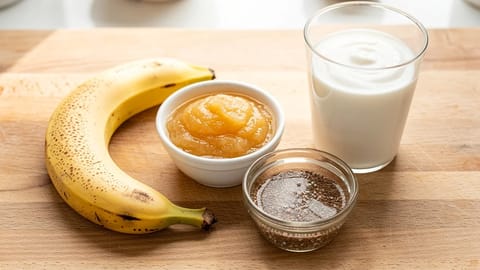
A practical guide to egg substitutes for baking. Covers flax eggs, applesauce, aquafaba, silken tofu, and more — with exact ratios per egg, a recipe-matching chart by bake type, scaling rules for multi-egg recipes, and honest notes on flavor impact.
How to cook rice perfectly every time
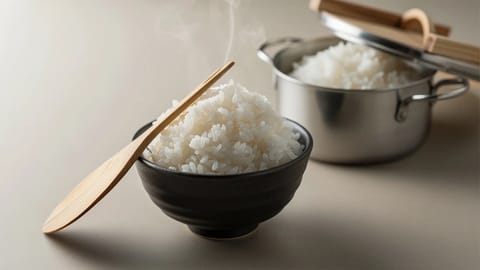
Rice is the most consumed grain on the planet, yet it trips up even confident home cooks. Too sticky, too mushy, burned on the bottom. The failures are predictable, and so are the fixes. Learning how to cook rice well comes down to the right water ratio, proper heat control, and leaving it alone while it cooks.
How to meal prep: a practical guide for beginners
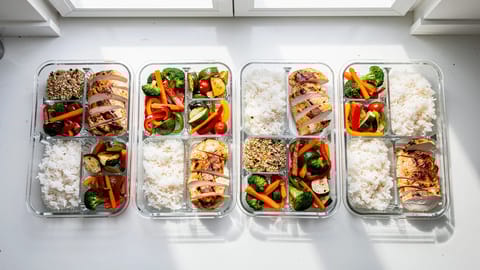
Meal prep means dedicating about 2 hours on a Sunday to planning, cooking, and portioning complete meals for the week ahead. Unlike batch cooking, which produces versatile components you mix and match, meal prep gives you finished meals ready to grab and eat. This guide covers everything from equipment and shopping lists to a minute-by-minute prep day timeline and safe storage practices.
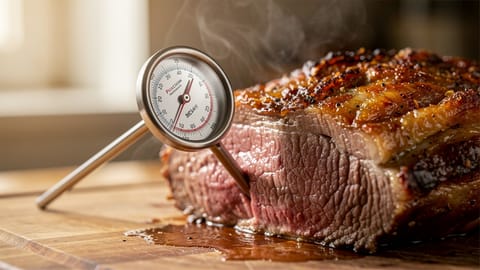
Carryover Cooking
The phenomenon where food continues to cook after being removed from heat, as residual thermal energy from the exterior migrates to the cooler interior.
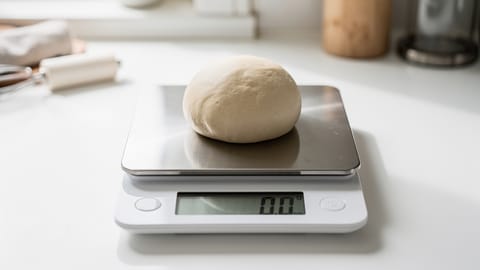
Kitchen Scale
A digital scale for measuring ingredients by weight — far more accurate than cups and spoons, especially in baking.
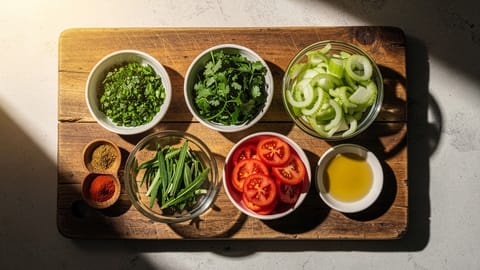
Mise en Place
The practice of preparing and organizing all ingredients before cooking — everything in its place.