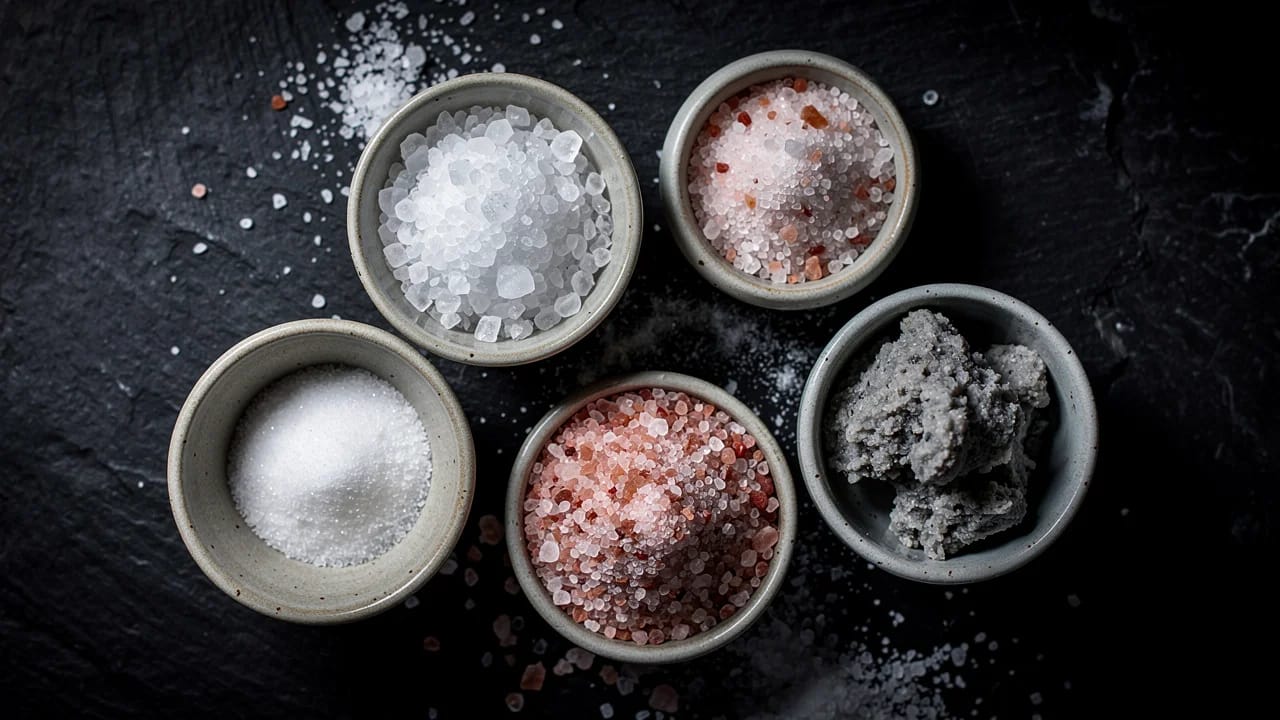
 Bastien
Types of salt for cooking: a practical guide to every salt in your kitchen
Not all salt is the same. A teaspoon of table salt contains almost twice as much sodium as a teaspoon of Diamond Crystal kosher salt. Crystal size, shape, and mineral content change how salt dissolves, how it sticks to food, and how much you actually need. This guide covers every common cooking salt and when to use each one.
Not all salt is the same, and the difference isn't just flavor. A teaspoon of fine table salt packs nearly twice the sodium of a teaspoon of Diamond Crystal kosher salt. That's not a minor detail when you're following a recipe. Crystal size, shape, and density change how salt measures, how it dissolves, and how it clings to food. Understanding the different types of salt for cooking will make you a better cook overnight.
This guide covers every type of salt you're likely to find at the grocery store or a specialty shop, with practical advice on when to reach for each one. And if you take away nothing else, save the conversion chart below.
Table salt
Table salt is the most common salt in the world. It's mined from underground deposits, refined to remove trace minerals, and ground into small, uniform cubic crystals. Most brands add iodine (an essential nutrient) and an anti-caking agent to keep it flowing freely.
Crystal size: Very fine and dense. Each grain is a tiny, compact cube.
What it's good for:
- Baking, where precise measurements matter and you want the salt to distribute evenly through a batter or dough
- Seasoning water for pasta or blanching vegetables
- Any recipe that specifies salt by weight rather than volume (since weight eliminates the measurement problem entirely)
What to watch out for: Because the crystals are so small and pack tightly together, a teaspoon of table salt delivers significantly more sodium than a teaspoon of kosher salt or flaky sea salt. If a recipe was developed with kosher salt (and most modern recipes are), using the same volume of table salt will make the dish too salty.
The iodine question: Iodized salt has a faint metallic taste that some people notice in delicate dishes. For everyday cooking, it's negligible. For bread baking, pickling, or fermentation, use non-iodized salt. Iodine can inhibit yeast activity and discolor fermented vegetables.
Kosher salt: the professional standard
If you watch any cooking show, read any modern cookbook, or follow any food blog, the default salt is kosher salt. There's a reason for that. The large, irregularly shaped flakes are easy to pinch, easy to control, and dissolve at a predictable rate. Professional cooks grab kosher salt because they can feel exactly how much they're adding.
The name comes from the koshering process: the large crystals draw moisture from meat during the salting step of koshering. It has nothing to do with the salt itself being certified kosher (though most brands are).
Diamond Crystal vs. Morton: the critical difference
This is the single most important thing in this article. Diamond Crystal and Morton kosher salt are not interchangeable by volume.
If a recipe calls for "1 tablespoon kosher salt" without specifying the brand, you need to know which one the author used. Most professional recipe developers and cookbook authors use Diamond Crystal. When in doubt, start with less and taste as you go.
Why Diamond Crystal is preferred by chefs: The lighter flakes make it harder to over-salt. You can always add more, but you can't take it away. The hollow crystal structure also means it dissolves faster and adheres better to the surface of proteins during searing. I switched from Morton to Diamond Crystal a few years ago and noticed the difference immediately. Seasoning by pinch became more intuitive because each pinch delivered less salt, giving me more control.
Kosher salt vs. sea salt
This is one of the most common questions, and the answer is straightforward. Kosher salt and sea salt differ in how they're made, their crystal structure, and their best uses, but they're both sodium chloride. Neither is meaningfully healthier than the other.
How they differ: Kosher salt is mined and processed into large, uniform flakes designed for cooking. Sea salt is evaporated from seawater and retains trace minerals that give it subtle flavor complexity. Kosher salt vs table salt is an even bigger gap: table salt is twice as dense by volume, making conversions essential.
In practice: Use kosher salt for everyday cooking (pinching, seasoning, marinades). Use sea salt when the mineral character matters (finishing, salt crusts, bread) or when you want a specific texture. For most cooking tasks, the two are interchangeable by weight, not by volume.
Sea salt
Sea salt is produced by evaporating seawater. That's the whole process: collect ocean water, let it evaporate, harvest the crystals. The result varies depending on where the water comes from, how it's harvested, and how much processing happens afterward.
Fine sea salt behaves similarly to table salt. The crystals are small, it measures consistently, and it works well in baking and general cooking. The mineral content gives it a slightly more complex flavor than pure table salt, but the difference is subtle.
Coarse sea salt has larger, irregular crystals. Use it for salt crusts on fish or meat, grinding in a salt mill, or adding texture to finished dishes. It dissolves slowly, which makes it a poor choice for quick-cooking applications where you need the salt to incorporate fast.
Mineral content: Sea salt retains trace amounts of magnesium, calcium, potassium, and other minerals from the ocean. These contribute to subtle flavor differences but have no meaningful nutritional impact. You'd need to eat dangerous amounts of salt to get a significant mineral dose.
Fleur de sel: the French finishing salt
Fleur de sel (literally "flower of salt") is hand-harvested from the surface of salt evaporation ponds, primarily in Brittany, France. Workers use wooden rakes to skim the thin, delicate crystals that form on top of the brine on warm, dry, windy days. It's labor-intensive, weather-dependent, and expensive, typically $15-30 for a small jar.
Crystal structure: Thin, irregular, slightly moist flakes with a faint grey or pink tint. The crystals are delicate and crumble easily.
Flavor: Fleur de sel tastes clean and briny with a gentle mineral quality. It has a slow, pleasant salinity that builds rather than hitting you all at once.
When to use it:
- As a finishing salt on grilled steak, roasted vegetables, or chocolate desserts
- Sprinkled on caramel. Salted caramel with fleur de sel is the classic pairing
- On fresh tomatoes with good olive oil
- On butter-topped radishes
When not to use it: Never cook with fleur de sel. Heat destroys its delicate crystal structure, and the subtle flavor differences disappear entirely. You'd be wasting $25 salt when $3 kosher salt does the same job in a hot pan.
Maldon salt
Maldon sea salt comes from Maldon, Essex, in England, where the Maldon Crystal Salt Company has been producing it since 1882. The salt is made by filtering and boiling local seawater, then slowly evaporating it to form its signature pyramid-shaped flakes.
Crystal structure: Large, flat, hollow pyramid crystals that look like tiny translucent squares. They shatter satisfyingly when you crush them between your fingers.
Flavor: Clean, bright salinity without bitterness. Less mineral complexity than fleur de sel. Maldon is all about texture and crunch.
Best uses:
- Finishing salt for steaks, eggs, salads, and roasted vegetables
- Topping for cookies, brownies, and chocolate bark
- Any dish where you want a visible, textural salt presence
- Sprinkling on avocado toast (it's become the cliche for a reason)
Maldon is more affordable than fleur de sel, typically $6-10 for a box, and it's widely available. For most home cooks, it's the best entry point into finishing salts. I keep a small bowl of Maldon next to the stove and reach for it more than any other finishing salt.
Himalayan pink salt
Himalayan pink salt is mined from the Khewra Salt Mine in Pakistan, one of the oldest and largest salt mines in the world. The pink color comes from trace iron oxide (rust, essentially). It also contains small amounts of calcium, magnesium, and potassium.
The health claims: You'll see marketing about Himalayan salt containing "84 trace minerals." This is technically true but practically meaningless. The quantities are so small that you'd need to consume kilograms of salt to get any nutritional benefit. Long before that, the sodium would cause serious health problems. Use it because you like the flavor or the look, not for health reasons.
Practical uses:
- Cooking and seasoning. Fine-ground Himalayan salt works like any other fine salt
- Salt blocks for grilling or serving (heated salt blocks impart a gentle saltiness to proteins)
- Salt mills. The large pink crystals look attractive and grind easily
- Rimming cocktail glasses
Flavor: Very similar to regular sea salt. In blind taste tests, most people cannot distinguish Himalayan pink salt from other high-quality sea salts. The color is the main differentiator.
Black salt (Kala Namak)
Kala Namak is a volcanic rock salt from South Asia, traditionally processed by heating salt with charcoal, herbs, and seeds in a furnace. The result is a pungent, sulfurous salt with a distinctive dark purple-black color that turns pinkish-grey when ground.
Flavor: Strongly sulfurous. It tastes and smells like hard-boiled eggs. This sounds unpleasant, but that egg-like quality makes it useful in specific applications.
Key uses:
- Vegan cooking -- this is where black salt shines. Add it to tofu scrambles, vegan omelets, or chickpea flour-based egg substitutes to replicate the taste of eggs
- Indian cuisine. It's a traditional ingredient in chaat masala, raita, and chutneys
- Sprinkled on fresh fruit (a common street food combination in India)
- Ayurvedic cooking traditions
How much to use: Start small. A quarter teaspoon is enough to season a tofu scramble for two. The sulfur flavor intensifies when heated, so add it at the end of cooking for a more subtle effect, or during cooking for a stronger egg-like presence.
Sel gris (French grey salt)
Sel gris ("grey salt") comes from the same salt marshes in Brittany as fleur de sel, but it's a different product. While fleur de sel is skimmed from the surface, sel gris is raked from the bottom of the evaporation ponds, where it picks up clay and minerals that give it a grey color and damp texture.
Crystal structure: Coarse, chunky, moist crystals. Sel gris never fully dries out. The residual moisture is part of its character.
Flavor: Earthy, mineral-rich, and more assertive than fleur de sel. It has a rounded saltiness that works well with hearty foods.
Best uses:
- Seasoning meats before roasting or braising
- Adding to stews, soups, and slow-cooked dishes
- Baking into rustic bread crusts
- Grinding in a salt mill as an everyday cooking salt
Sel gris sits between an everyday cooking salt and a finishing salt. It's too expensive to use as freely as kosher salt, but robust enough to handle heat without losing its character.
Smoked salt
Smoked salt is any salt that has been cold-smoked over wood for several hours. The most common varieties use hickory, applewood, mesquite, or cherrywood. Commercial smoked salts range from gently smoky to aggressively campfire-forward.
Flavor: Smoky, woodsy, and warm. The intensity depends on the wood type and smoking duration.
Best uses:
- Finishing grilled meats, roasted vegetables, or baked potatoes
- Adding smokiness to dishes without a grill or smoker. A pinch of smoked salt on roasted cauliflower or mashed sweet potatoes adds depth
- Homemade spice rubs and BBQ seasonings
- Vegan bacon, smoked tofu, or anywhere you want smoke flavor without actual smoking
What to avoid: Don't confuse smoked salt with "smoke-flavored" salt, which uses liquid smoke additives. True smoked salt costs more but has a cleaner, rounder flavor. Check the ingredient list: it should say just "salt" with no added flavorings.
Pickling salt
Pickling salt (also called canning salt) is pure sodium chloride with no iodine and no anti-caking agents. It dissolves cleanly in brine without cloudiness or discoloration.
Why it matters for preserving: Iodine and anti-caking agents in regular table salt can turn pickling brine cloudy and give fermented vegetables an off color. Pickling salt avoids both problems. If you're making pickles or any lacto-fermented vegetables, this is the salt to use.
Can you substitute? Kosher salt works for pickling if you adjust for the volume difference. The key is avoiding iodized salt. Fine sea salt (non-iodized) is another good option.
Volume-to-weight salt conversion chart
This is the chart that will save you from ruining dishes. Because different salts have different crystal sizes and densities, a "teaspoon" or "tablespoon" of salt varies dramatically in actual sodium content.
The golden rule: When precision matters, weigh your salt with a kitchen scale. Volume measurements are inherently unreliable for salt. This is especially important for baking, where salt ratios affect yeast activity, gluten development, and the baker's percentage calculations.
Weight per teaspoon
| Salt type | Weight per teaspoon | Notes |
|---|---|---|
| Table salt (fine) | 6 g | Dense, compact crystals |
| Morton kosher salt | 4.8 g | Flat, rolled flakes |
| Diamond Crystal kosher salt | 3 g | Hollow pyramid flakes |
| Fine sea salt | 5.7 g | Similar to table salt |
| Coarse sea salt | 4.5 g | Varies by brand |
| Maldon flaky salt | 3.5 g | Light pyramid crystals |
| Fleur de sel | 4.5 g | Moist, irregular flakes |
| Himalayan pink (fine) | 5.8 g | Dense, similar to table salt |
| Sel gris (coarse) | 4.5 g | Moist, heavy crystals |
Volume conversion between common salts
If a recipe calls for 1 teaspoon of one salt and you have another, here's how to convert:
| Recipe calls for | Table salt | Morton kosher | Diamond Crystal kosher |
|---|---|---|---|
| 1 tsp table salt | 1 tsp | 1 1/4 tsp | 2 tsp |
| 1 tsp Morton kosher | 3/4 tsp | 1 tsp | 1 1/2 tsp |
| 1 tsp Diamond Crystal kosher | 1/2 tsp | 2/3 tsp | 1 tsp |
| 1 tbsp table salt | 1 tbsp | 1 tbsp + 3/4 tsp | 2 tbsp |
| 1 tbsp Morton kosher | 2 1/4 tsp | 1 tbsp | 1 1/2 tbsp |
| 1 tbsp Diamond Crystal kosher | 1 1/2 tsp | 2 tsp | 1 tbsp |
The quick mental math:
- Diamond Crystal to Morton: multiply by 0.66 (use about 2/3 the volume)
- Diamond Crystal to table salt: multiply by 0.5 (use half the volume)
- Morton to table salt: multiply by 0.75 (use 3/4 the volume)
These ratios matter. Using 1 tablespoon of table salt when a recipe means 1 tablespoon of Diamond Crystal will make the dish roughly twice as salty. This is the number one reason home cooks over-salt food when following online recipes.
Which salt for what? Quick reference
| Use case | Best salt | Why |
|---|---|---|
| Everyday cooking | Diamond Crystal kosher | Easy to pinch, forgiving, dissolves well |
| Baking | Table salt or fine sea salt | Even distribution in batters and doughs |
| Seasoning meat before cooking | Kosher salt | Coarse crystals adhere to surface and draw out moisture for better searing |
| Finishing steaks | Maldon or fleur de sel | Visible flakes, textural crunch, clean burst of flavor |
| Finishing chocolate desserts | Fleur de sel or Maldon | Delicate crystals that don't overpower sweetness |
| Pan sauces | Kosher salt | Dissolves quickly in liquid, easy to adjust |
| Pasta water | Any salt | Crystal size doesn't matter in a large pot of water. Use whatever is cheapest |
| Vegan egg dishes | Kala Namak | Sulfurous egg-like flavor |
| Salt crusting fish | Coarse sea salt or sel gris | Large crystals form a solid crust without over-seasoning |
| Bread baking | Fine sea salt or table salt (non-iodized) | Even distribution, no iodine to inhibit yeast |
| Pickling and fermenting | Pickling salt or non-iodized fine salt | Clean brine, no cloudiness |
| Adding smokiness | Smoked salt | Wood-smoked flavor without a grill |
| Cocktail rims | Maldon or Himalayan pink | Visual appeal and crunch |
| Grinding in a salt mill | Himalayan pink or coarse sea salt | Hard crystals that grind evenly |
Storage tips
Salt doesn't spoil. It's a mineral, not a food product. But improper storage creates problems. Salt is hygroscopic, meaning it absorbs moisture from the air. Humid conditions cause clumping, especially with kosher salt and flaky finishing salts. A salt cellar on the counter is the professional standard. I keep three on my counter: one with Diamond Crystal for cooking, one with Maldon for finishing, and one with fine sea salt for baking. Having them visible and accessible means I actually use the right salt for each job.
The bottom line
- Diamond Crystal kosher salt is the best all-purpose cooking salt for most home cooks
- Morton kosher is 1.5x saltier than Diamond Crystal by volume. Always check which one a recipe uses
- Save finishing salts (fleur de sel, Maldon) for the last moment. Heat destroys their texture
- For baking, use fine sea salt or non-iodized table salt for even distribution
- When in doubt, weigh your salt. Weight is always consistent regardless of crystal size
- Himalayan pink salt is fine to cook with but the health claims are marketing, not science
For 90% of your cooking, Diamond Crystal kosher salt is the right choice. It's forgiving, easy to control, and the standard that most recipes are written for. Keep a box of table salt for baking, a jar of Maldon or fleur de sel for finishing, and you're covered.
The salt conversion chart above is worth bookmarking. The kosher salt vs sea salt vs table salt differences in density trip up even experienced cooks. When you're not sure, use a kitchen scale and measure by weight. Salt by weight is always consistent, regardless of crystal size or brand.
Salt is the single most important seasoning in your kitchen. Everything else builds on top of it. Getting the type and amount right is the foundation of food that actually tastes good.
Sources
Cook smarter
Join the waitlist for Fond. Recipes, meal plans, and a little AI sous-chef that learns how you cook.
Related articles

Bread baking for beginners: your first loaf, start to finish
A complete walkthrough for baking your first loaf of bread at home. Covers the four core ingredients, kneading by hand or mixer, proofing, shaping, and baking, with temperatures, times, and troubleshooting for every step.
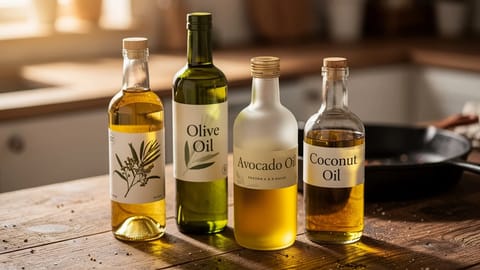
Cooking oil smoke points: the complete guide for every cooking method
Every cooking oil has a temperature limit. Push past it and you get bitter flavors, acrid smoke, and potentially harmful compounds filling your kitchen. That temperature limit is called the smoke point, and knowing it is the difference between a perfect sear and a smoking disaster.
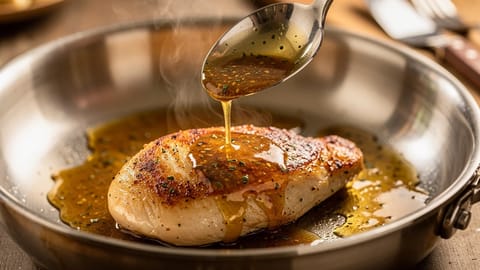
How to make a pan sauce: deglazing 101
A pan sauce turns the browned bits stuck to your skillet into a rich, flavorful sauce in under five minutes. Learn the technique, choose your deglazing liquid, and master pan sauces for chicken, steak, pork chops, and mushrooms.
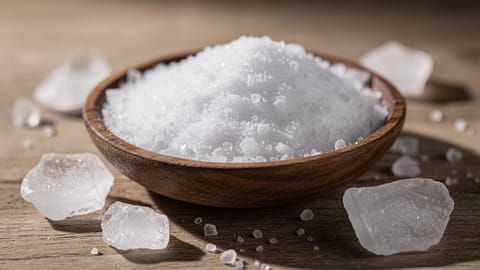
Kosher Salt
A coarse-grained salt with large, flat crystals that's preferred by chefs for seasoning because it's easy to pinch, dissolves well, and has no additives.